Your pool looks great. Your pump and filter do not.
If that bulky equipment is the first thing you see when you step outside, you are not alone. Many homeowners want a cleaner backyard without hurting how the equipment works.
This guide shares pool equipment shed ideas, from simple screens to full pool houses. You will also learn how to pick the right size and style, plus which features and materials hold up best around water and chemicals.
We focused on what matters most for airflow, access, and durability, since those affect how well your equipment runs. That way, you can choose a design that fits your yard and your setup.
How to Choose the Right Pool Equipment Shed
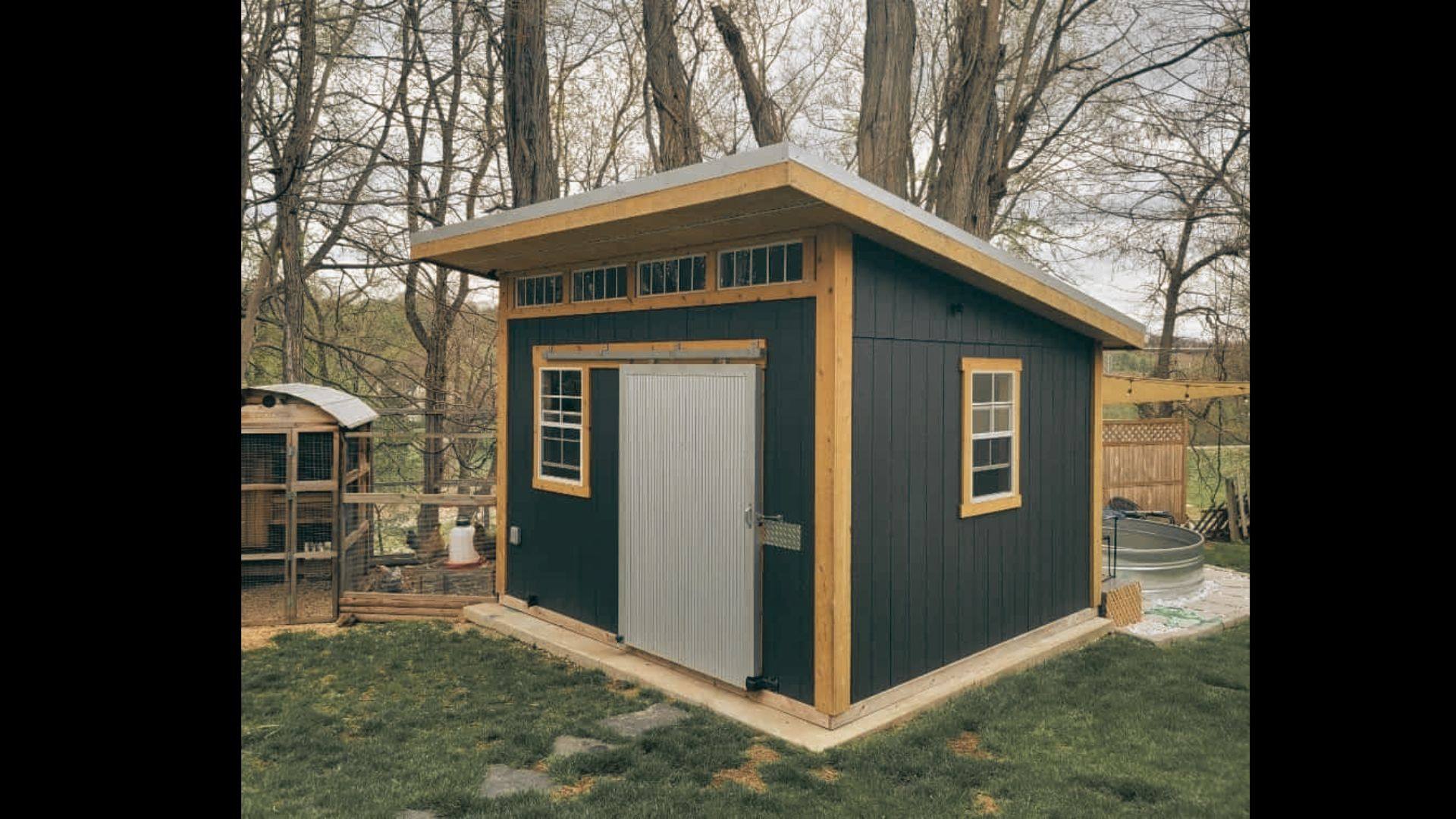
Picking the right shed comes down to more than just looks, though looks matter too.
Start by matching the shed to your backyard's overall style, since a sleek modern pool deck calls for something different than a cottage-style yard with lots of greenery.
Ventilation and access matter just as much as appearance, since pool equipment generates heat and needs regular checks, so a shed that looks great but traps heat or blocks the pump will cause problems fast.
Size and material round out the decision, and both should reflect the actual equipment you own now along with anything you might add later, like a heater or extra filtration, so it helps to review common shed dimensions before you commit.
Getting all three of these right, style, function, and sizing, is what separates a shed that blends in from one that becomes another eyesore in the yard.
List of 33 Pool Equipment Shed Ideas
Each of these designs takes a different approach to hiding pool equipment while keeping it functional, so look for the one that fits your yard and your equipment setup.
1. Modern Slatted Wood Shed
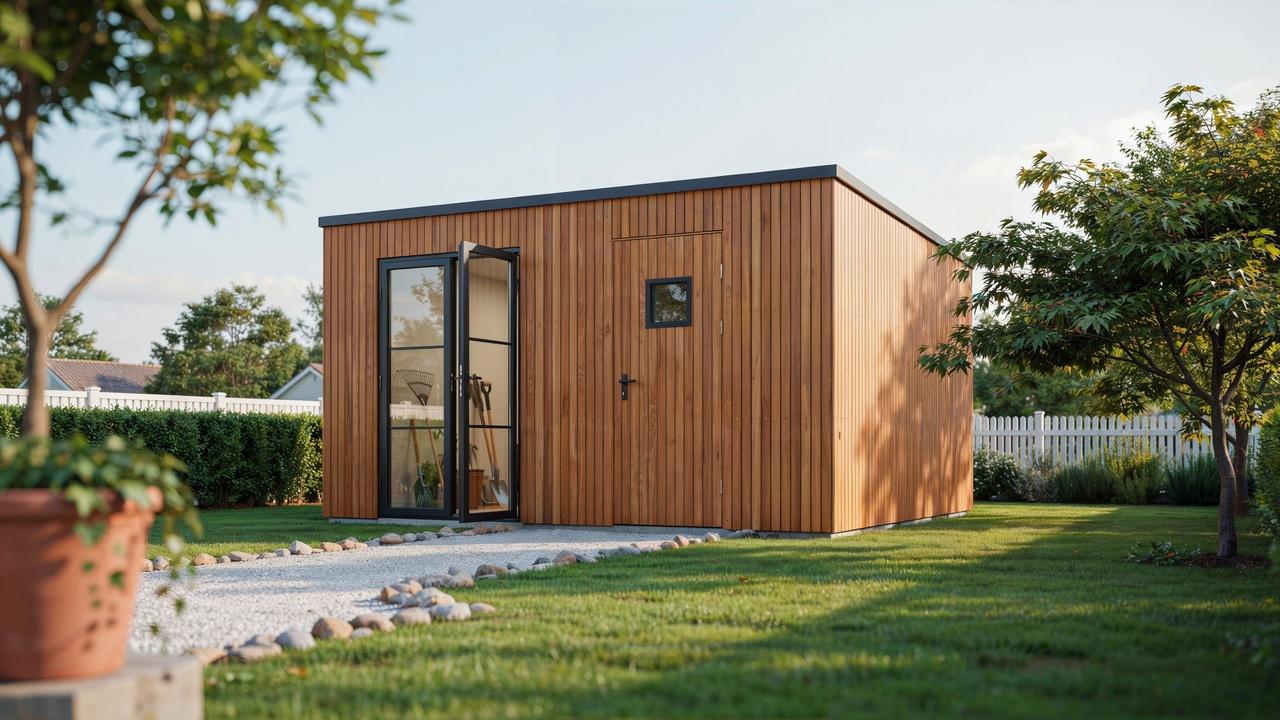
Vertical wood slats with gaps between them hide equipment from view while still letting air move freely.
This style pairs well with contemporary pool decks and clean landscaping.
2. Compact Cedar Equipment Shed
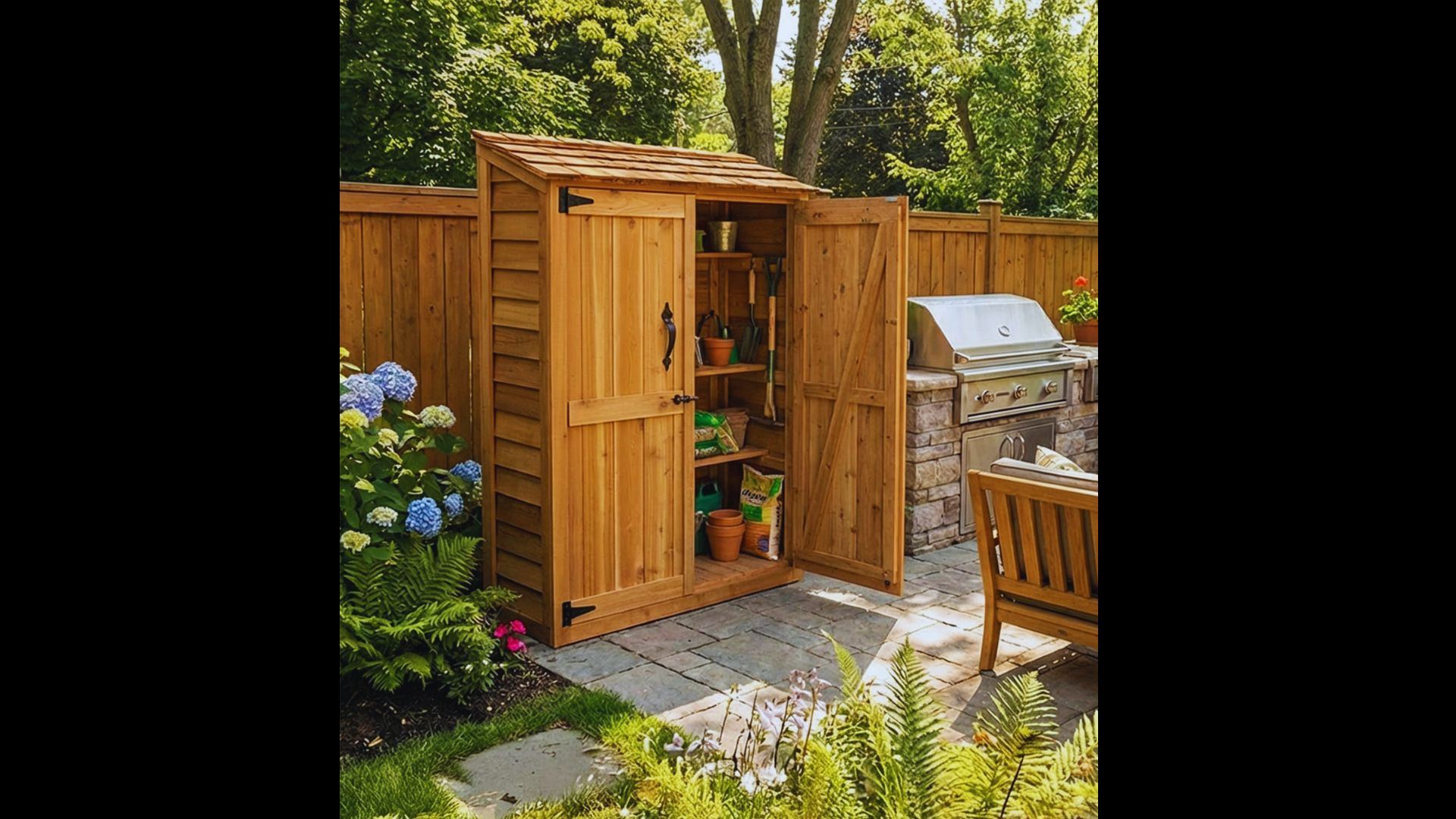
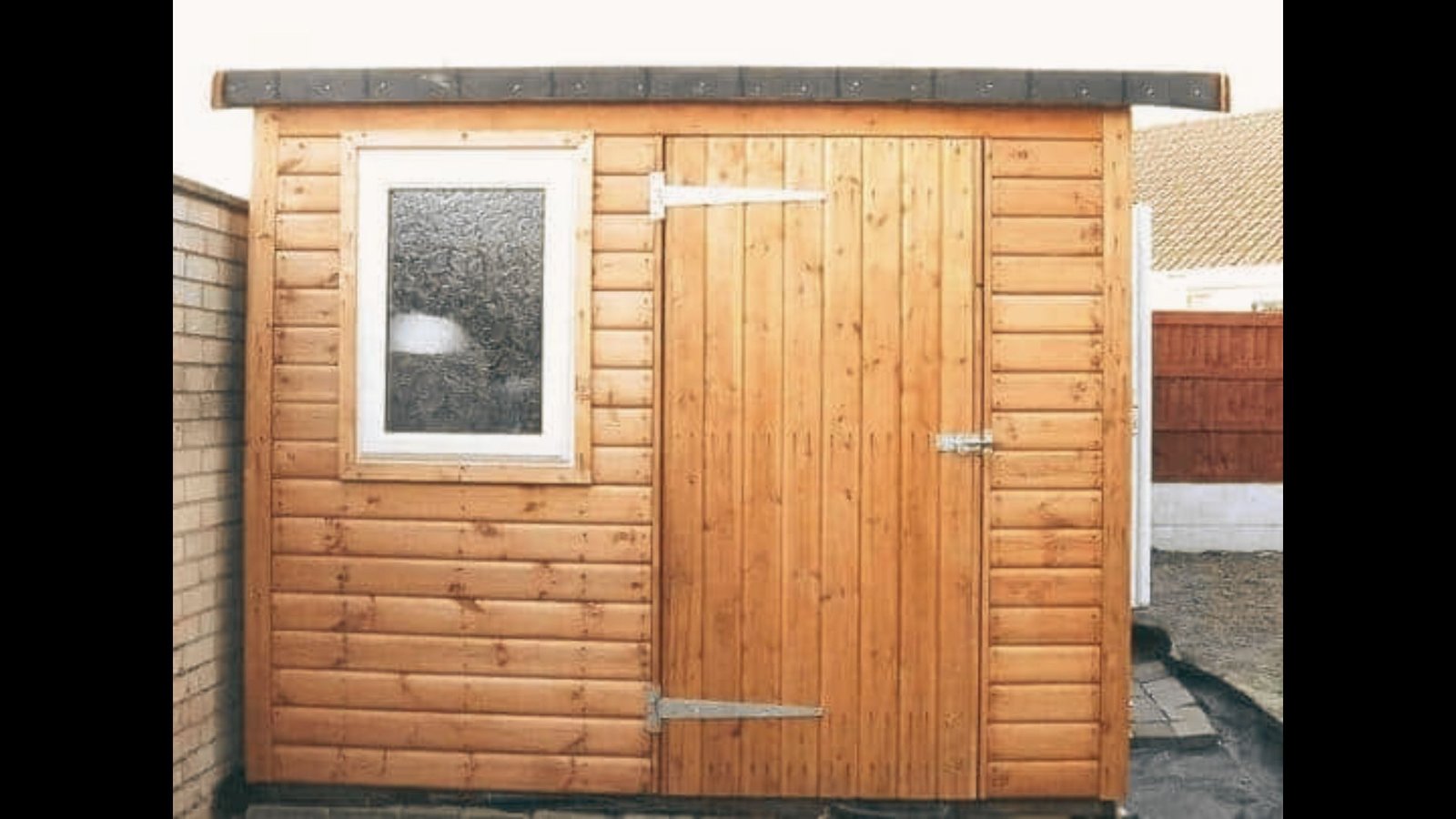
A small cedar box built specifically around pump and filter dimensions keeps the footprint minimal.
Cedar naturally resists rot, which matters given how close this shed sits to pool chemicals and moisture.
3. Rustic Pool Equipment Shed
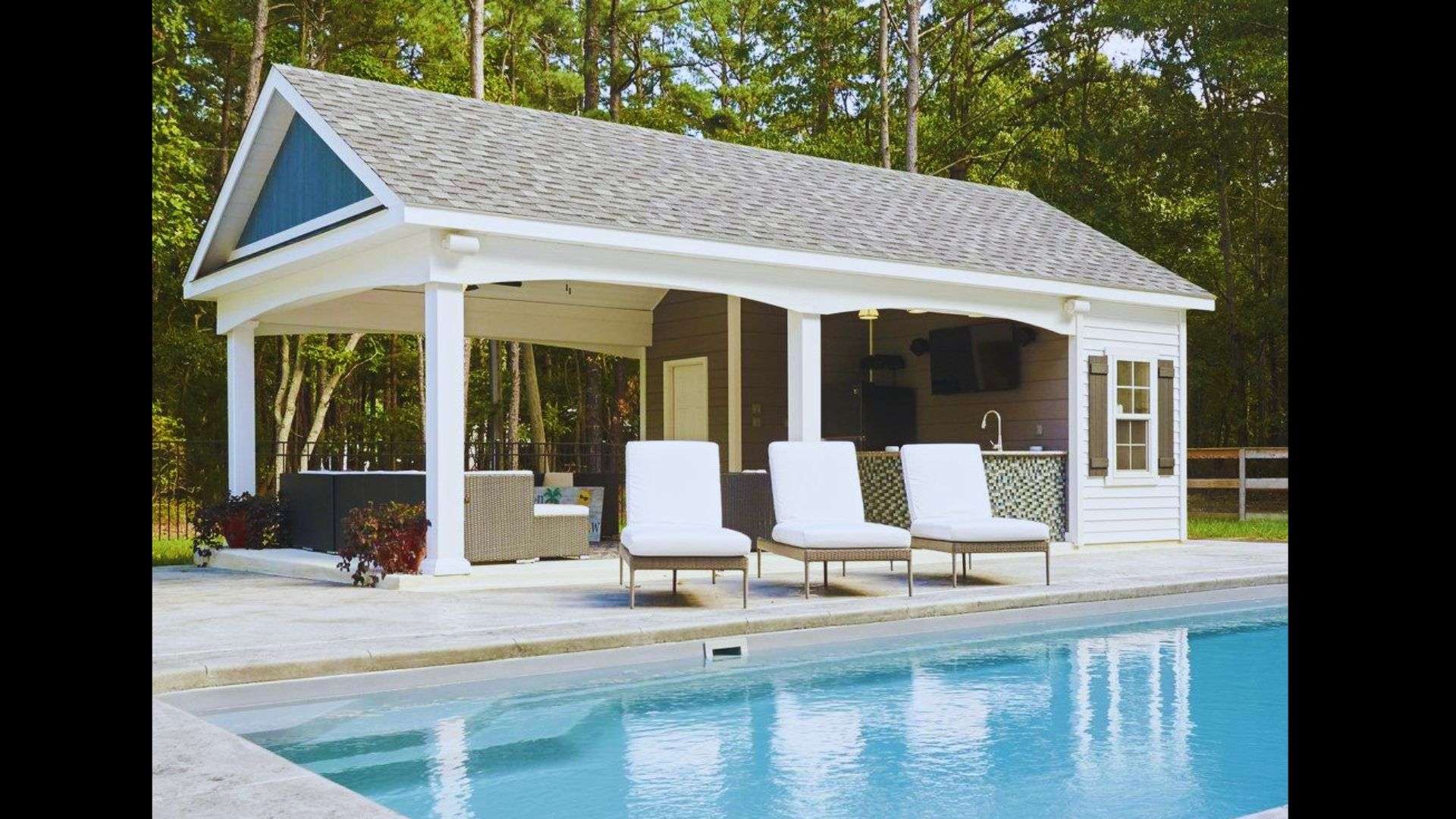
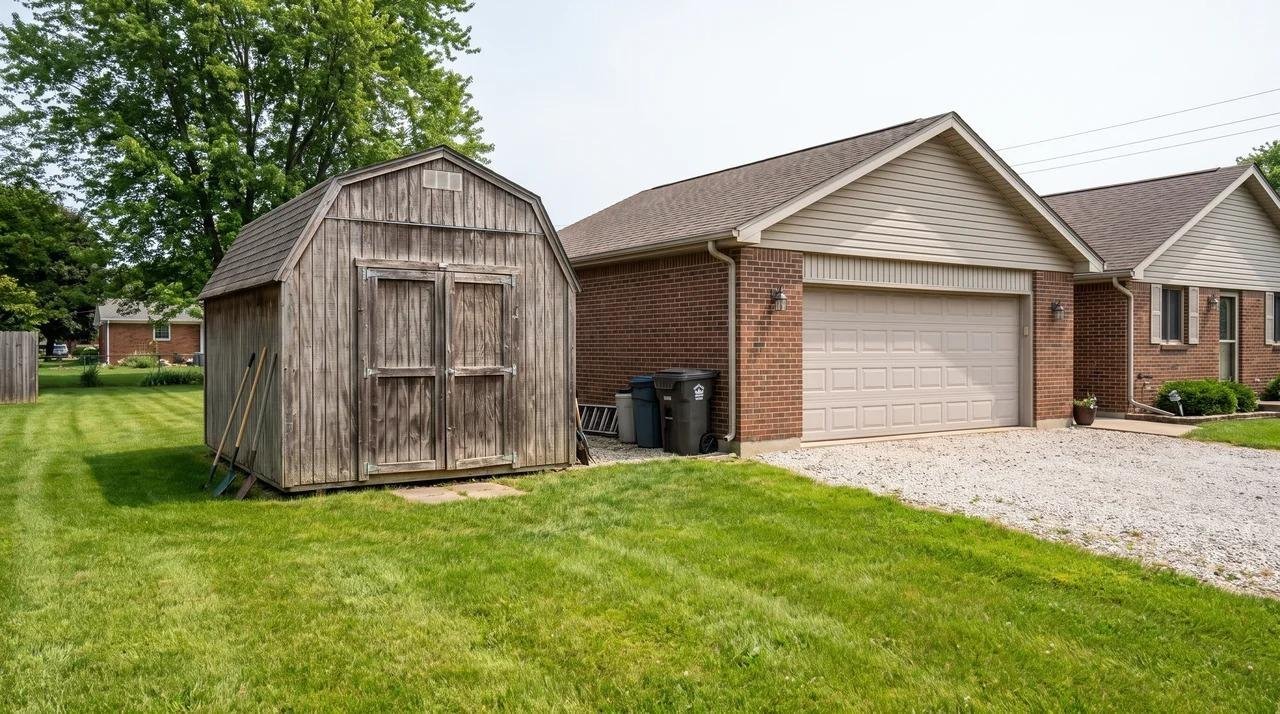
Built with weathered wood and simple hardware, this style works well in yards with a more relaxed, natural look.
It blends into garden beds or wooded corners without standing out.
4. Small Corner Equipment Shed
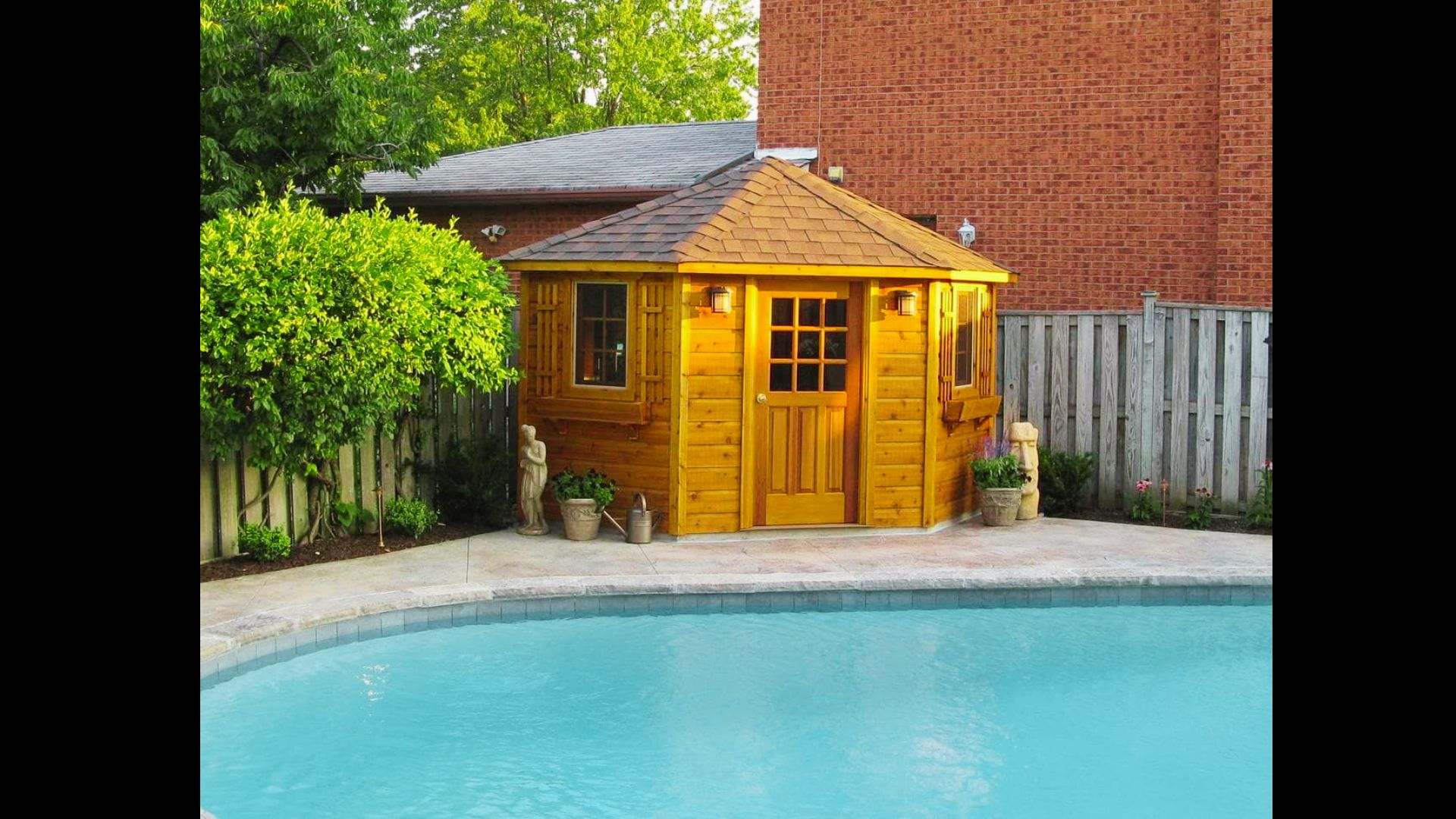
Fitted into an unused backyard corner, this design makes use of dead space that would otherwise go to waste.
It keeps equipment close to the pool without taking up prime yard space.
5. Pool House with Equipment Room
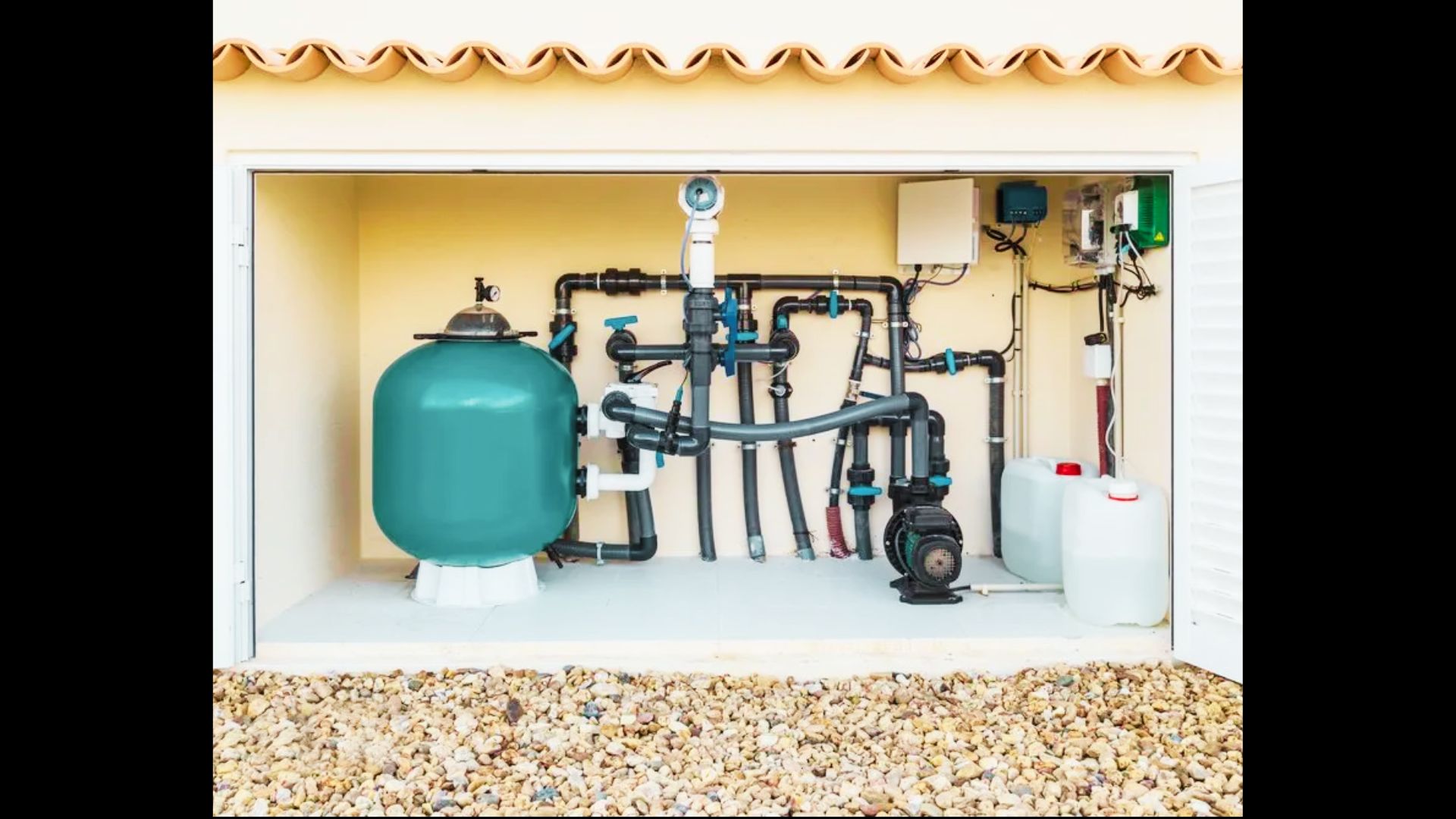
A full pool house with a dedicated equipment room combines storage, changing space, and equipment concealment in one structure, and smooth, water-resistant flooring makes the changing area far more comfortable underfoot.
This works well for larger properties that can support a bigger footprint.
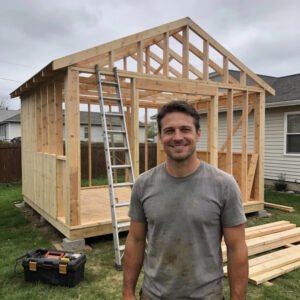
6. Backyard Storage Shed Conversion
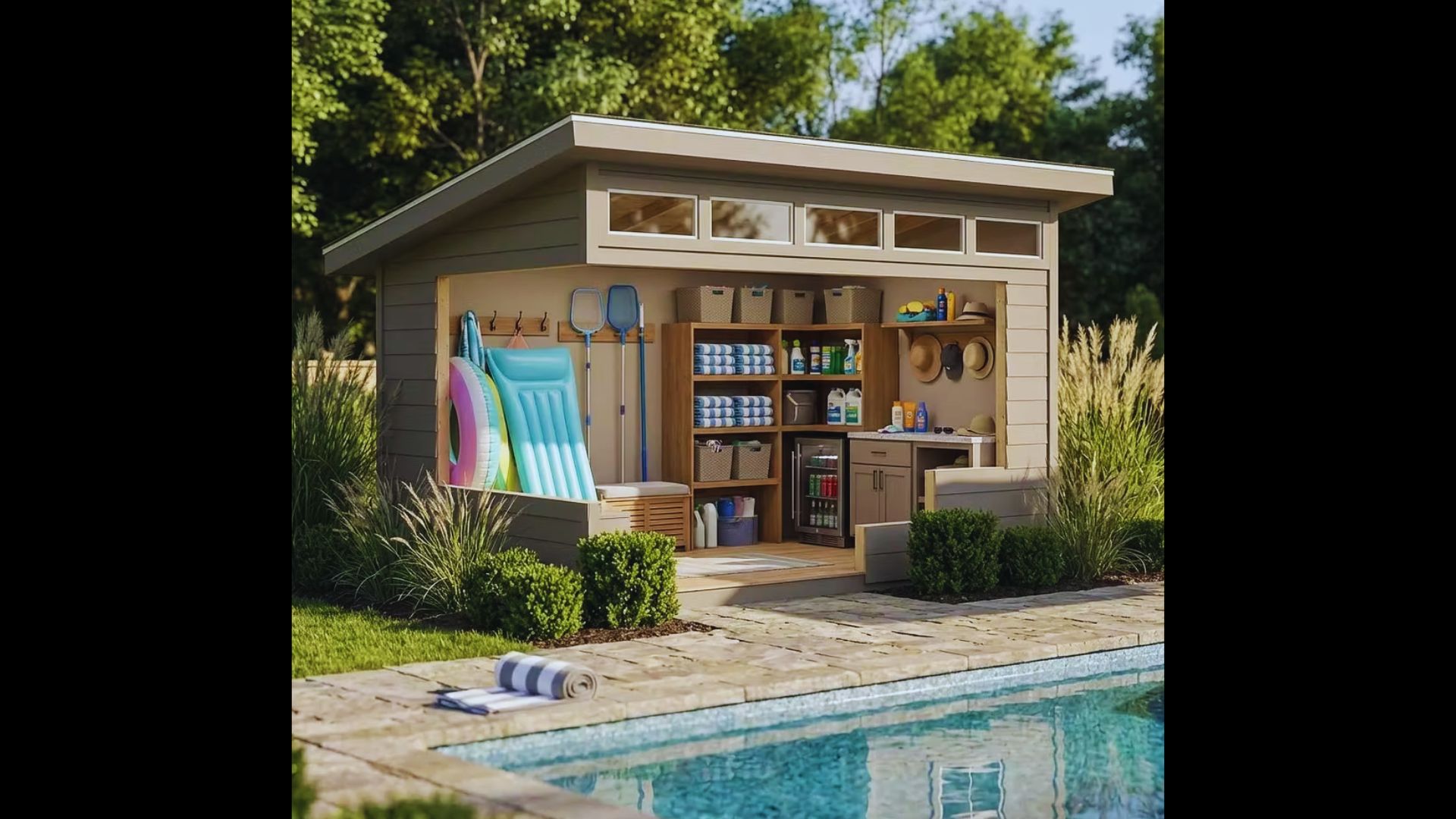
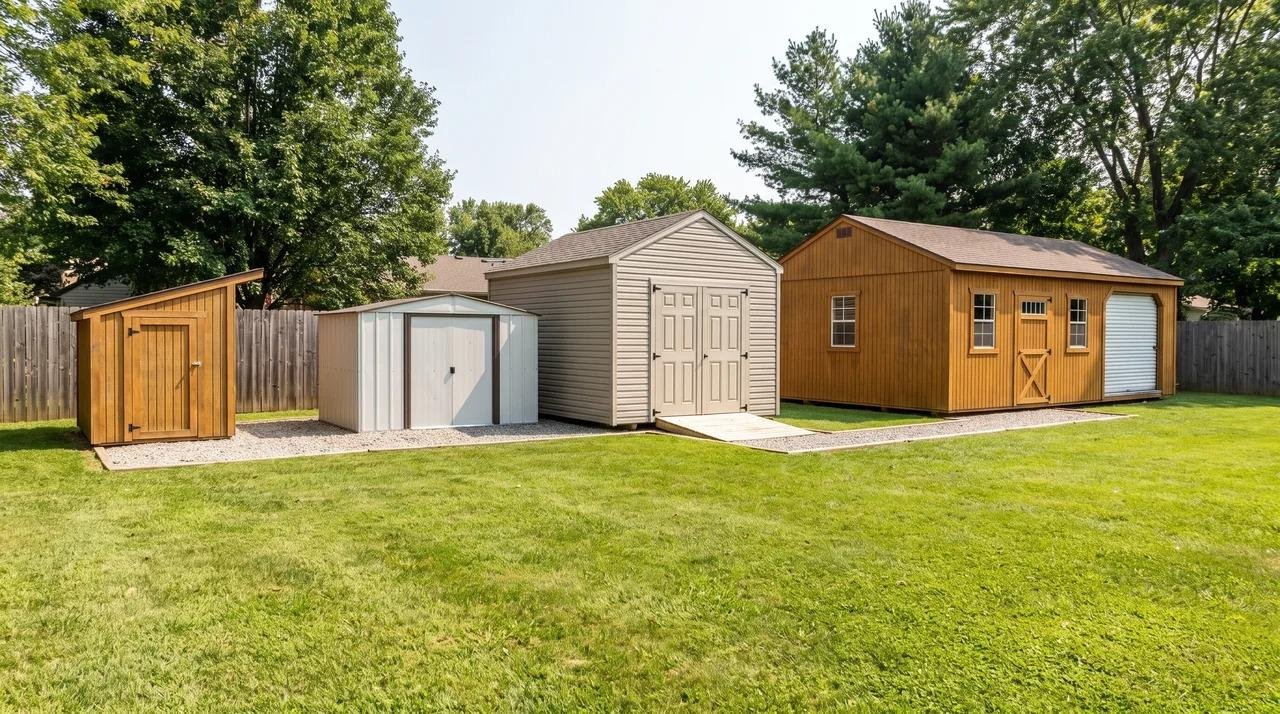
An existing storage shed can be adapted to house pool equipment, adding vents and access panels as needed.
This is a budget-friendly option if you already have a shed that isn't being used for much else.
7. Horizontal Privacy Screen Enclosure
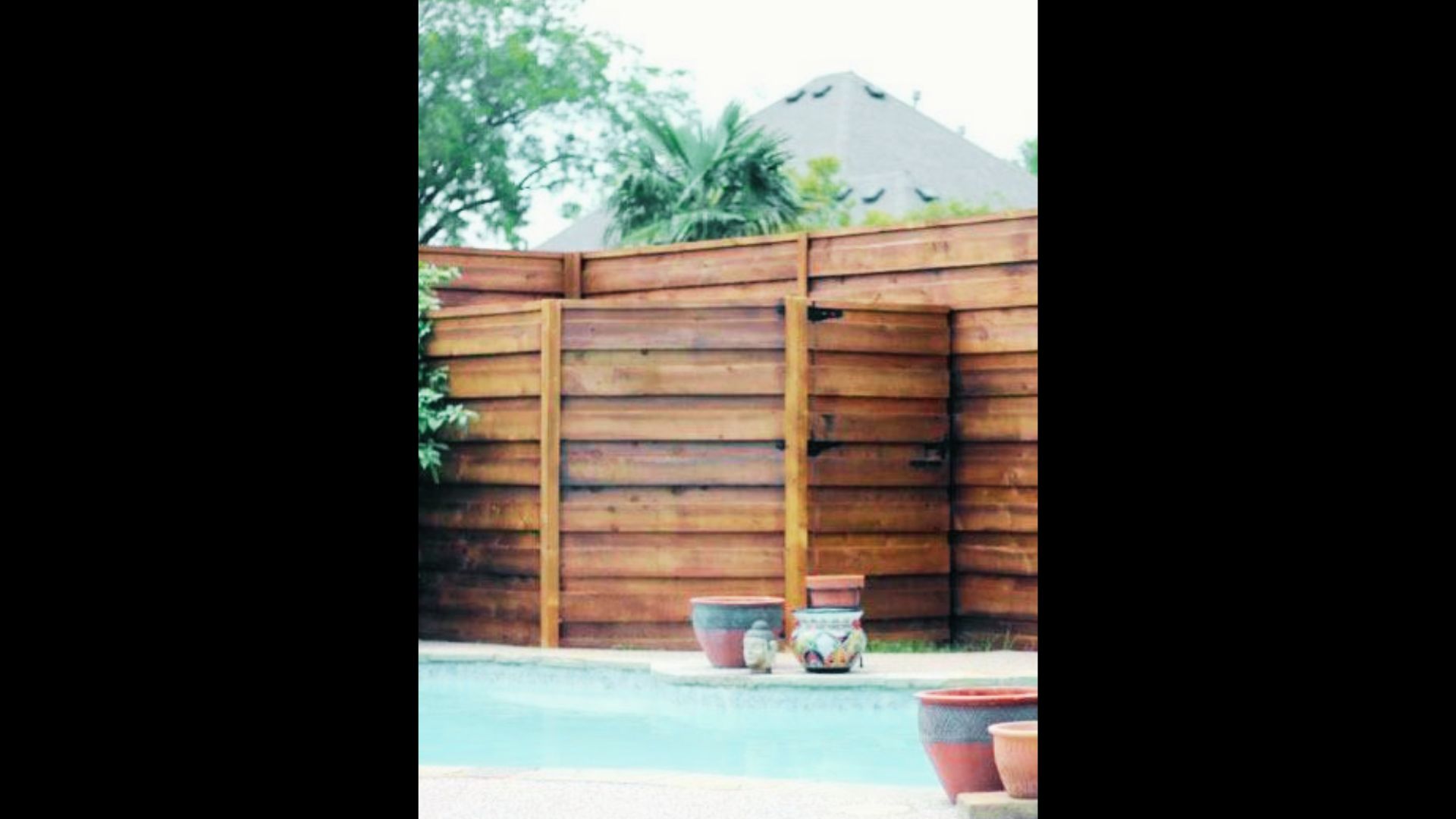
Horizontal slats or panels create a low, wide screen around equipment without a full roof or walls.
This works well when you want quick visual coverage without a full building project.
8. Louvered Ventilation Shed
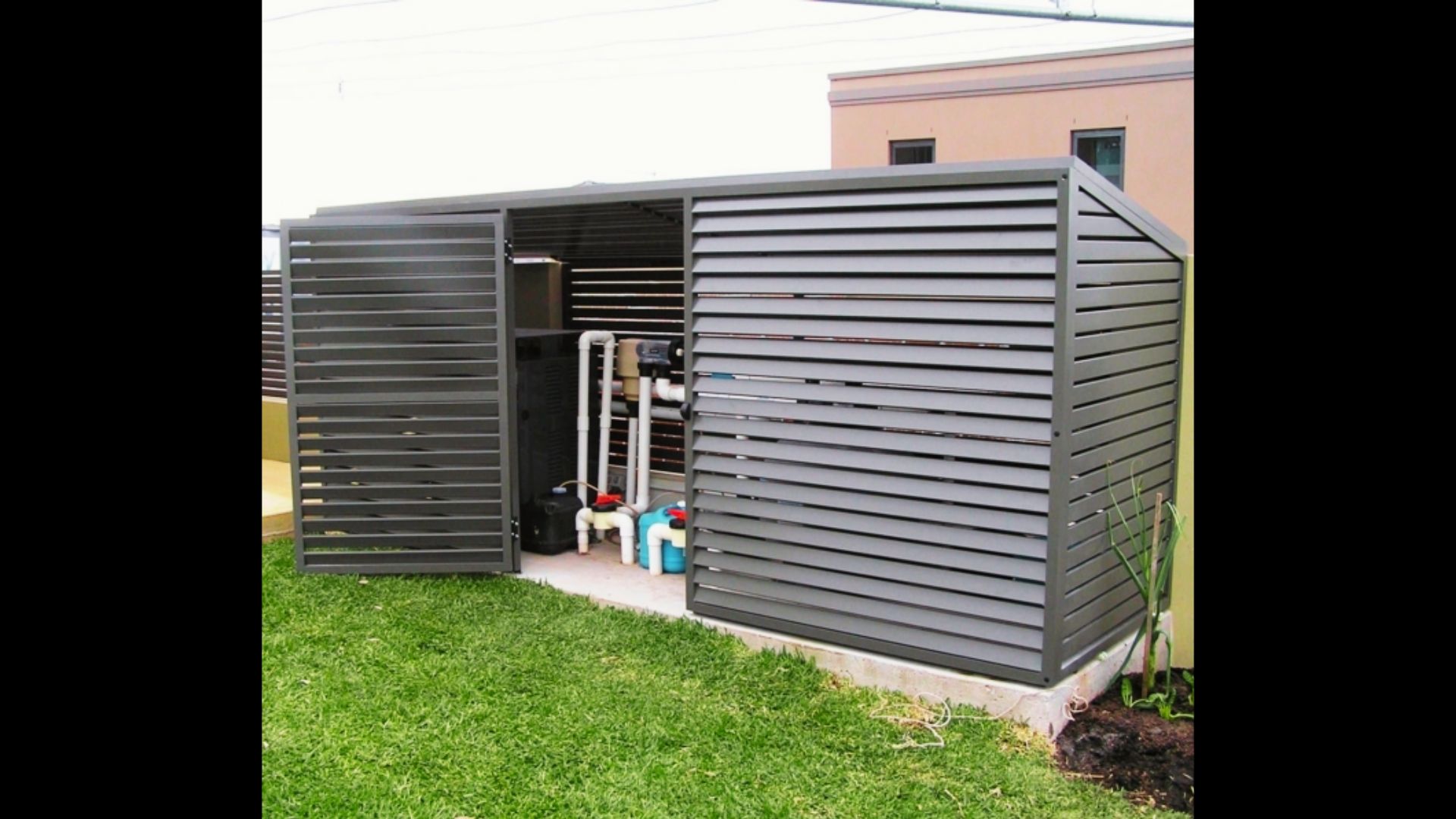
Built with angled louvers on multiple sides, this design prioritizes airflow above almost everything else.
It suits equipment that runs hot or needs consistent air circulation to avoid overheating.
9. Pergola with Hidden Equipment
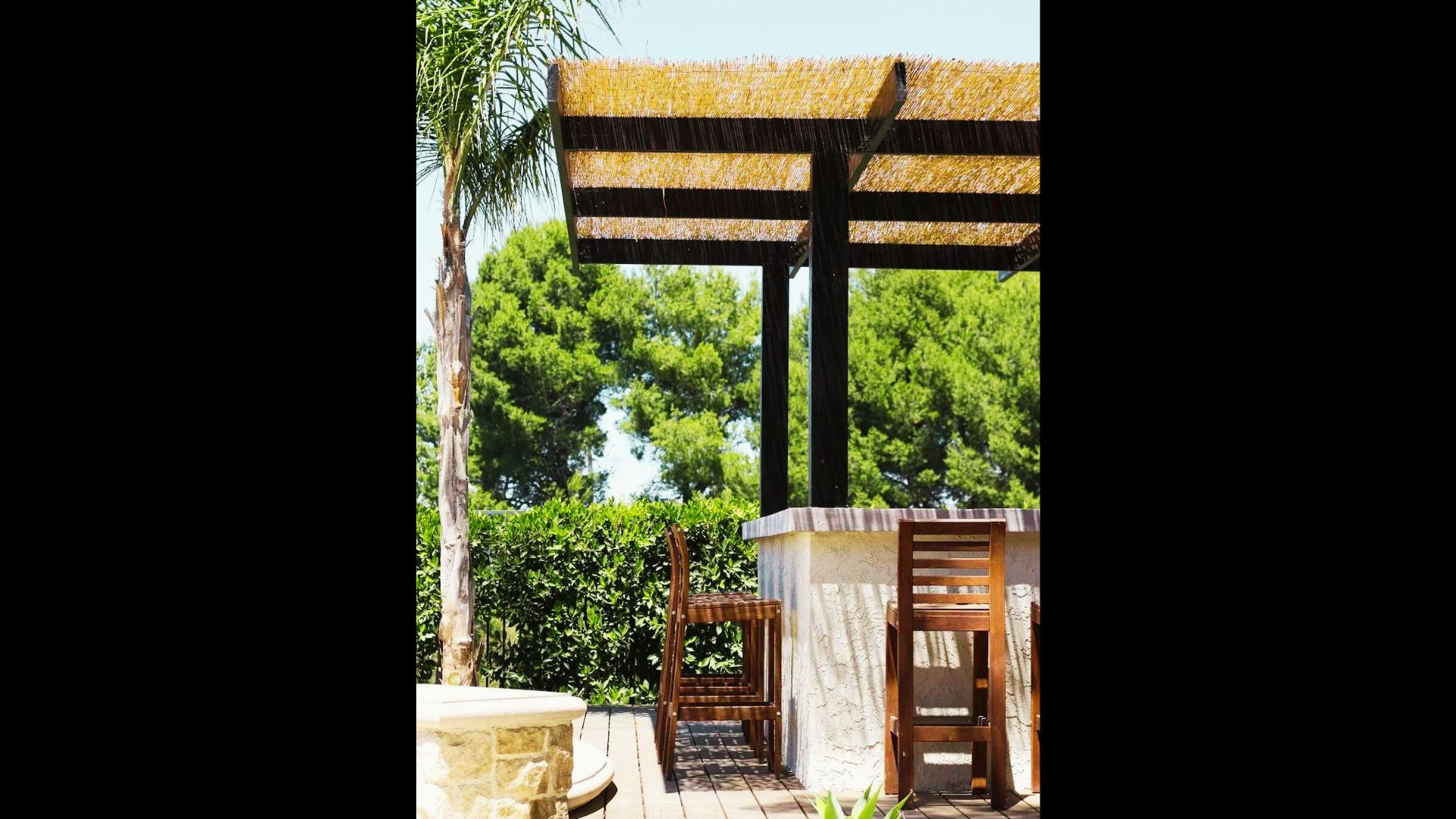
A pergola or gazebo structure with lattice or slatted sides can double as equipment cover while adding shade or a place for climbing plants.
This option blends function with a more decorative backyard feature.
10. Composite Equipment Shed
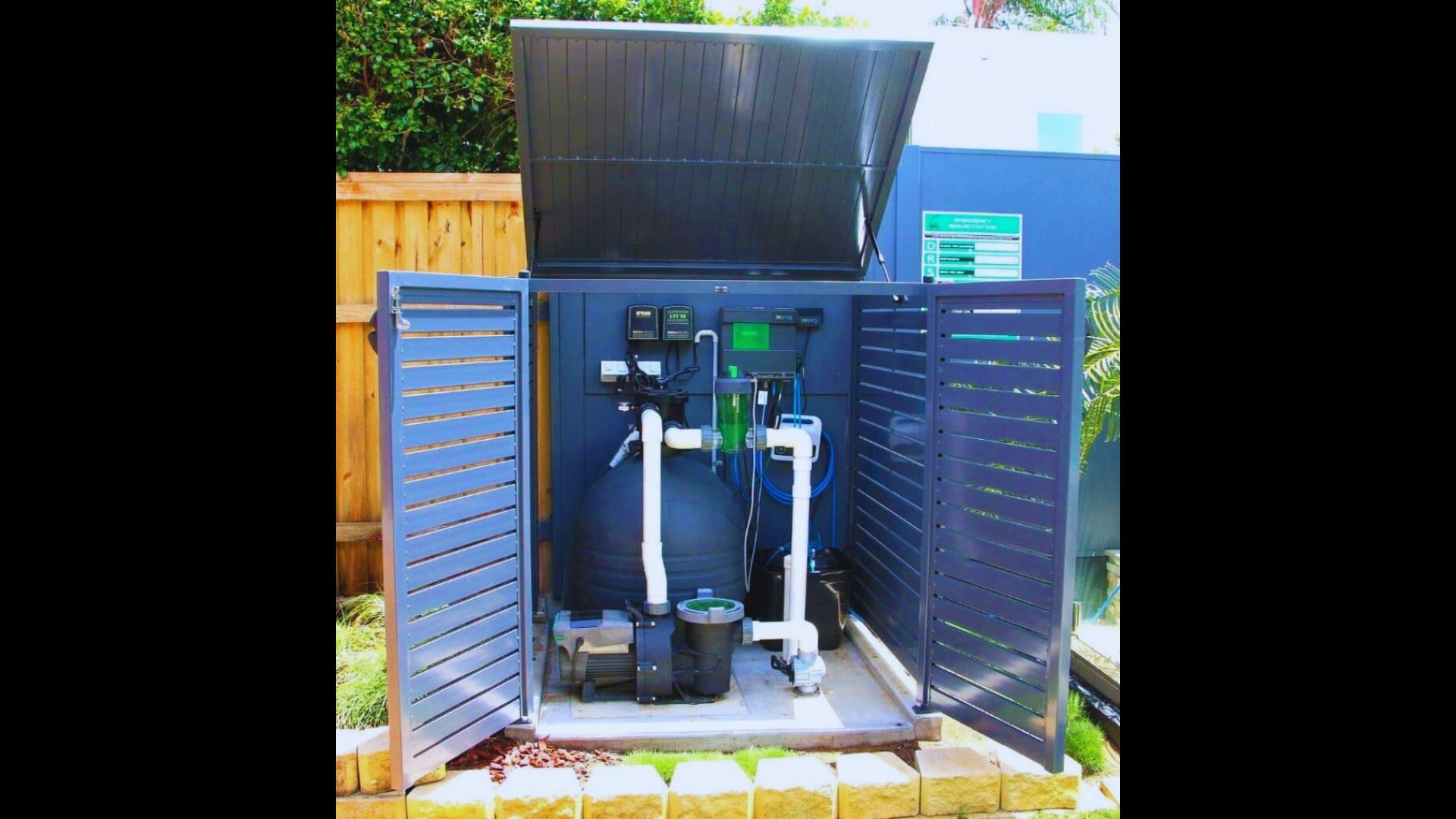
Composite panels resist rot, fading, and moisture damage better than untreated wood, making them a strong pick for equipment sheds that sit close to splash zones.
Maintenance stays low over the life of the structure.
11. Vinyl Pool Equipment Shed
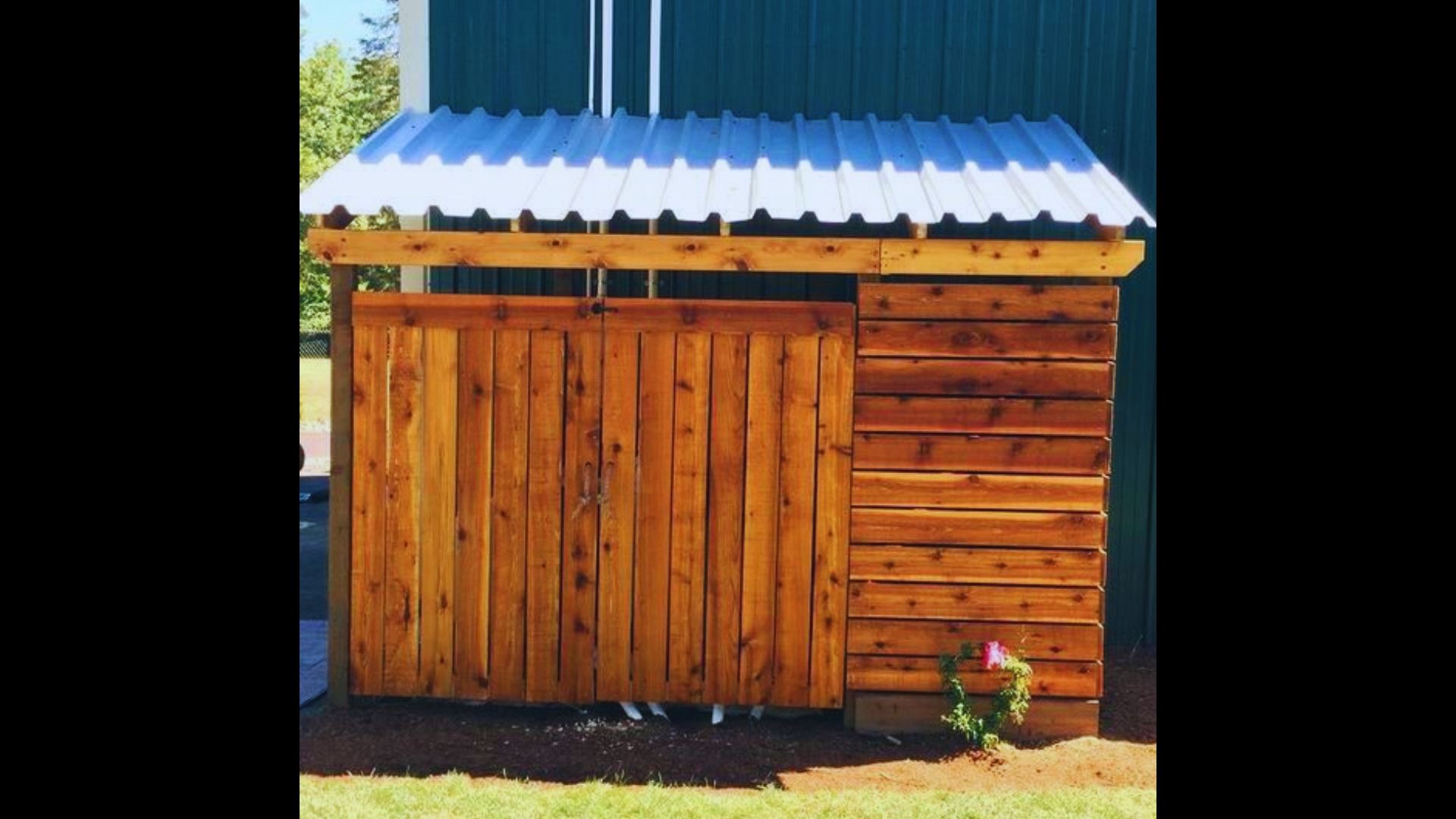
Vinyl sheds hold up well against humidity and chlorine exposure without warping or peeling.
This material works especially well in wetter climates or areas with heavy pool splash.
12. Metal Utility Shed
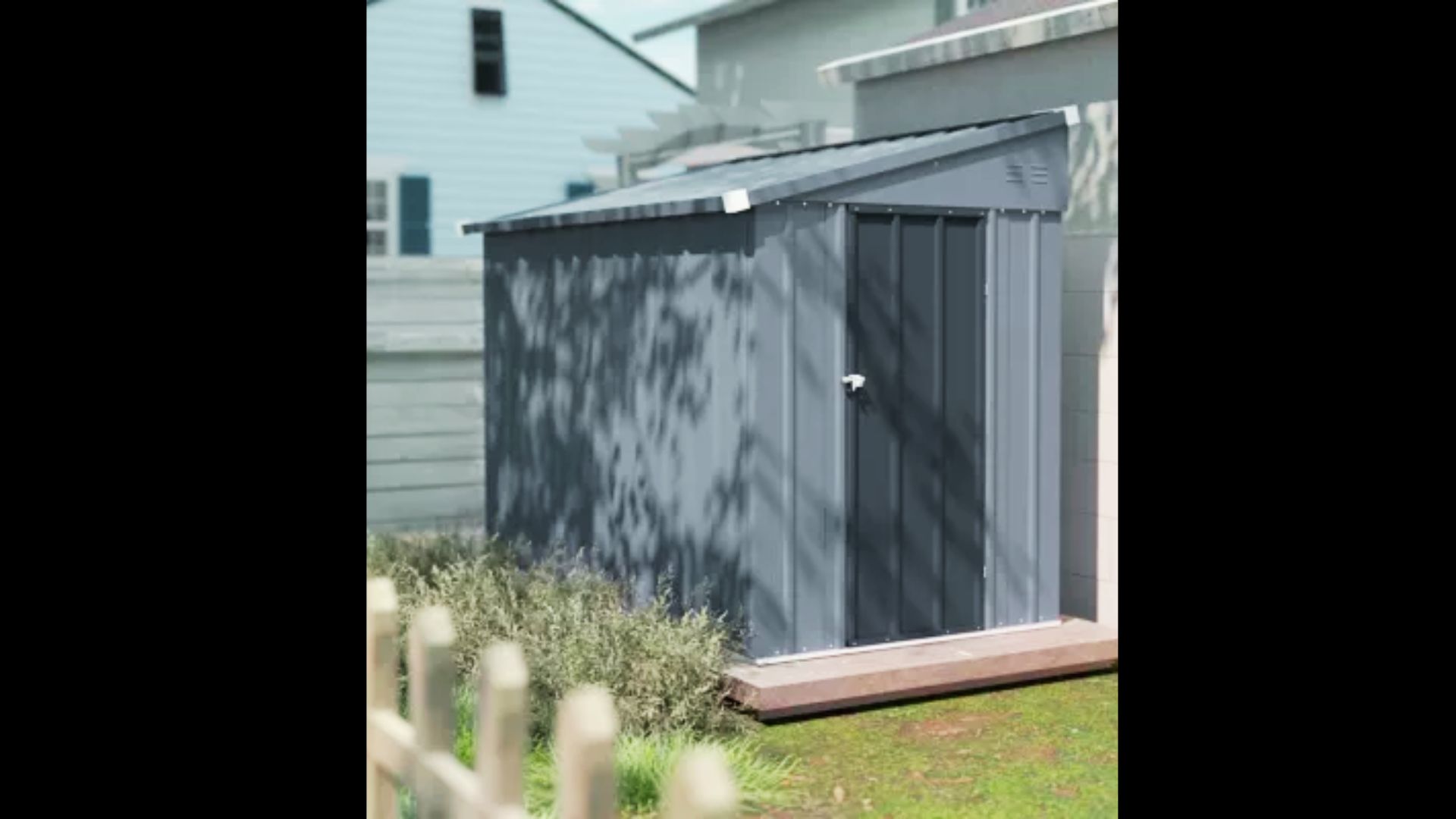
A simple metal shed offers strong protection and security at a lower cost than custom-built options.
Adding vents and a coat of paint that matches the yard helps it blend in better.
13. Farmhouse-Style Equipment Shed
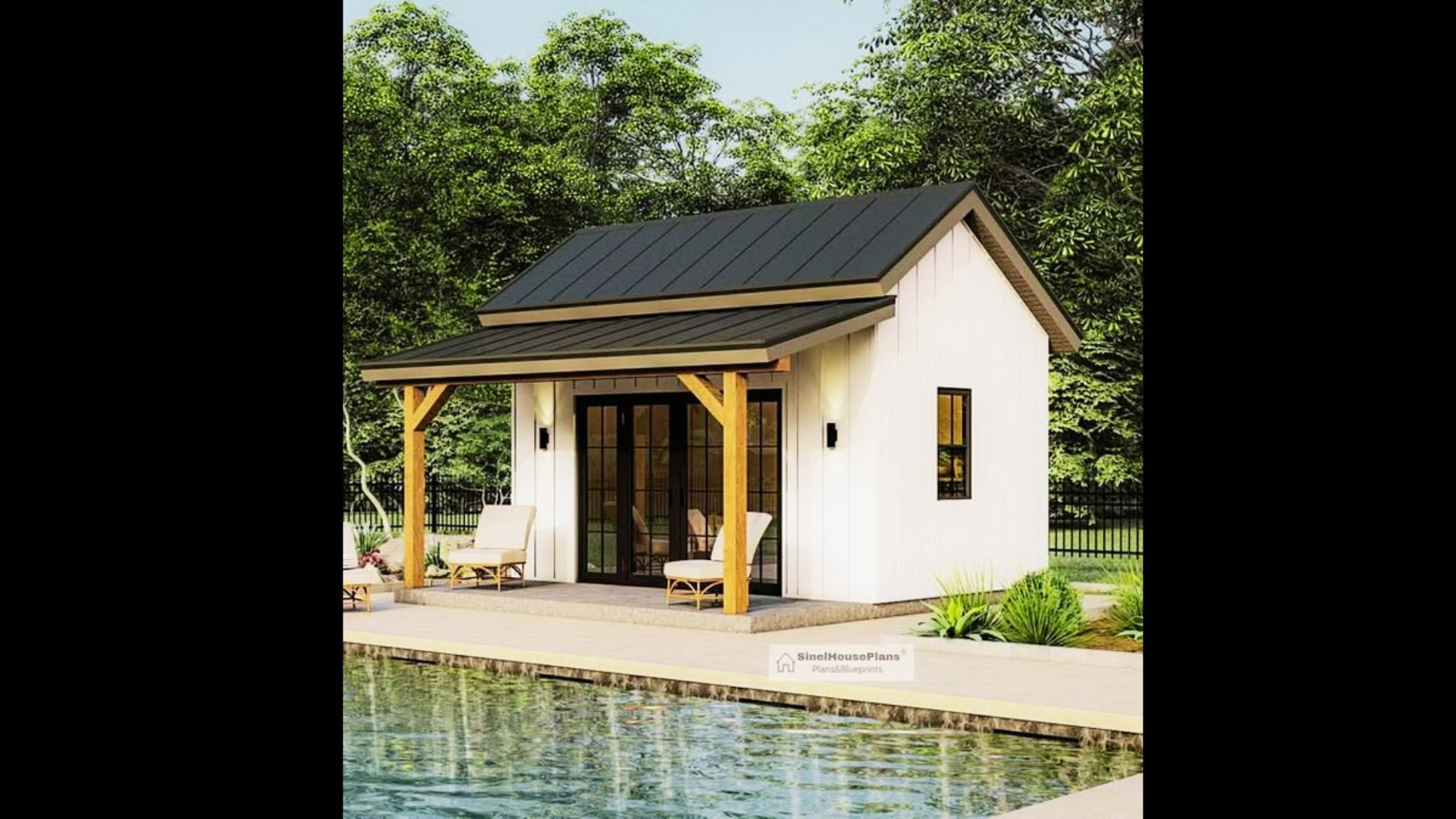
Board and batten siding, a simple pitched roof, and black hardware give this style a classic, cottage-adjacent look.
It pairs naturally with farmhouse-style homes and landscaping.
14. Coastal Pool Shed Design
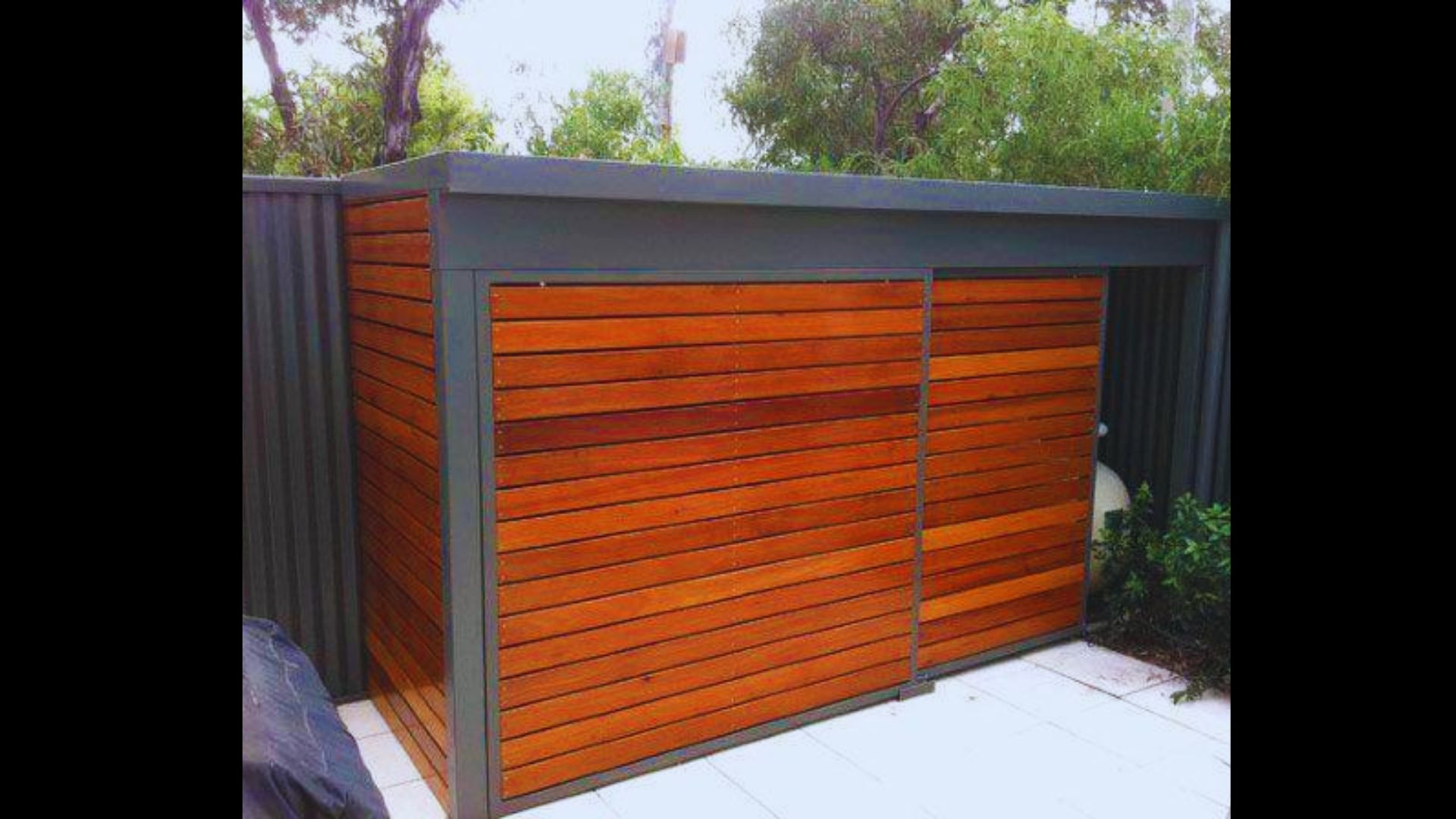
Light, weathered wood tones and white trim give this style a beach house feel, often paired with hurricane-resistant materials in coastal regions.
Salt air resistance matters most here.
15. Tropical Pool Equipment Enclosure
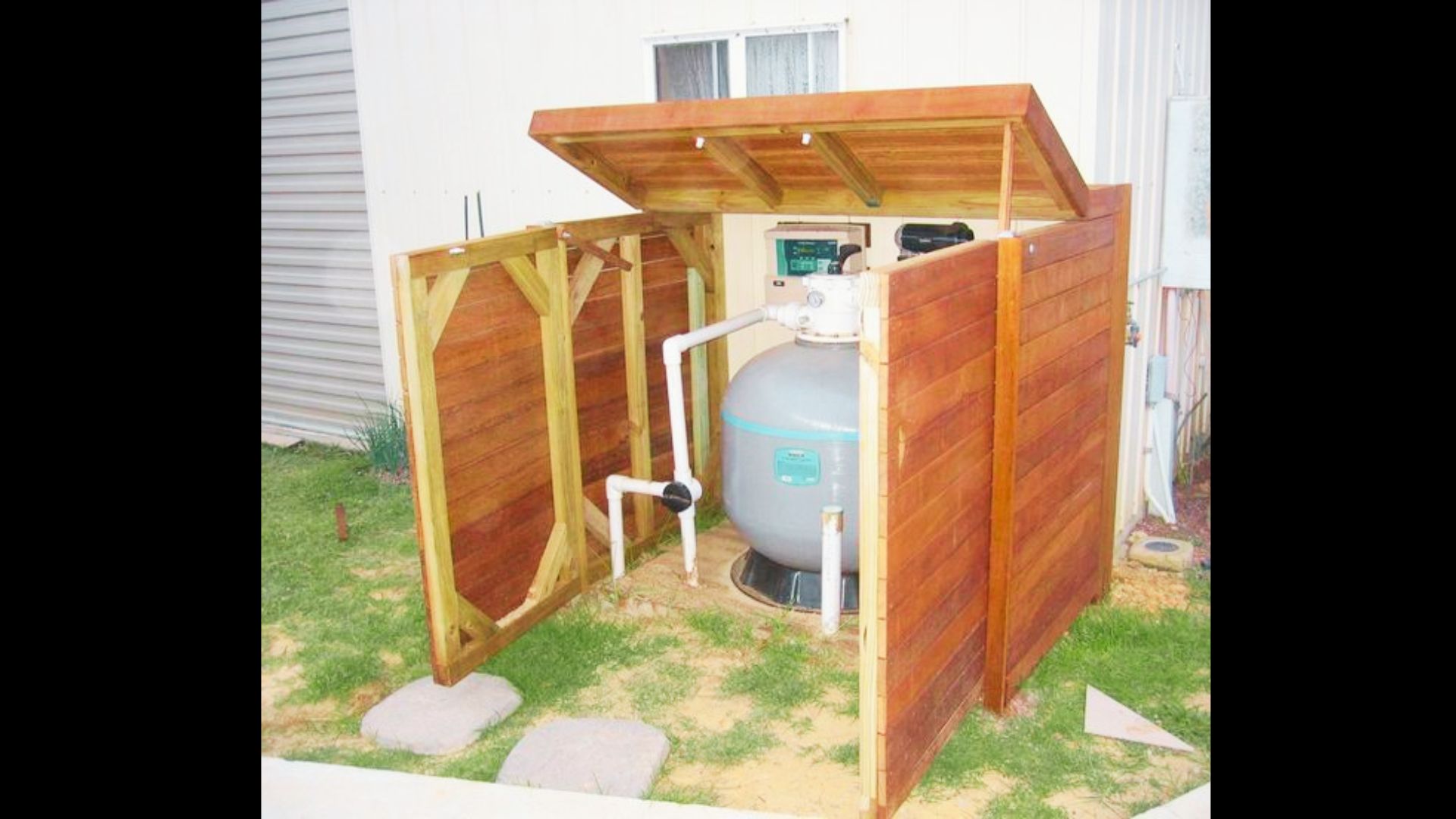
Bamboo panels, palm accents, or a thatched roof style bring a resort feel to equipment concealment.
This works well around lush, tropical landscaping and freeform pool shapes.
16. Stone and Timber Pool Shed
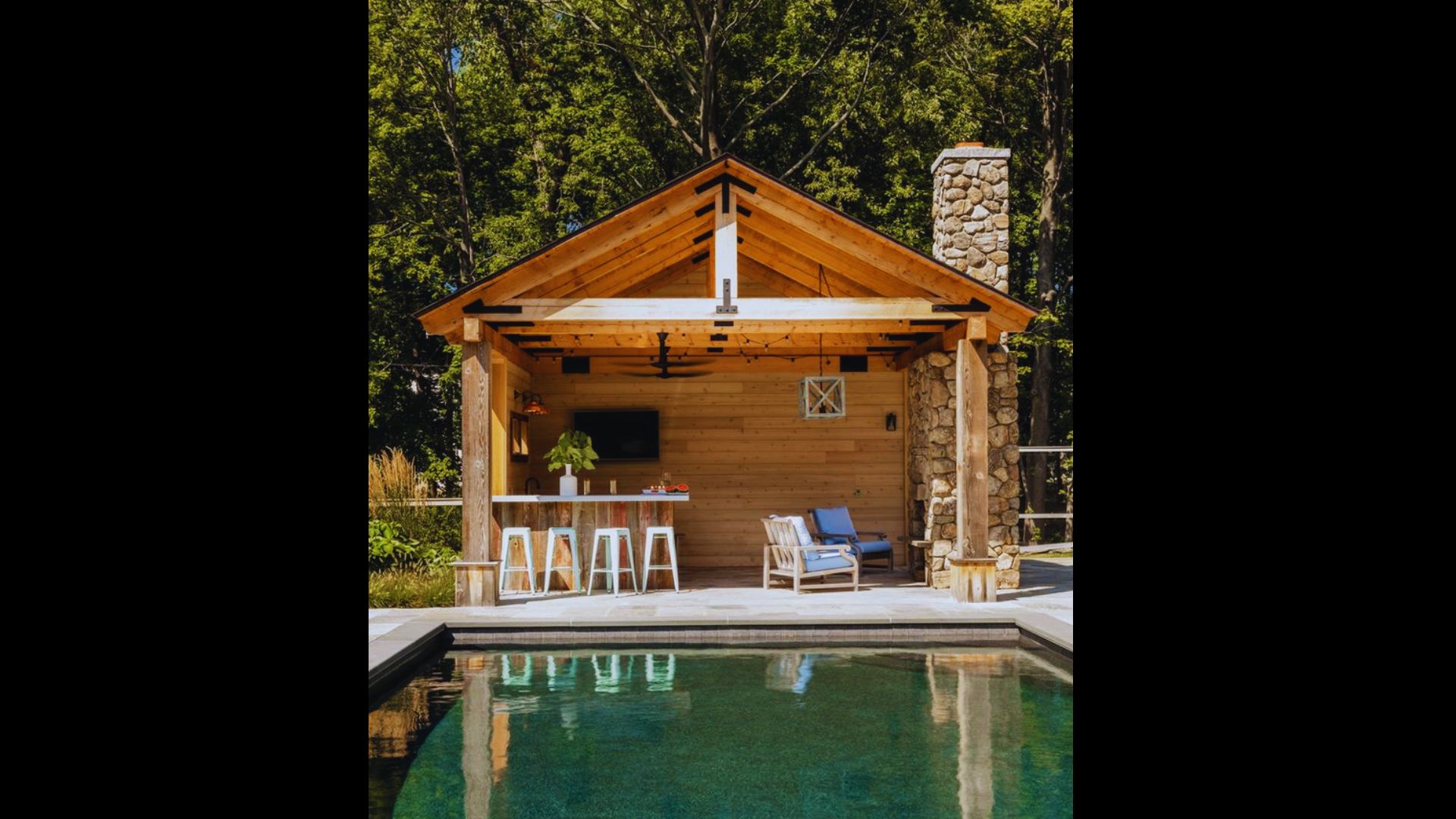
Combining stone accents with timber framing creates a sturdy, upscale look that suits larger properties.
This style often costs more but adds real visual weight to the backyard.
17. Black Modern Equipment Shed
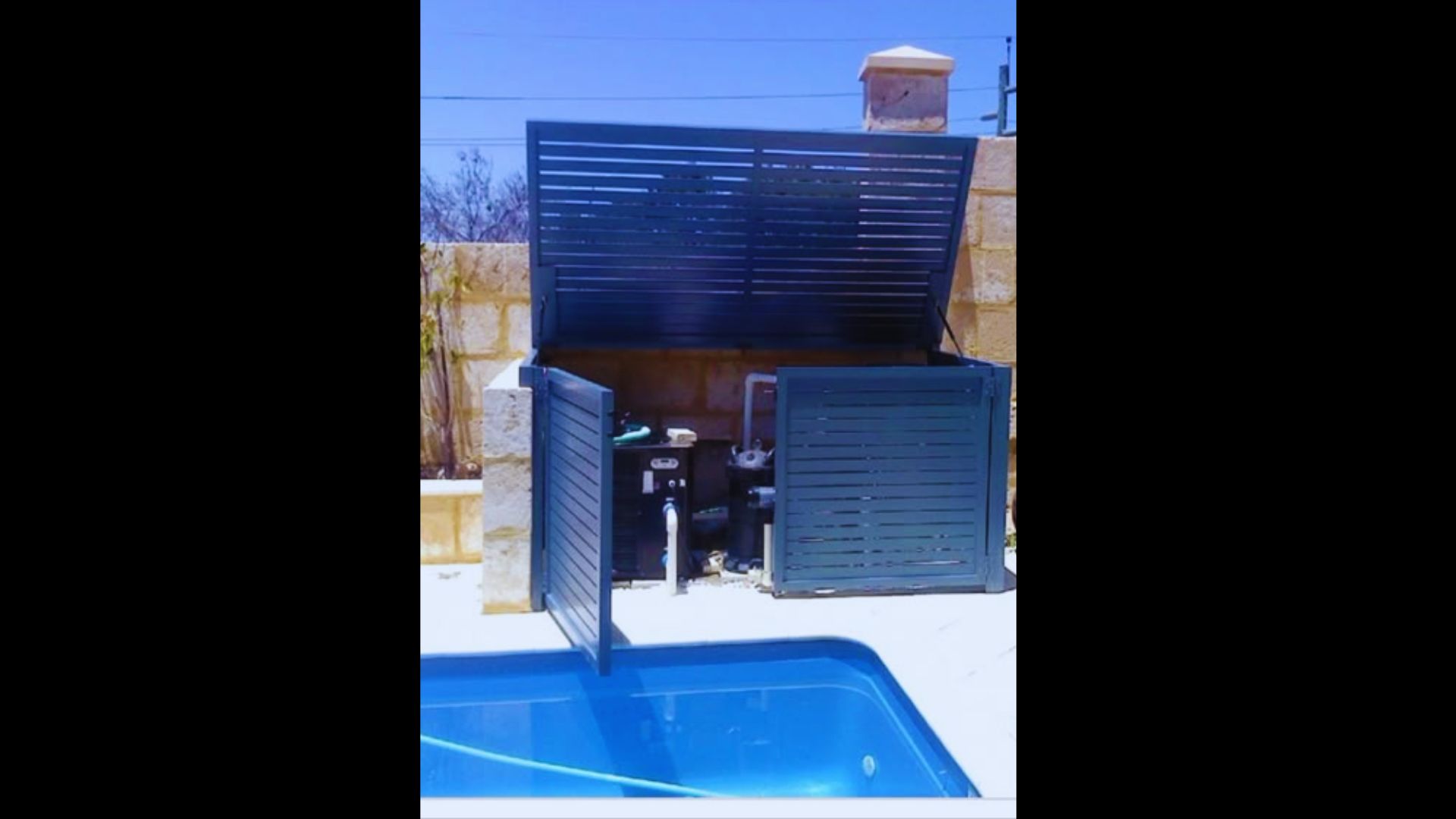
A matte black exterior gives this design a bold, contemporary edge that contrasts nicely against greenery or light-colored decking.
It's a strong choice for minimalist backyard designs.
18. White Cottage-Style Pool Shed
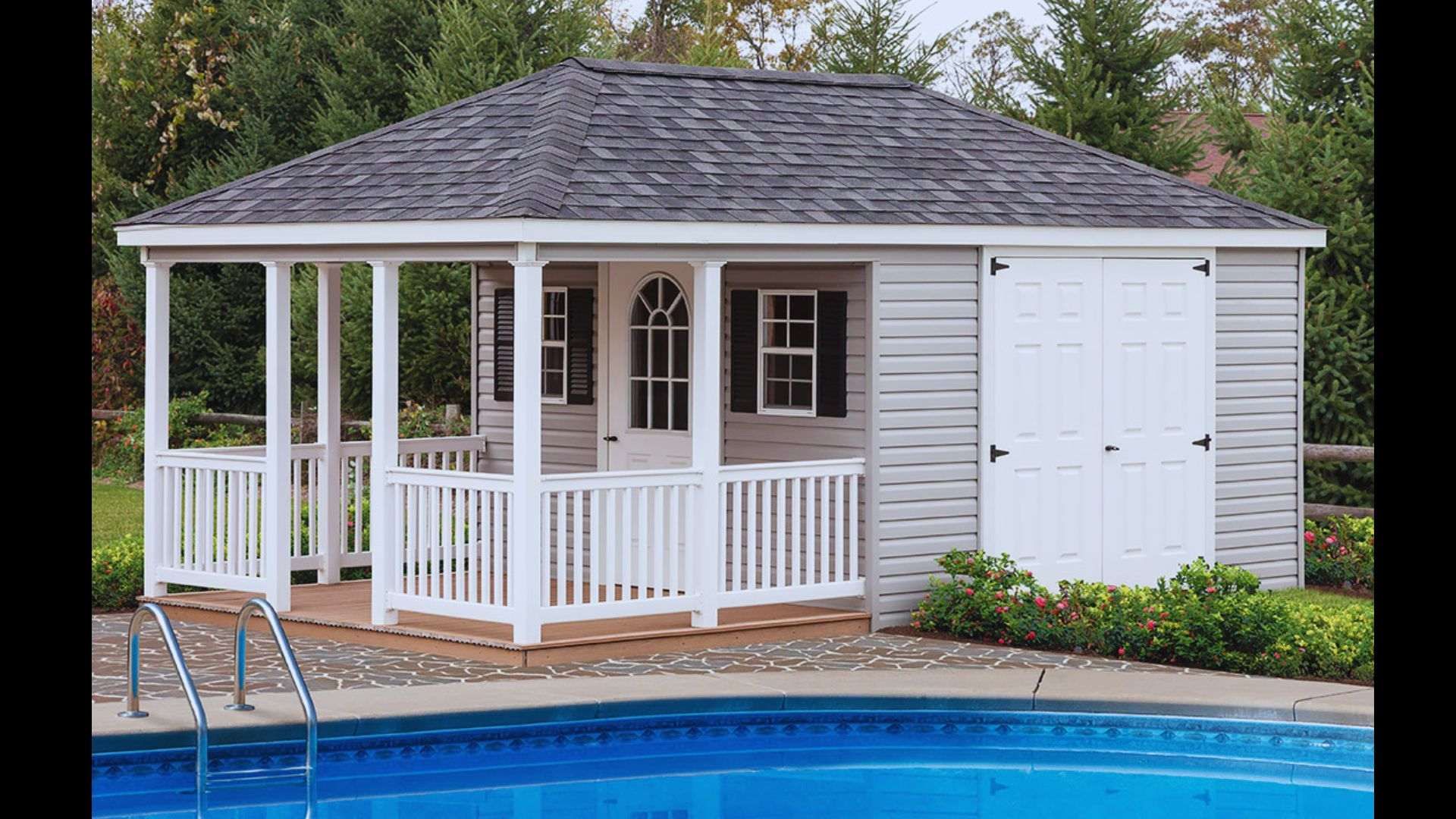
White siding with simple trim and a small peaked roof gives this option a soft, classic look.
It works especially well next to a white or light-colored pool house.
19. Garden Shed with Hidden Equipment
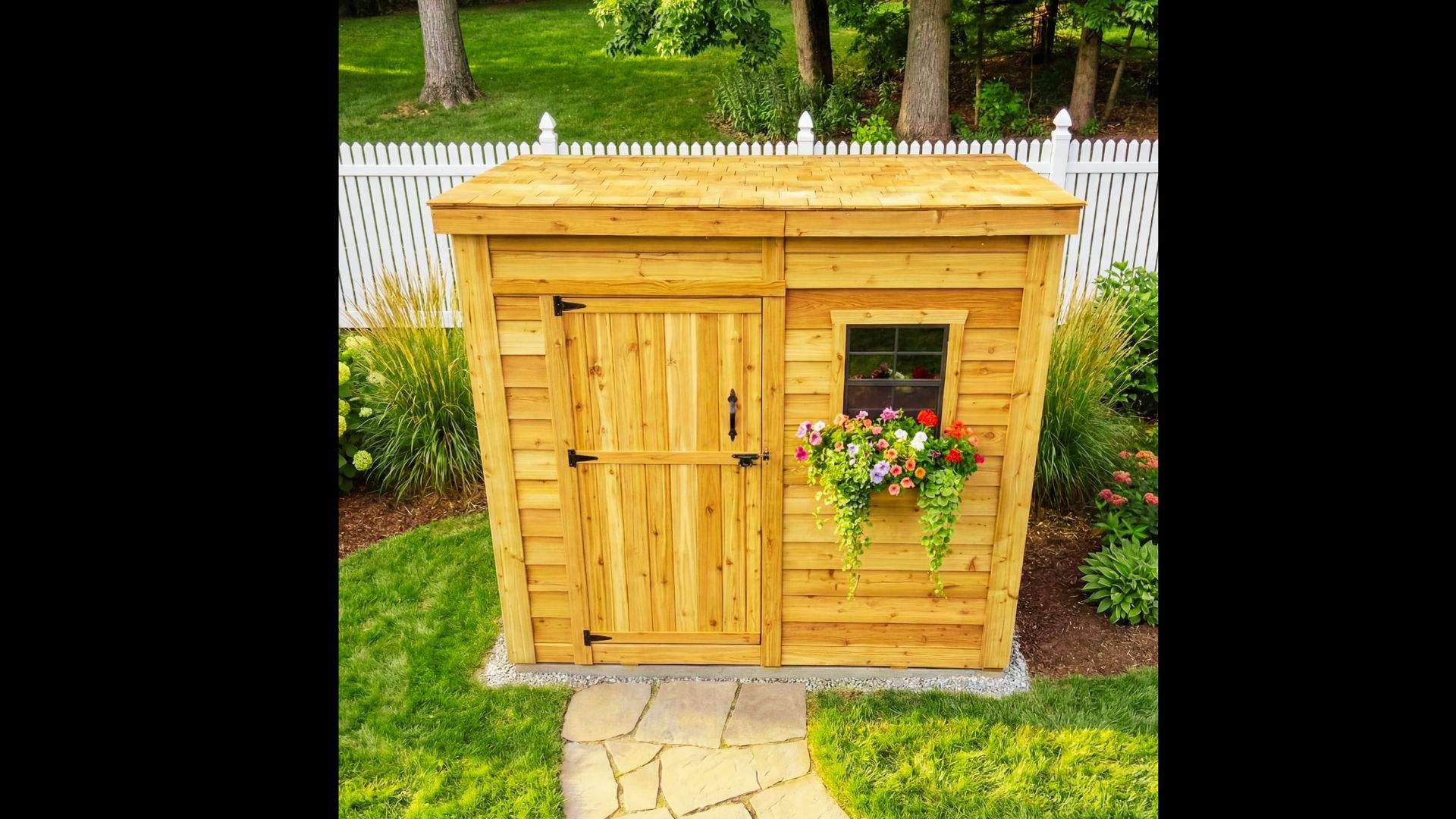
Equipment sits tucked inside a shed that doubles as garden tool storage, saving yard space by combining two functions in one structure.
Extra shelving keeps both uses organized.
20. Built-In Equipment Cabinet
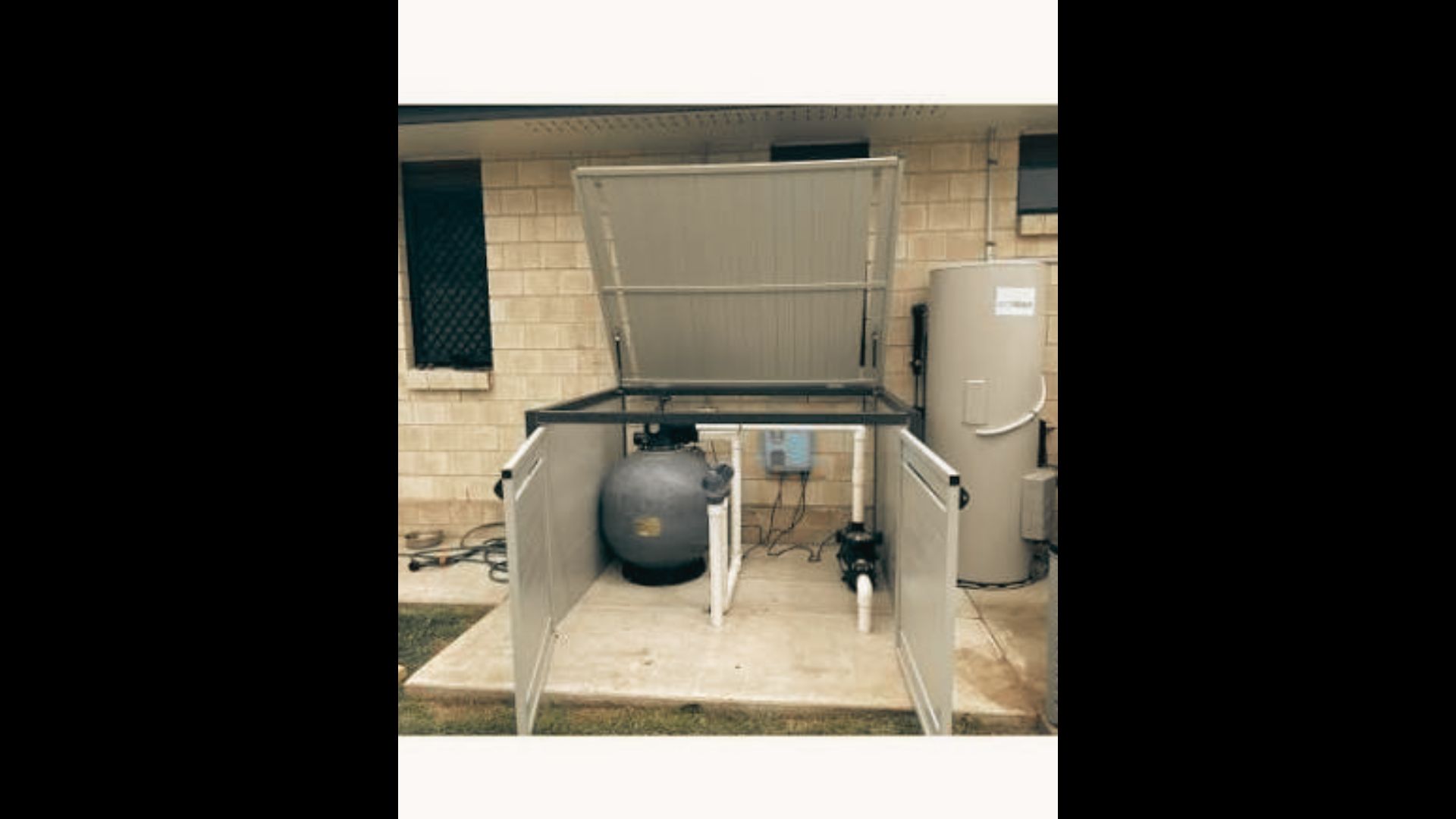
Rather than a standalone structure, equipment sits inside a cabinet built into an existing wall, deck, or pool house.
This works well for tighter yards without room for a separate shed.
21. Decorative Fence Panel Enclosure
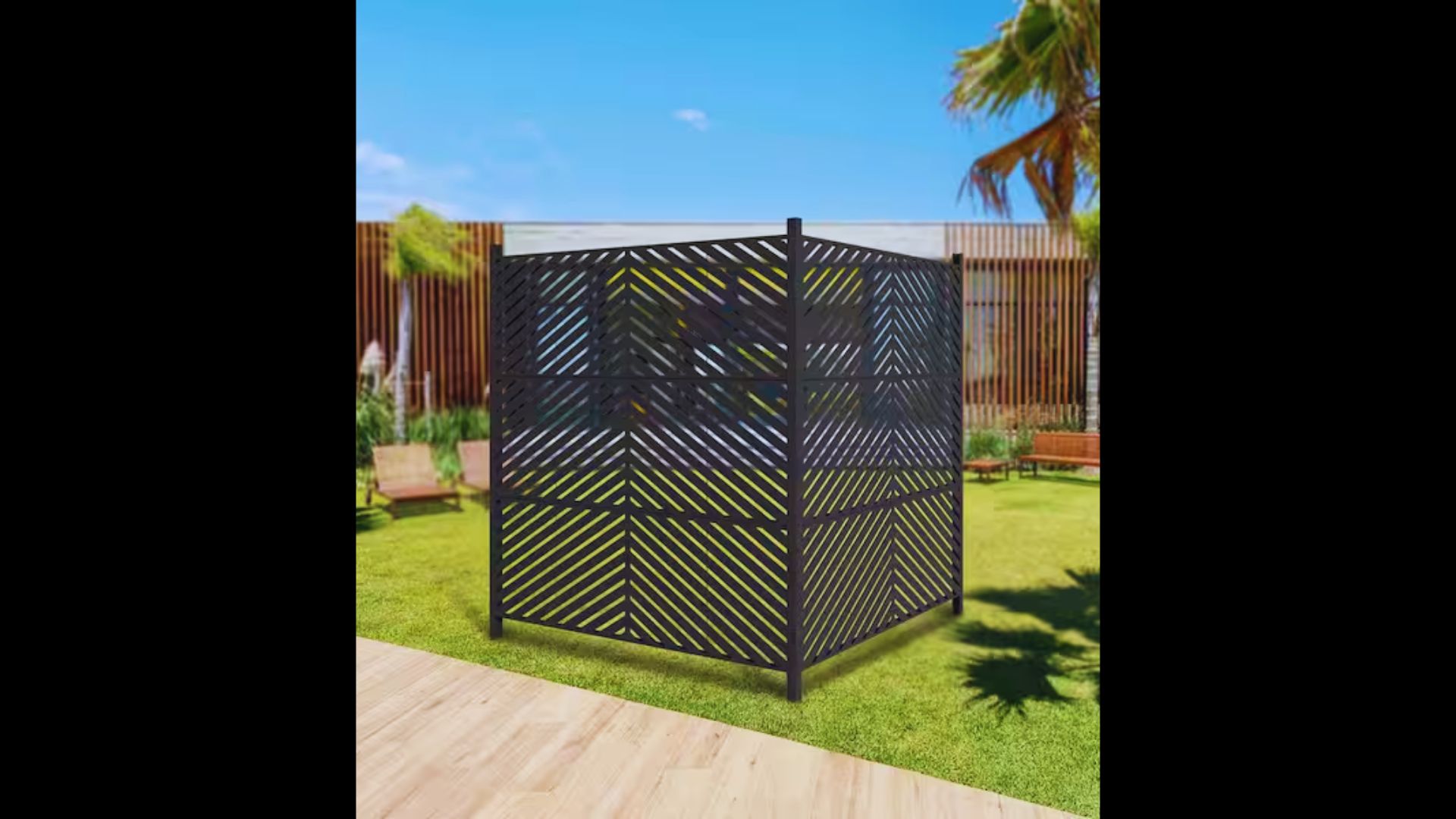
Matching fence panels create a simple enclosure that blends directly into an existing yard fence line, and this guide on how to build a garden fence shows how to put the panels up.
This option keeps costs low while still fully hiding equipment from view.
22. Equipment Shed with Double Doors
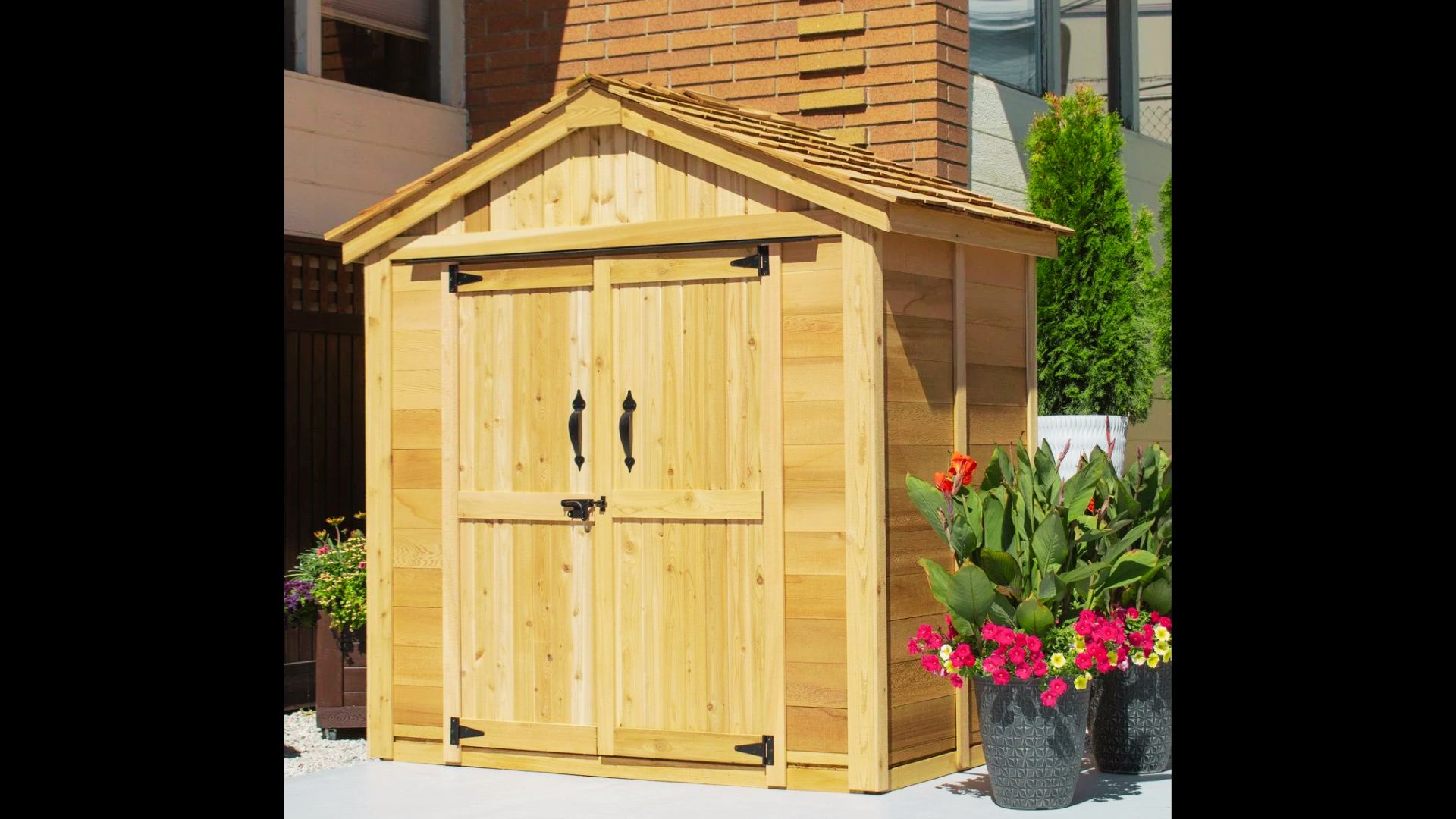
Wide double doors make it easy to access larger equipment setups, like multiple filters or a pool heater, without squeezing through a single narrow opening.
Adding a smaller secondary service door alongside them makes quick, everyday access even easier.
23. Lean-To Pool Equipment Shed
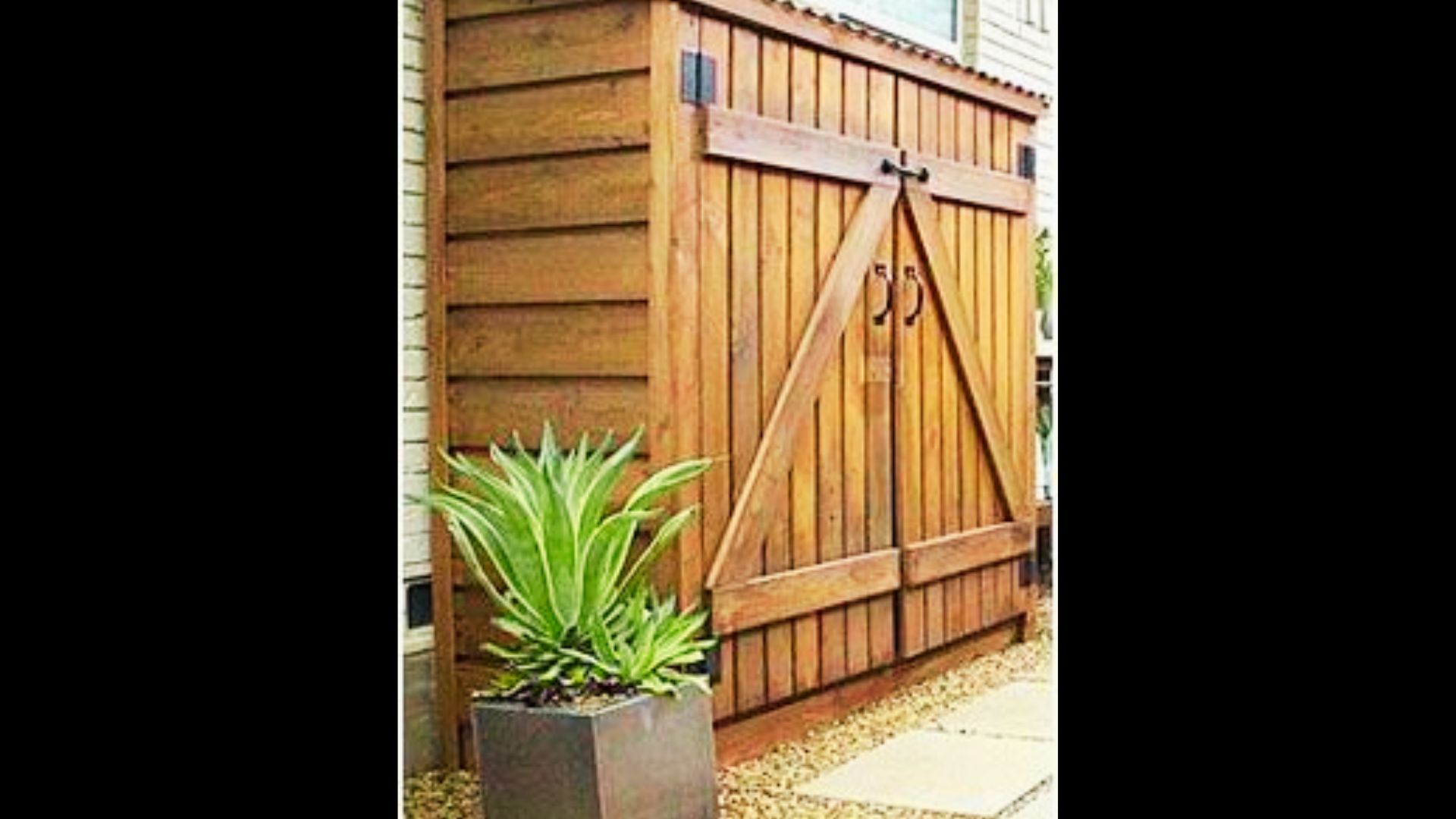
Built against an existing wall or fence, a lean-to design saves on materials and construction time since one side is already supported.
It's a practical, budget-conscious option for smaller equipment setups.
24. Raised Equipment Shed
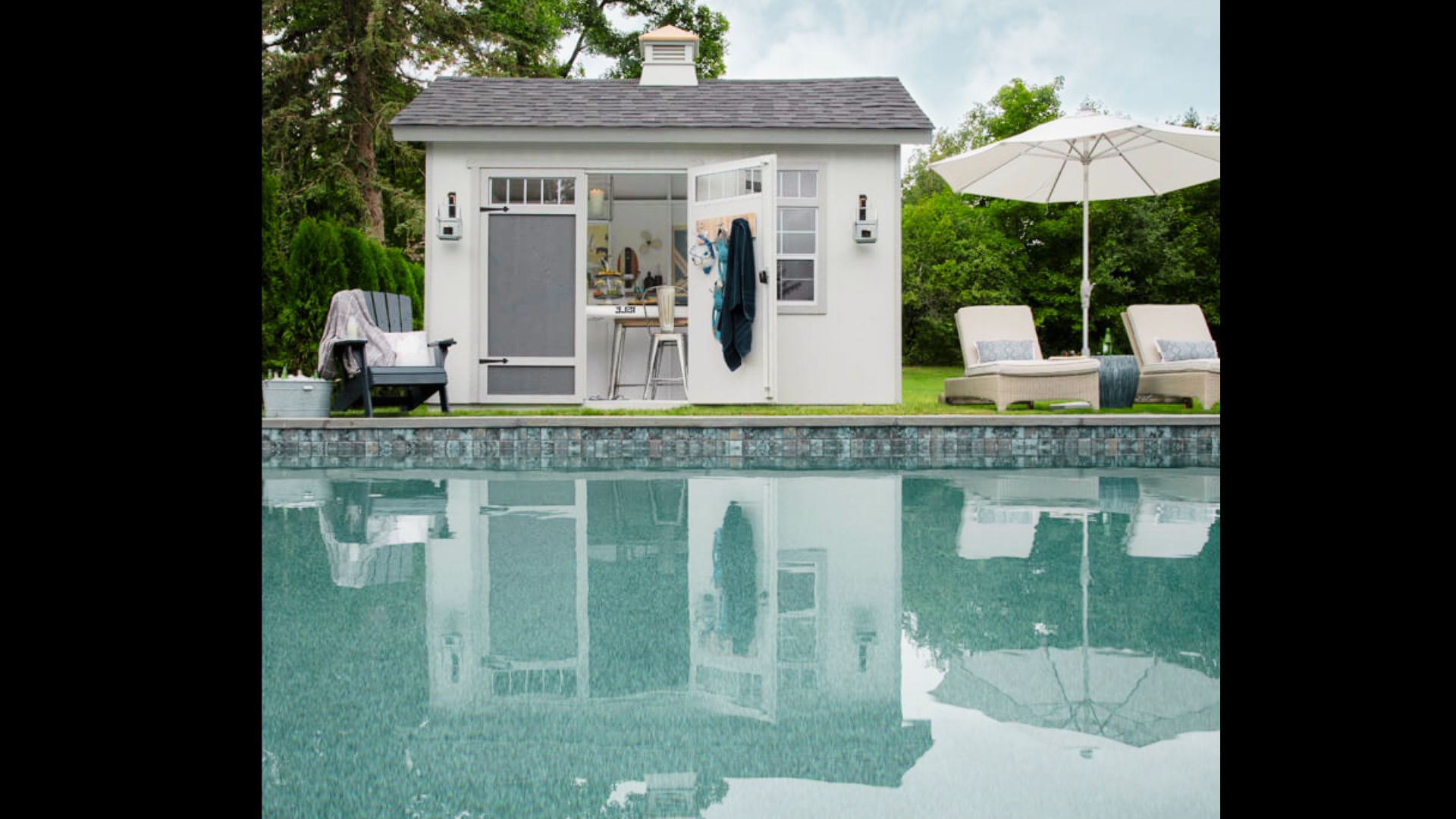
Elevating the shed slightly off the ground helps with drainage and airflow underneath, especially useful in yards prone to standing water.
This also helps protect equipment from flooding during heavy rain.
25. Pool Shed with Outdoor Storage
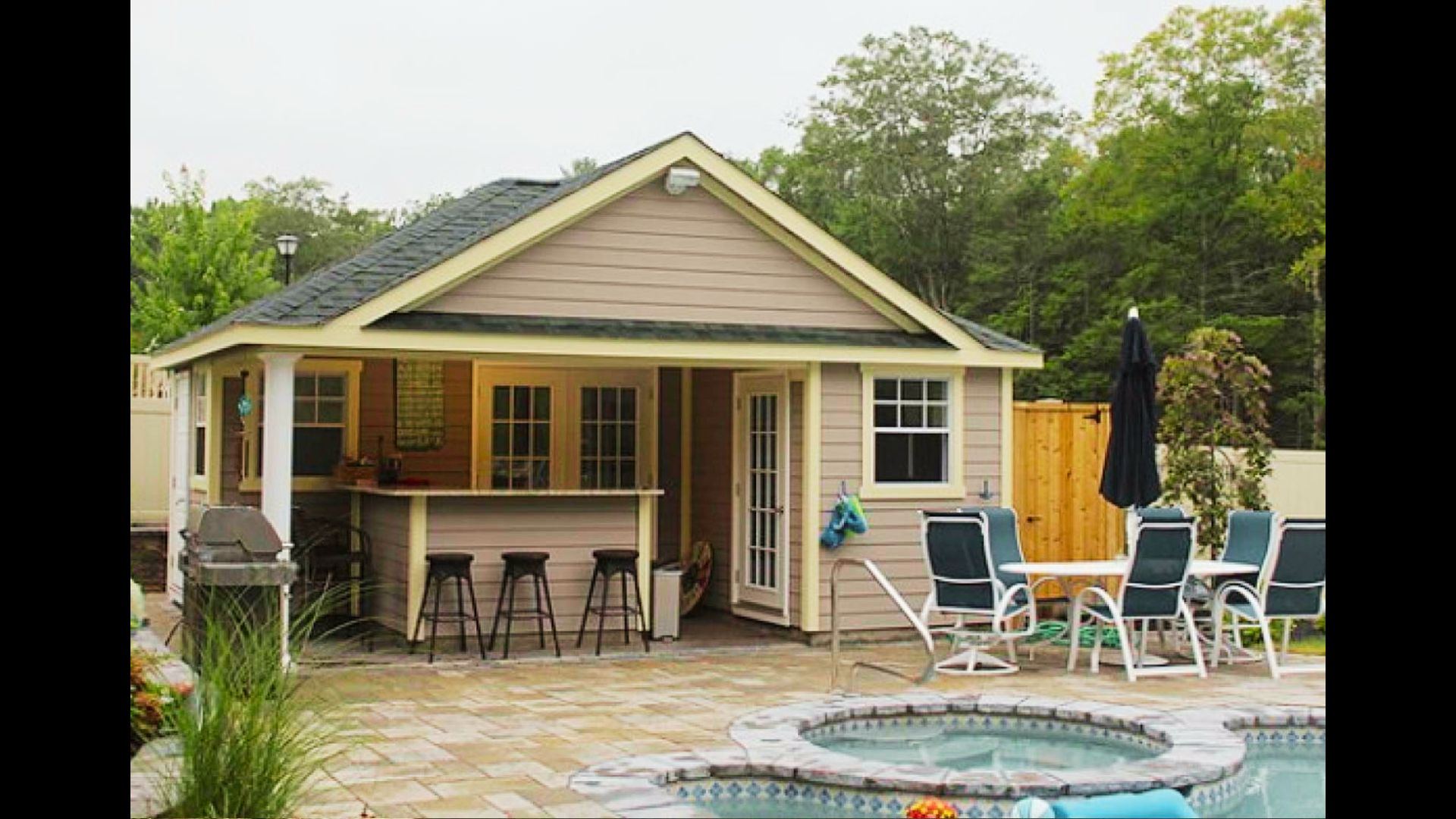
Extra space inside the shed holds pool toys, cleaning tools, and chemicals alongside the main equipment, keeping everything pool-related in one place.
Some homeowners go further and add a small bar area with seating, turning the shed into an entertaining space as much as a storage one.
26. Equipment Shed with Shelving
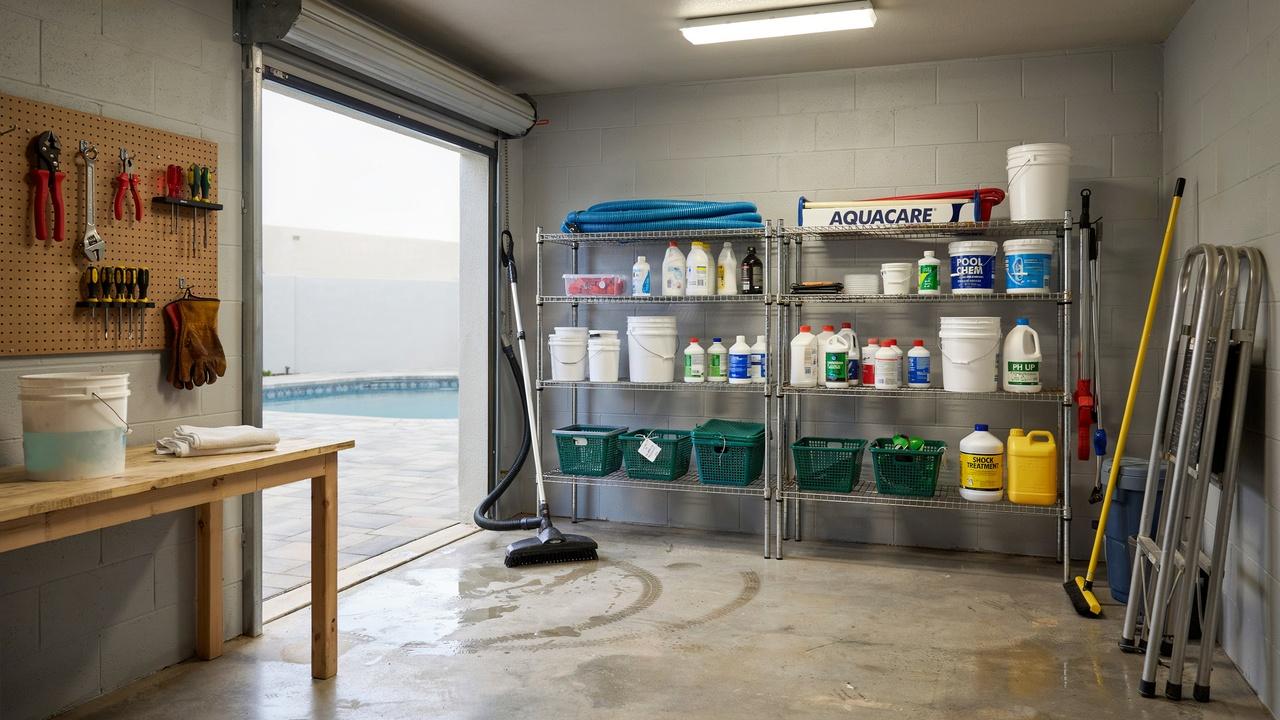
Built-in shelving keeps filters, chemicals, and small tools organized and off the ground.
This makes maintenance faster since everything has a designated spot.
27. Minimalist Backyard Equipment Shed
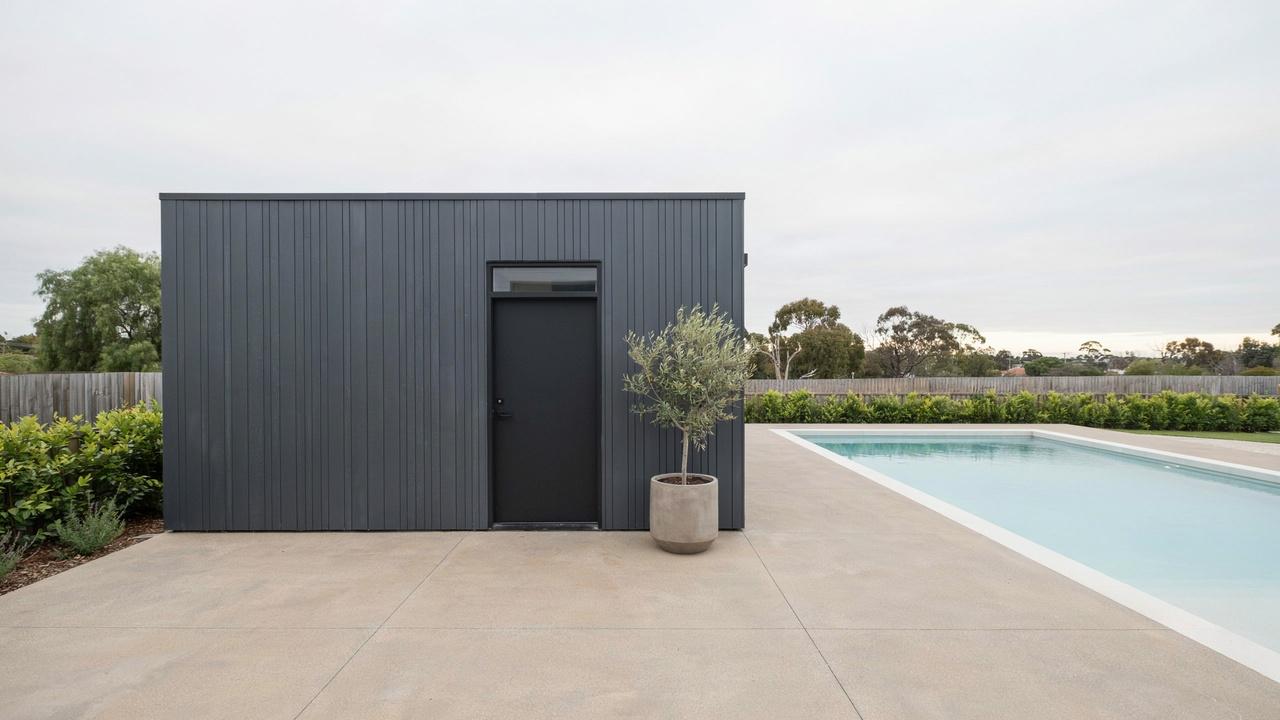
Clean lines, a single door, and no extra ornamentation keep this option simple and functional.
It suits yards where the shed should stay in the background rather than draw attention.
28. Bamboo Privacy Equipment Screen
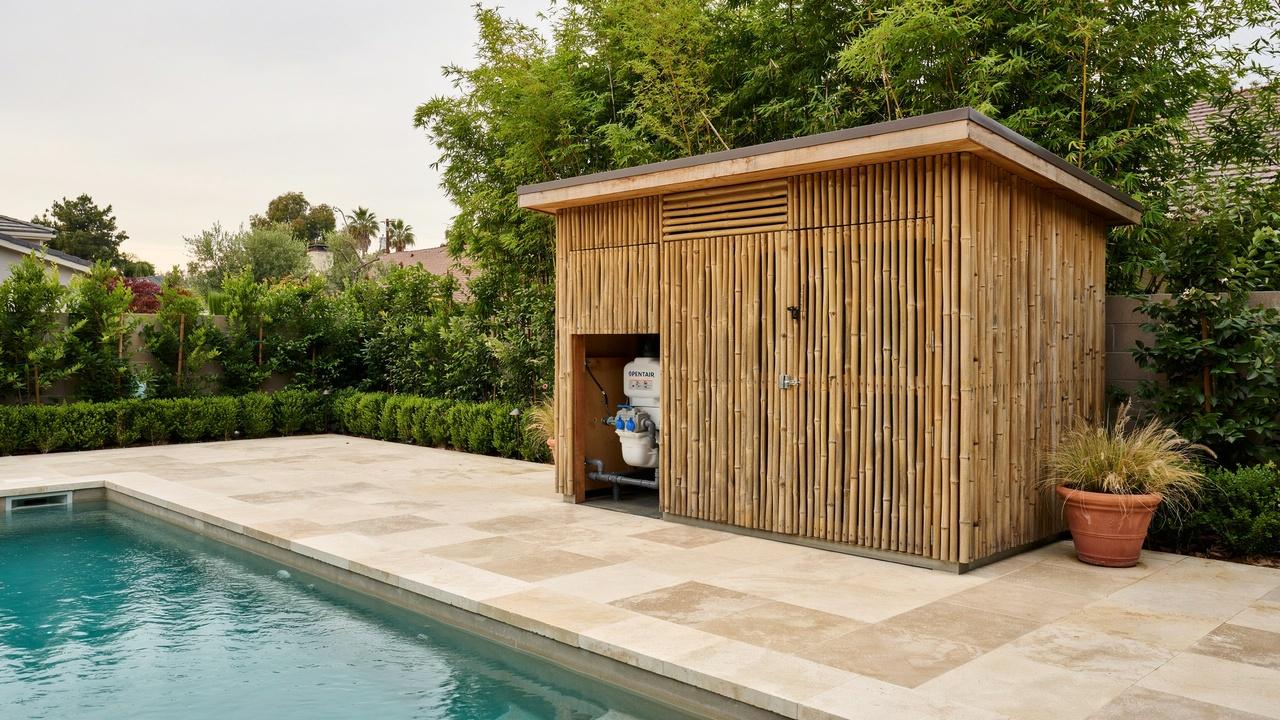
A freestanding bamboo screen hides equipment without a full enclosure, offering a natural, low-cost option. This works best in warmer climates where bamboo holds up well outdoors.
29. Custom Pool Pump Shed
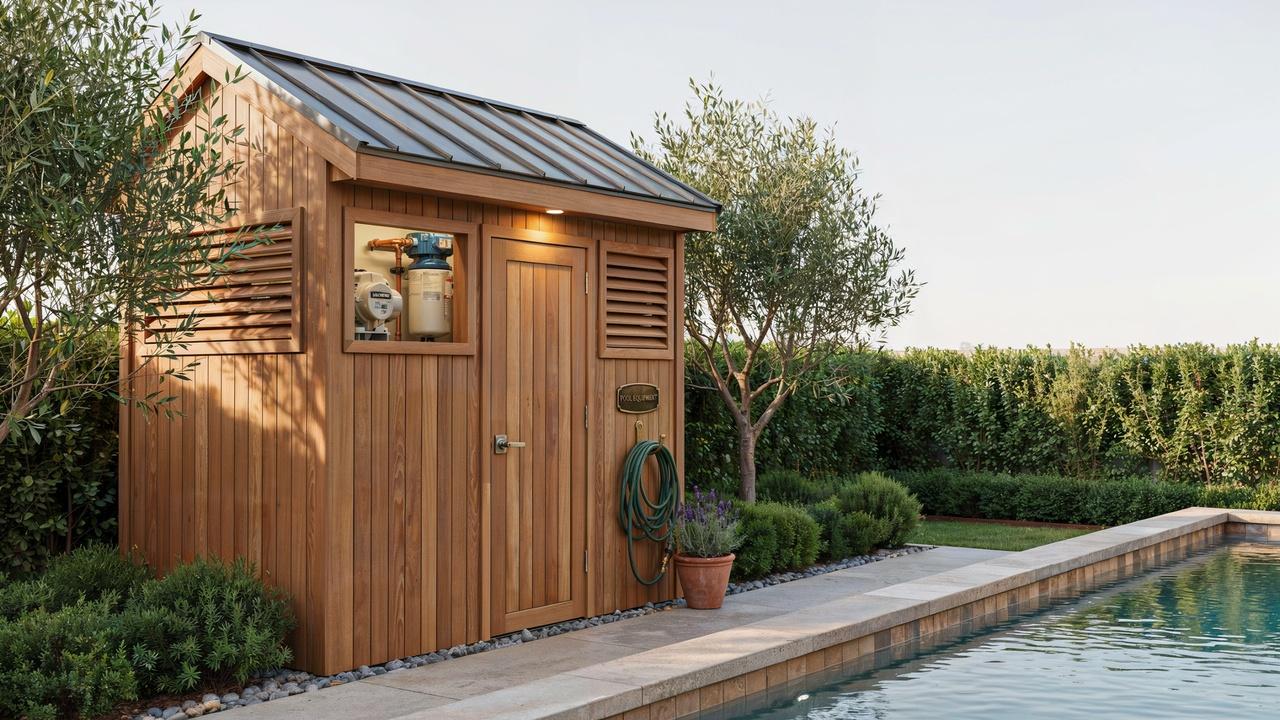
Built specifically around pump dimensions and clearance requirements.
This option avoids wasted space while still fully hiding equipment. It's ideal for smaller pools with more compact equipment needs.
30. Pool Filter Storage House
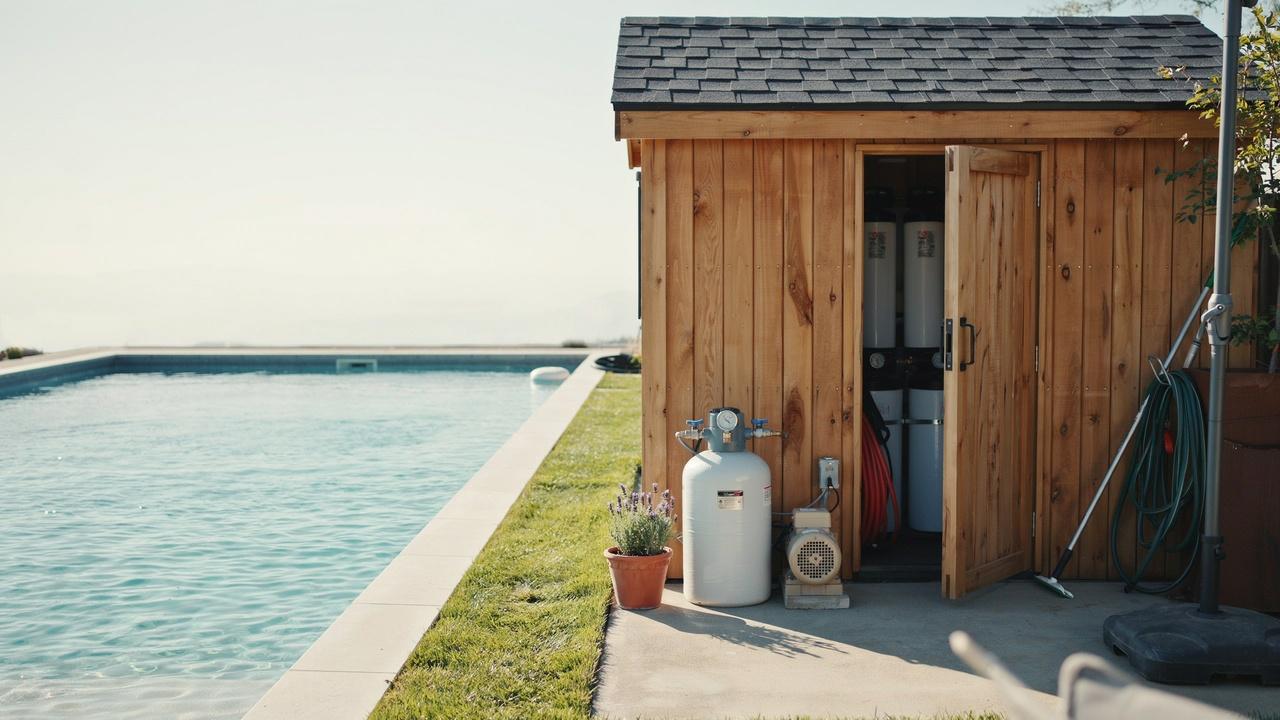
Dedicated specifically to housing the filter system, this smaller structure separates filtration equipment from pumps or heaters for easier individual access.
This works well when different equipment pieces need different maintenance schedules.
31. Equipment Shed with Green Roof
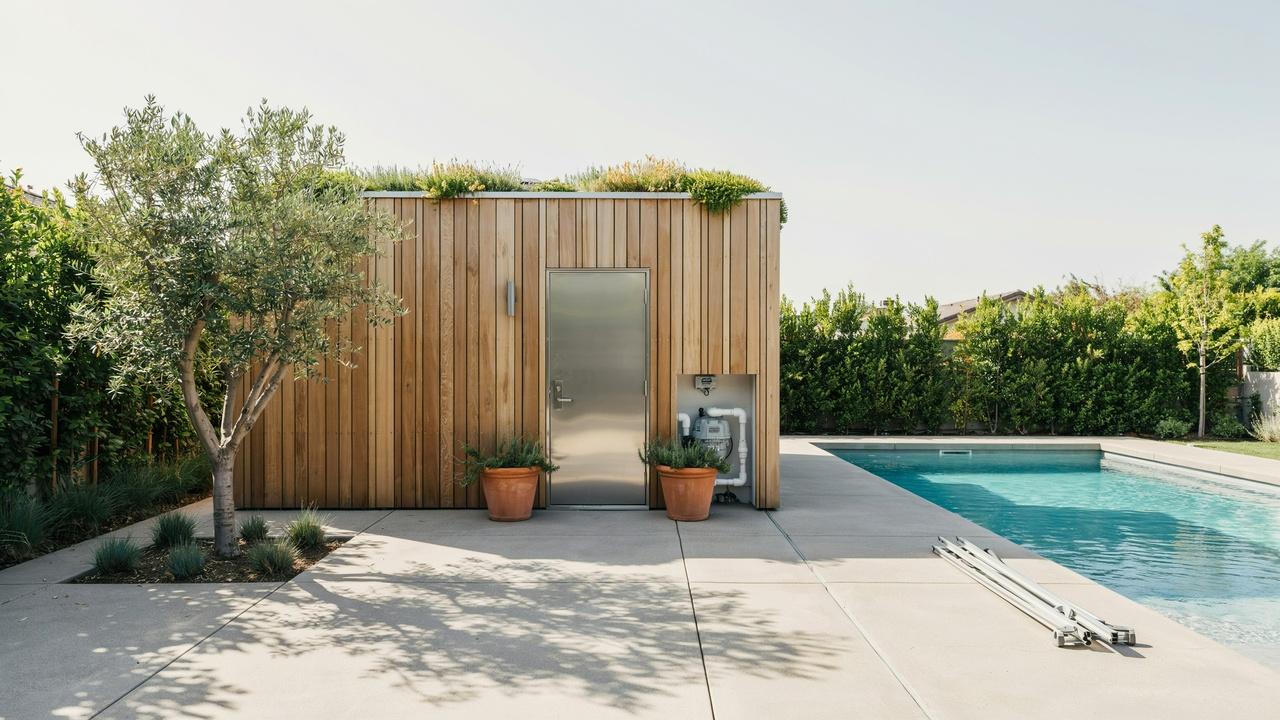
A living roof covered in low-maintenance plants helps the shed blend into garden landscaping while adding a bit of insulation.
This option requires more upkeep than a standard roof but adds real visual interest.
32. Pool Equipment Shed with Planter Boxes
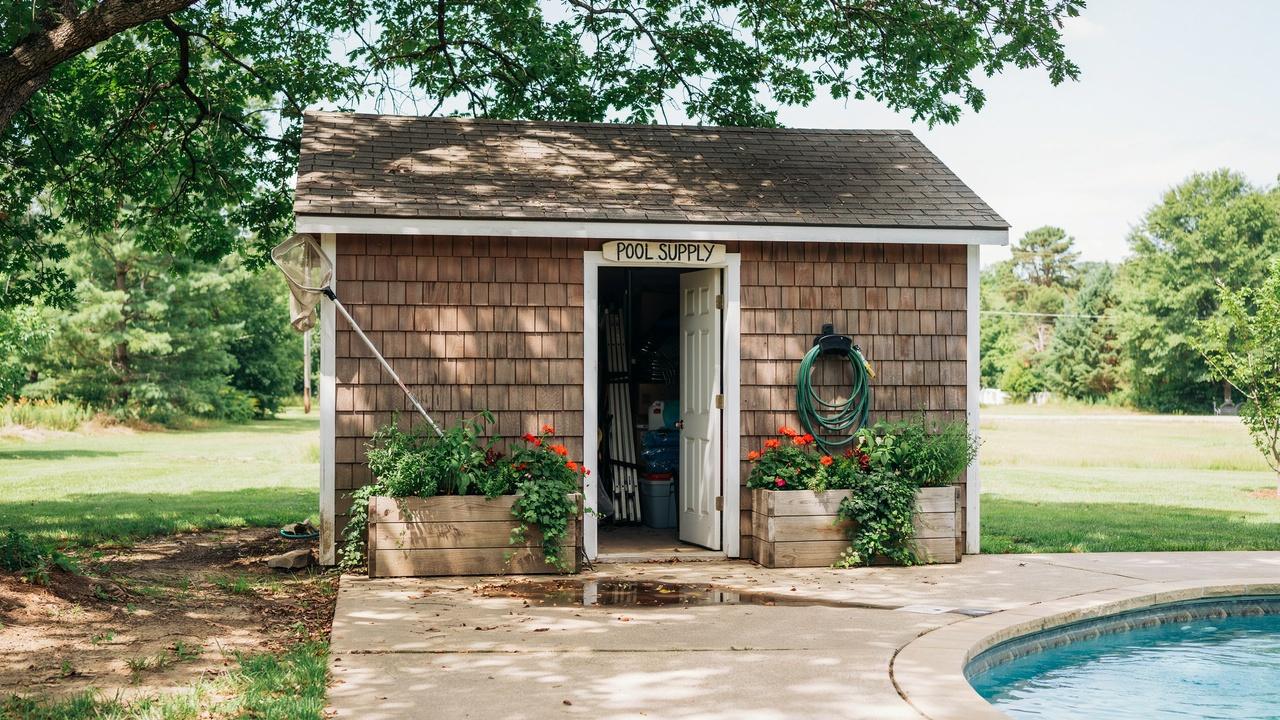
Attached planter boxes along the shed's sides soften its look with greenery or flowers, helping it feel like part of the landscaping rather than a utility structure.
This is a simple upgrade for an otherwise plain shed.
33. Matching Shed and Pool House Design
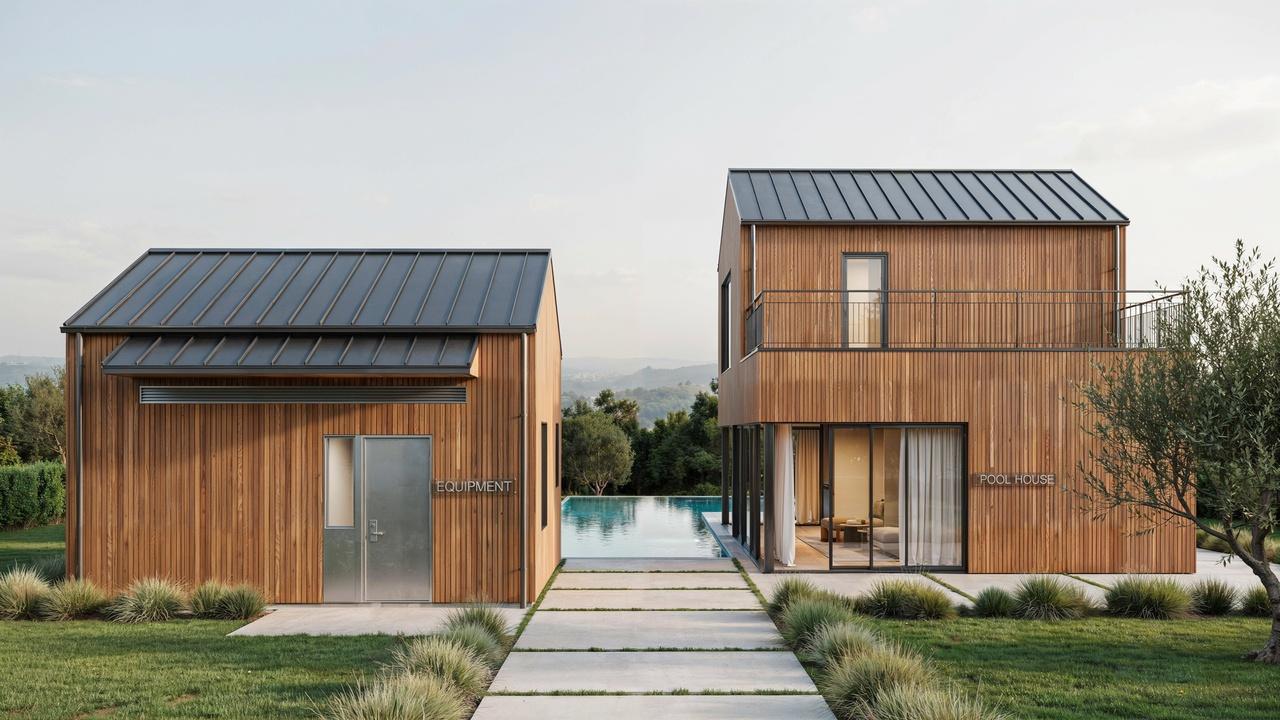
Designing the equipment shed to match the materials, color, and roofline of an existing pool house, or a custom-built shed finished to match your home's exterior, creates a cohesive, intentional look across the whole backyard.
This works especially well on properties where visual consistency matters.
Features That Improve a Pool Equipment Shed
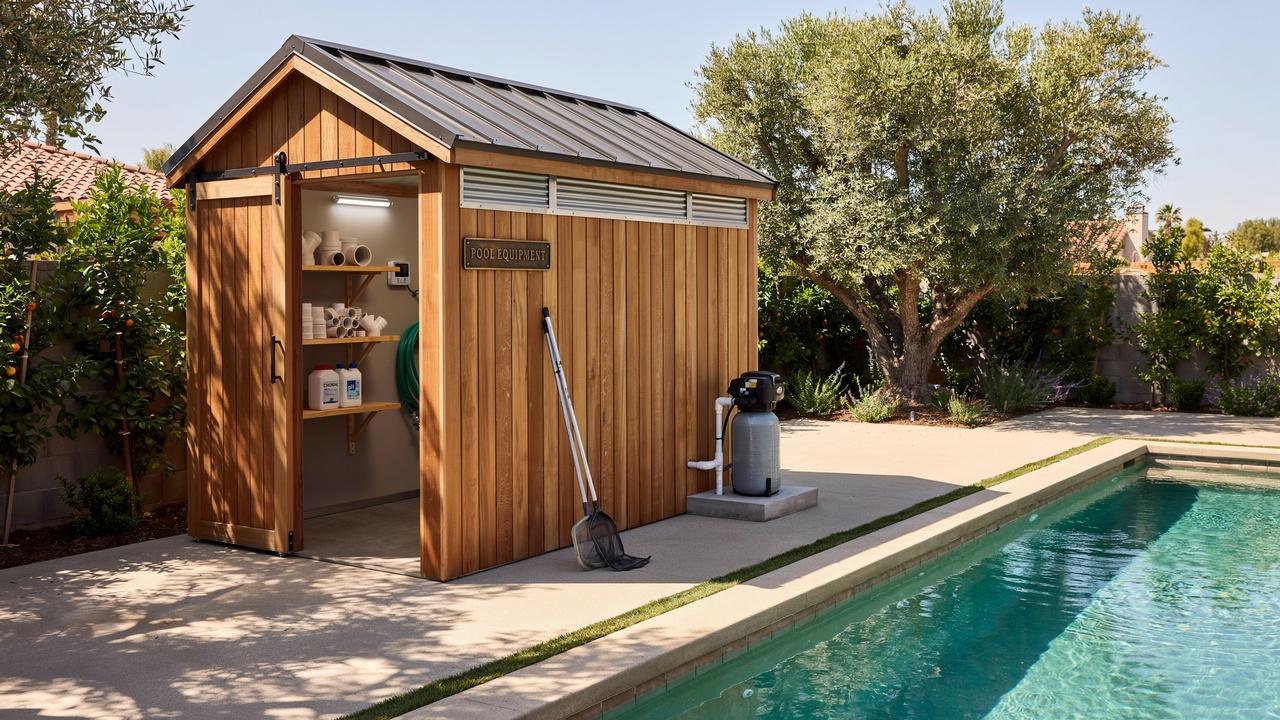
Beyond the overall design, a few functional features make a real difference in how well a pool equipment shed performs over time, and small details like a gable window for natural light can make routine maintenance more pleasant too.
Ventilation panels Louvers, vented panels, or a small roof cupola keep air moving around equipment that generates heat, which helps prevent overheating and extends equipment lifespan.
Lockable doors A simple lock keeps curious kids, pets, and pool chemicals secure, which matters most for households with young children near the pool area.
Removable access panels Panels that come off easily make routine maintenance faster, since technicians or homeowners don't need to fully open the shed just to check a filter or valve. A small ramp at the entrance also helps if you ever need to move heavier equipment in or out.
Sound-reducing design Insulated walls or sound-dampening panels can cut down on pump noise, which matters if the equipment sits close to a patio, deck, or bedroom window.
Built-in storage shelves Shelving keeps chemicals, tools, and spare parts organized and off the ground, making the space more functional beyond just hiding equipment.
Best Materials for Pool Equipment Sheds
Material choice affects how well a pool equipment shed handles moisture, pool chemicals, and everyday outdoor conditions.
Cedar naturally resists rot and insects, making it a reliable option for humid pool areas, although it benefits from occasional sealing to maintain its durability.
Composite materials resist moisture, fading, and warping with very little maintenance, making them a durable long-term choice despite the higher initial cost.
Vinyl performs well in humid and chemical-prone environments because it resists rot, peeling, and moisture absorption.
Metal sheds provide strong durability and security at a lower cost, though they may require additional ventilation or insulation to help manage heat around pool equipment.
Conclusion
With this many pool equipment shed ideas to pick from, the goal is finding one that hides your equipment without making maintenance harder.
A basic privacy screen might solve the problem for a small backyard, while a full pool house with a dedicated equipment room makes more sense for a larger property.
Keep ventilation, access, and material durability in mind as you narrow things down. Try sketching out your favorite pool equipment shed idea from this list.
Then share it with a friend planning their own backyard project or drop a comment with the design you're leaning toward.
Frequently Asked Questions
Can I install a pool equipment shed myself, or do I need a contractor?
Smaller prefab sheds are often doable as a DIY project, while custom builds or electrical work usually call for a licensed contractor for safety and code compliance.
Does a pool equipment shed need a permit?
In many areas, yes, especially for larger structures or ones involving electrical connections. Checking local building codes before starting avoids costly issues later, and this guide on whether you need a shed permit covers the basics.
How far should a pool equipment shed be from the pool itself?
Most codes require a few feet of clearance from the water's edge, though exact distances vary by location and local pool safety regulations.
Can plants or landscaping be used instead of a shed to hide equipment?
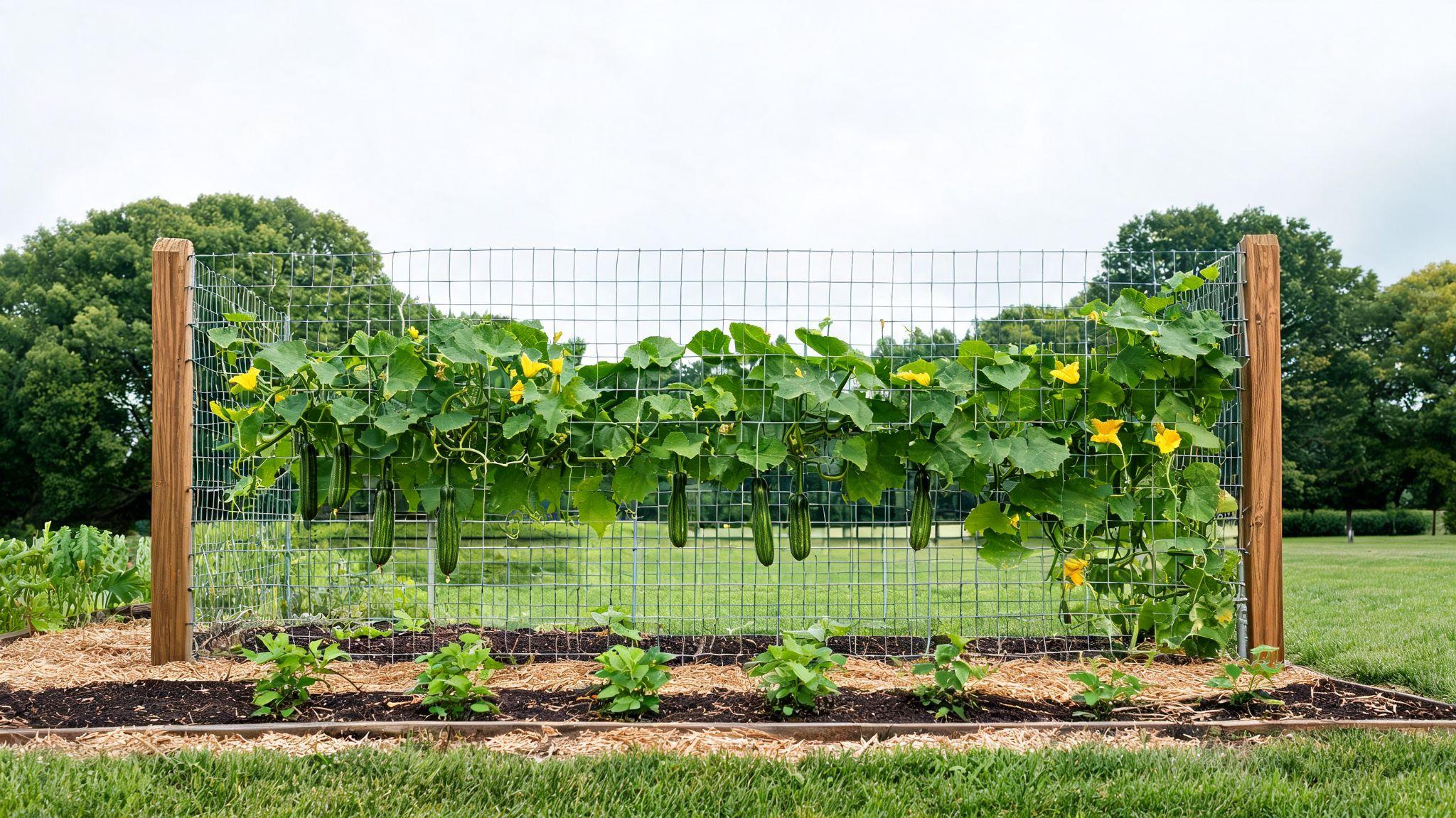
Yes, dense shrubs or tall grasses can partially screen equipment, though they offer less protection from weather and typically need more ongoing upkeep.