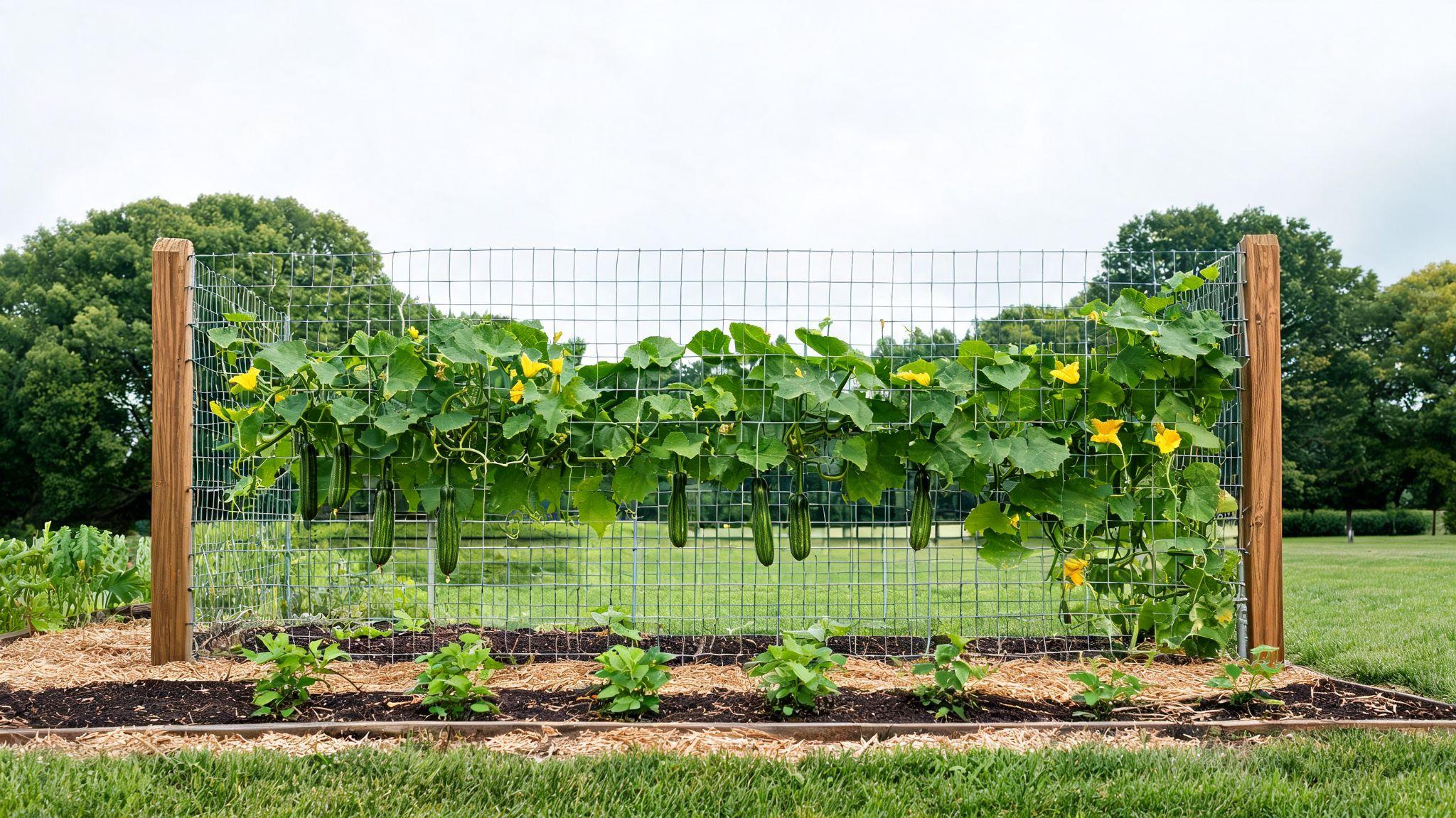
A vertical squash trellis changes how your whole garden works. The vines climb, the fruit hangs clean, and you free up ground space.
You also see problems sooner, because the whole plant is in front of you.
Here’s what surprises most people. The trellis doesn’t cut your workload. It moves the work to the start of the season.
Get the setup right early, and the plant mostly looks after itself. So the real question is whether this method fits your garden.
Should You Grow Squash on a Trellis?
Yes, squash grows well on a trellis. Just tie the vines often and match the support to the fruit.
Lifting the plant saves ground space and keeps fruit off wet soil, so it stays clean. Leaves dry faster, which gives mildew a harder time.
You also spot squash bugs early, since the whole vine is in front of you. The catch is the workload. Vertical plants dry out quickly, so you water more, and the stems need tying every few days.
Miss a week and a heavy vine can twist or snap. If you have plenty of bed space, one or two compact bush zucchini do fine on the ground.
Which Trellis and Squash Variety Should You Pick?
The support should match what the plant produces. Fruit weight decides the frame, not the plant type.
The best trellis is the one built for the weight of the mature fruit. A light zucchini and a heavy butternut need very different frames.
Trellis Types That Hold Up
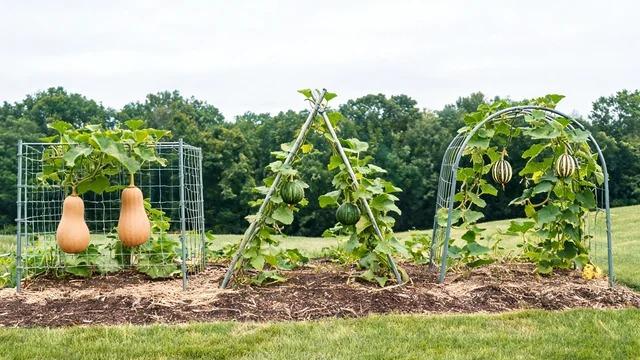
Cattle panels on T-posts handle the heaviest fruit you can trellis. Fruit up to about three pounds works best, and bigger squash may be better left on the ground.
A heavy A-frame suits medium fruit. Two panels leaning together work well, and you can pick from both sides.
Arch trellises suit light fruit like delicata. They look great, but they flex under load. Don’t hang a heavy butternut from one, or the arch will bow.
Build It or Buy It
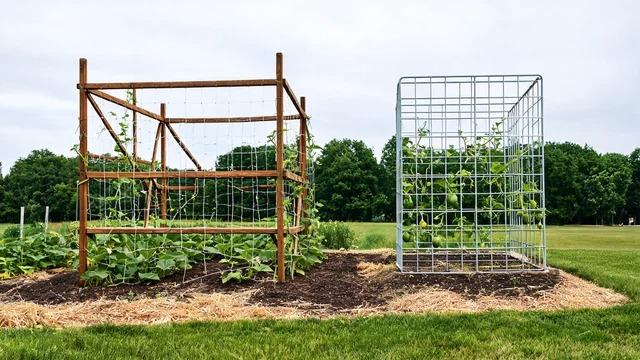
A DIY frame from wooden stakes, cross braces, and yarn costs very little. It makes sense if you own basic tools and have a free weekend.
Cross braces matter most. Without them, a loaded frame leans in the first strong wind.
A ready-made kit saves time. It suits light fruit and small gardens. For heavy fruit, check the weight rating first, or build your own.
Summer and Winter Squash Varieties
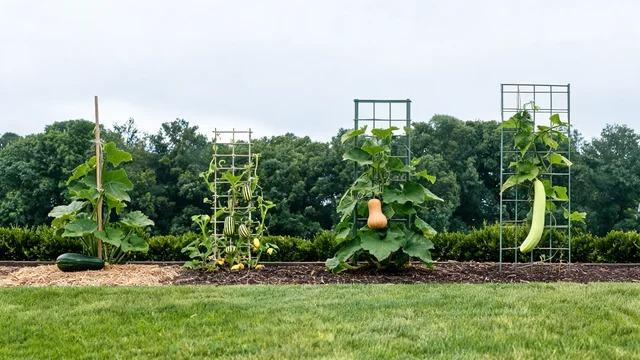
Zucchini is a bush type, so one wooden stake is enough. It keeps the plant upright and the fruit off the soil.
Butternut, delicata, spaghetti squash, and tromboncino are vining choices. They climb well, but their fruit weights differ a lot.
Delicata is the lightest, so it’s the easiest to support. Butternut and spaghetti squash need a strong frame. Tromboncino fruit hangs long, so give it height. Check the seed packet for mature fruit size before you build.
How Do You Set Up and Train Squash on a Trellis?
Timing and early tying decide how smooth the season goes. Get both right, and the plant mostly looks after itself.
Put the trellis in at planting, then tie the main stem loosely as it grows.
Step 1: Drive the T-Posts Before You Sow
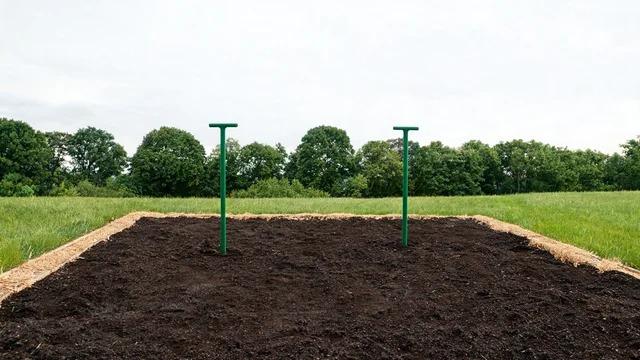
Set two T-posts about 5 feet apart where the squash will grow. Hammer each one in until it stands firm when you shake it.
Do this before any seed goes in. Posts driven later can damage the roots.
Step 2: Clip the Cattle Panel to the Posts
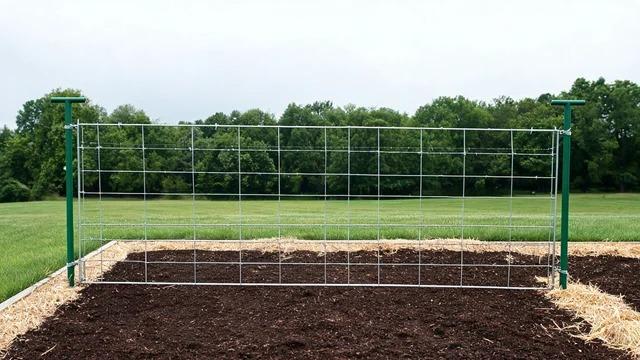
Raise the panel a few inches off the ground. Air can then move under the lowest leaves.
Clip it at several points on each post. A loose panel rattles in the wind and wears on the stems.
Step 3: Plant Close to the Base
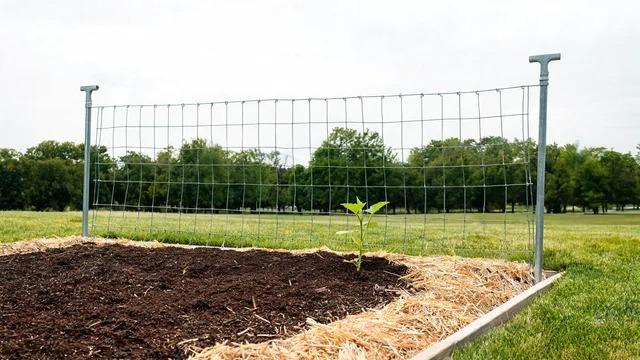
Sow the seed or set the seedling a few inches from the panel. The young stem then has a short reach to the support.
Frame first, plant second. That order keeps your roots safe.
Step 4: Tie the Main Stem as Soon as It Leans
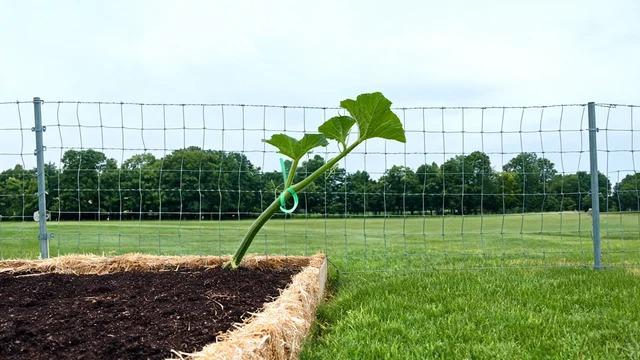
Don’t wait for it to flop. A young stem bends easily, and an old one fights you.
Bush types like zucchini have thick, hollow stems and few or no tendrils. They need your help from the start.
Step 5: Use Soft Garden Tape and Keep It Loose
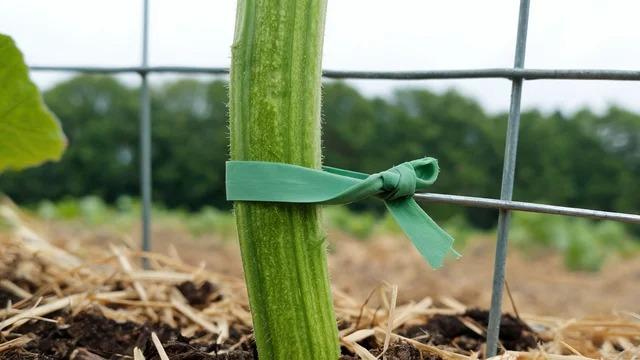
Make a loose loop around the stem and fasten it to the panel. The stem thickens fast, and a tight tie cuts into it.
Skip wire and thin string. Both bite into the stem as it grows.
Step 6: Retie Every Few Days
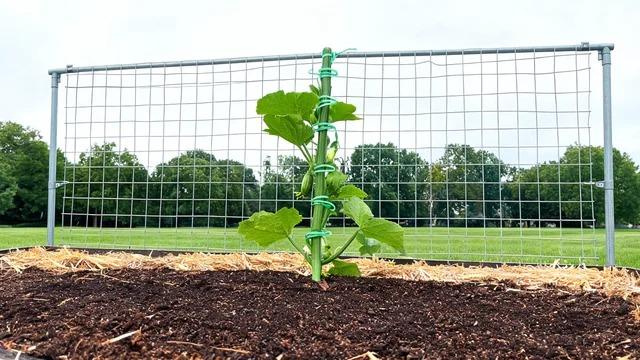
Add a new tie for every 4 to 8 inches of new growth. The stem keeps growing, and fruit adds weight.
That way, no section hangs unsupported. Early, repeated tying stops a heavy stem from sagging or snapping.
Step 7: Guide the Tendrils on Climbing Types
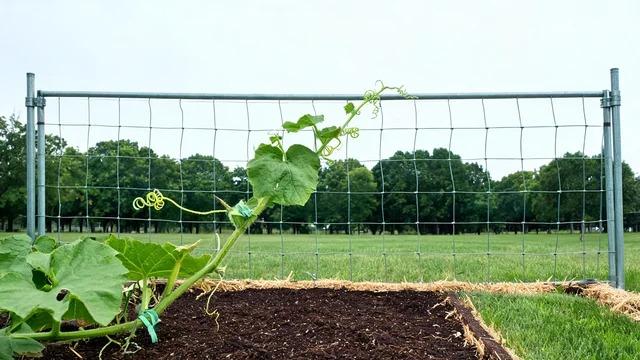
Point the tendrils toward the panel and let them wrap. Climbing types grab on by themselves once they find it.
These plants need fewer ties than bush types. Check them weekly and tie only where the stem leans away.
How Do You Support Fruit and Keep Plants Healthy?
Heavy fruit needs a sling tied to the trellis, and trellised plants need more water.
Three things decide whether the season holds together. Each one asks something different from you.
- Slings for heavy fruit: Light summer squash hangs fine on its own. Winter squash like butternut needs a sling made from pantyhose, mesh netting, or scrap fabric. Tie the sling to the trellis, never to the fruit.
- More irrigation: Raised plants dry out faster because more leaf sits in open air and sun. The soil also loses its shade and warms quickly. Water more often than you would on the ground.
- A working setup: The stem stands upright and is tied. Fruit is supported, and air moves freely through the leaves. That airflow also lets you spot squash bugs early.
Check these three each week. If one slips, fix it before the others follow. A sagging sling today becomes a snapped stem next week.
Final Takeaway
A vertical squash trellis pays you back in clean fruit, fewer pests, and a garden you can actually walk through.
Here’s what I’ve learned. The trellis doesn’t save you work. It moves the work to the start of the season.
Build it strong, tie early, and the plant mostly runs itself. Match your frame to your heaviest squash this week. Then drive those posts before you sow.
Ready to try it? Pick your variety and build your trellis today.
Frequently Asked Questions
Can You Grow Squash Vertically in a Container?
Yes, if you use a large pot, a compact plant, and a sturdy support tied firmly in place. Containers dry out fast, so check the soil often.
Can You Grow Squash on a Trellis in a Raised Bed?
Yes, arch trellises made for raised beds work well. Plant along the bed edge so the vines climb up instead of spreading across the bed.
Can You Plant Squash Closer Together on a Trellis?
Often yes, because climbing frees up ground space. One gardener planted squash 6 to 8 inches apart, but follow your seed packet, since the right spacing depends on the variety.
How Big Should a Squash Trellis Be?
Winter squash like butternut does best on a trellis at least 5 feet tall. Summer squash can use a shorter support, so size it to your variety.
Can You Use a Fence or Bamboo Poles as a Squash Trellis?
Yes, for lighter squash, if they are well anchored. Heavier fruit needs a stronger frame that will not lean in the wind.