Ever seen a yard with one big rock out front and wondered why it looks so good? It’s rarely the rock itself.
The best front yard landscaping with large rocks looks like the stone was there first. The house was just built around it.
That look is easy to copy once you know three small things: how deep the rock sits, how many you group, and what goes around them.
Below are ideas for every kind of yard, along with placement tips and cost basics before you spend a dollar.
What Are Large Rocks for Landscaping Called?
Large landscaping rocks are usually called boulders, with fieldstone and river rock as the other common types.
Boulders are the largest of the three, and most suppliers use that word for big stone. Fieldstone is gathered from farm fields and hillsides, so it usually looks weathered and a little mossy.
River rock comes from streambeds and is smooth and rounded from years of moving water. Quarried boulders are the opposite, with rough, angular edges where the stone was cut or broken free.
If you call a yard and ask for big landscaping rocks, they’ll likely ask which type you mean. Knowing the right name saves you a confusing phone call.
Local stone usually looks most at home, because it matches the soil and hills around your property. Ask what’s native nearby before you choose.
How Many Rocks and What Size Work in a Front Yard?
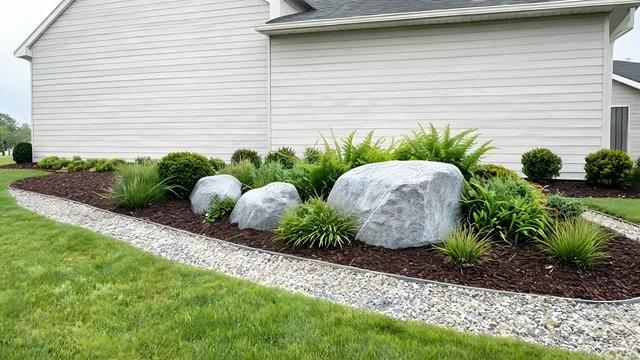
Groups of three in mixed sizes look most natural, and rock size should match the scale of your house.
Groups of three feel natural because nature rarely places rocks in tidy pairs. Two matching rocks look staged, like bookends by a door. Odd numbers, such as three or five, let the eye move around the group.
Mix sizes inside each group. Use one large rock, one medium, and one small. The large one anchors the group and the smaller ones tuck in beside it. Match the size to your house, too.
A big two-story home can usually carry boulders 3 feet or wider without looking lost. A small cottage tends to look crowded once stone gets much past 2 feet across, since oversized boulders can overwhelm a smaller front bed.
Weight matters for planning. Rocks around 150 to 300 pounds are a two-person job. Heavier stones need machinery, so plan for that before delivery day.
List of Front Yard Landscaping Ideas With Large Rocks
Large rocks can work as focal points, borders, walls, paths, and cover-ups in a front yard. Pick the job first, then pick the stone.
The ideas below start with focal points and borders, then move to problem-solvers like slopes, drainage, and bare spots.
Scan for the one that matches your yard. Each idea names a rock type that suits it and one situation where it falls short.
1. Anchor the Yard With One Large Focal Boulder
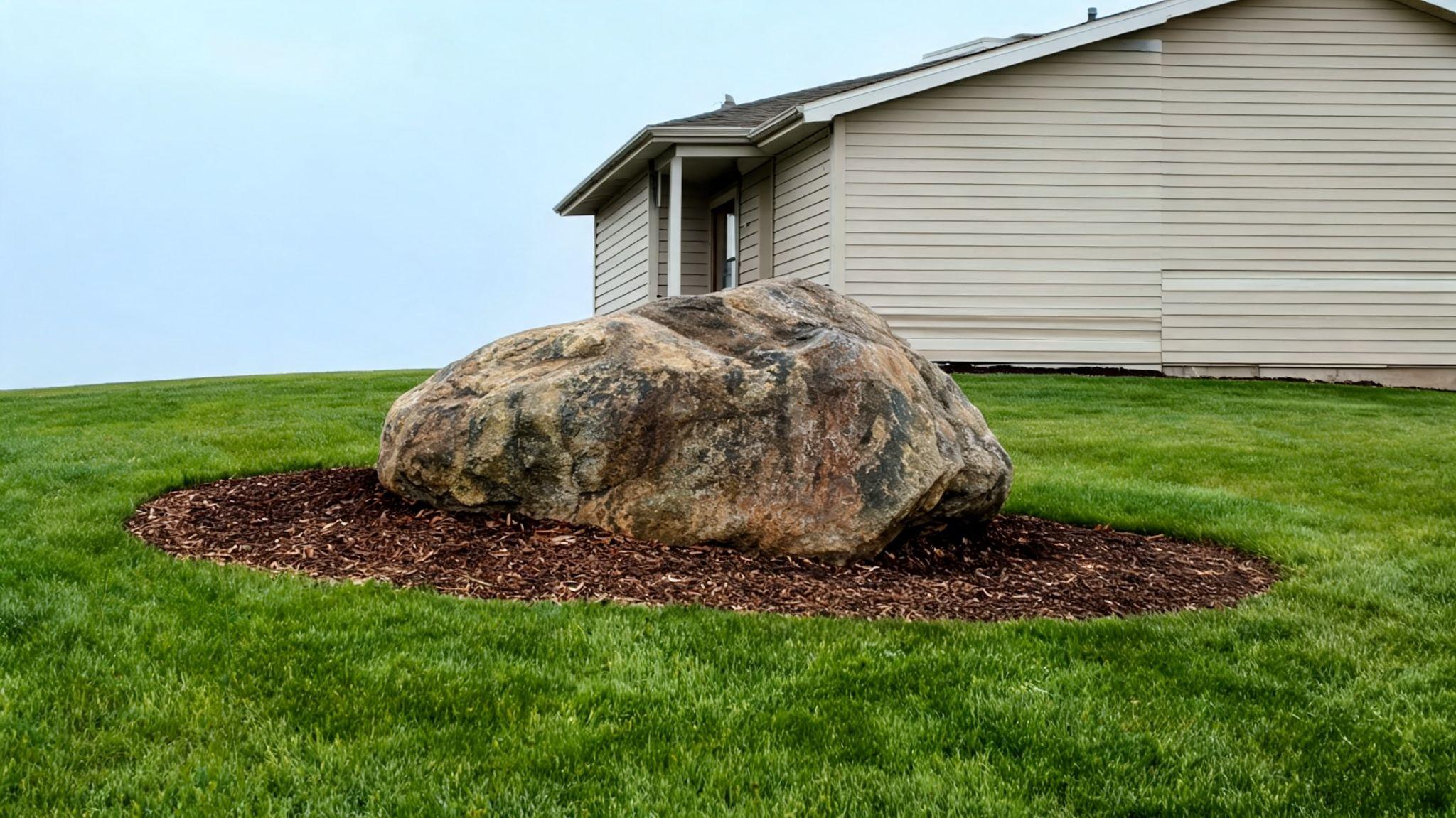
A single large boulder near the entry or a front corner gives the eye one place to land. Weathered fieldstone suits most homes and looks settled quickly.
Bury about a third of it so it sits naturally, as if it was always there. It fails in a tiny yard, where one big stone swallows the space.
2. Group Three Boulders in a Cluster
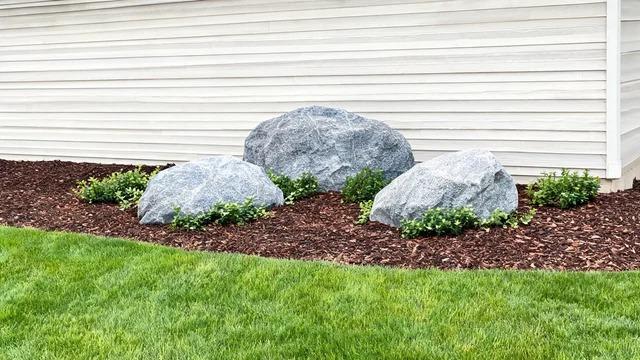
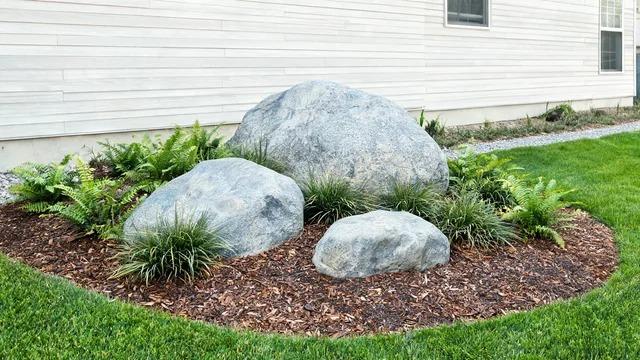
Three boulders set close together read as one natural outcrop. Use quarried boulders in mixed sizes, spaced unevenly, and tuck the largest slightly behind the others.
Add low plants at the base to ground the group. It fails on a bare, flat lawn with nothing around it, where the cluster looks dropped in.
3. Build a Dry Creek Bed With River Rock
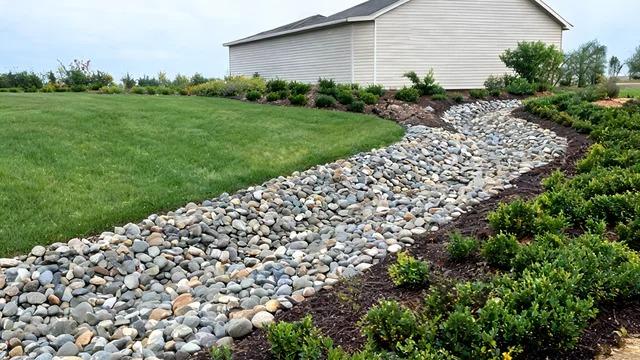
A dry creek bed is a winding channel of smooth river rock. It guides runoff and gives you the look of water without any water. Mixed sizes look most natural.
Curve the path instead of running it straight. It fails on flat ground with no runoff, where it looks like a random stripe.
4. Edge Flower Beds With Large Stones
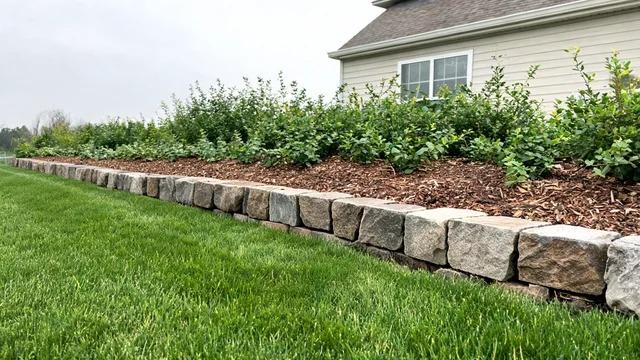
Large stones along a bed’s edge replace plastic or metal edging, and they never rust or crack. Flat-topped fieldstone works well here. Set them snug together.
Pick stones of similar height so the line looks steady. It fails around tight curves, where big stones leave gaps, and mulch spills out.
5. Build a Rock Retaining Wall on a Slope
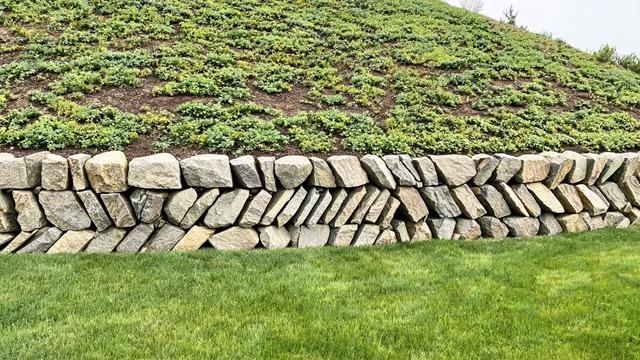
A rock wall holds soil on a slope and slows washout during heavy rain. Use quarried, angular boulders, since flat faces stack better than round ones.
Keep the wall low, around knee height. Taller walls often need an engineer and a permit. Tilt each layer back toward the hill. It fails on very steep slopes.
6. Lay a Stepping Stone Path Through Gravel
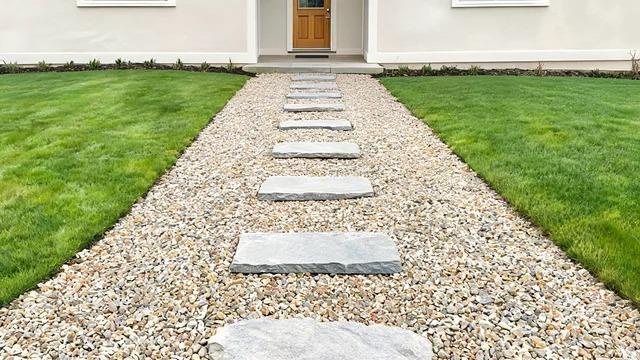
Flat stones set across open gravel make a relaxed walkway to the door. Flagstone or flat fieldstone works best, and the gravel keeps weeds down.
Space them one natural stride apart. Set each stone level so nobody trips. It fails for strollers, wheelchairs, or heavy foot traffic, which need a smooth, solid surface.
7. Combine Pavers and Gravel
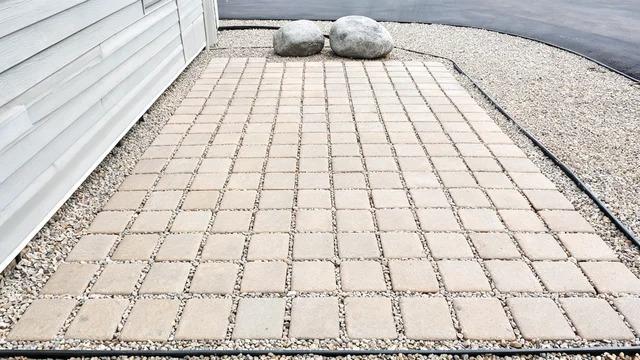
Pavers give you crisp lines, and gravel fills the spaces between them. Add one or two rounded boulders to soften the straight edges. Pick a neutral gravel so the pavers stay the star.
Edge the gravel with steel or stone so it stays put. This fails on a sloped driveway, where loose gravel slides downhill and scatters.
8. Plant a Succulent and Cactus Rock Garden
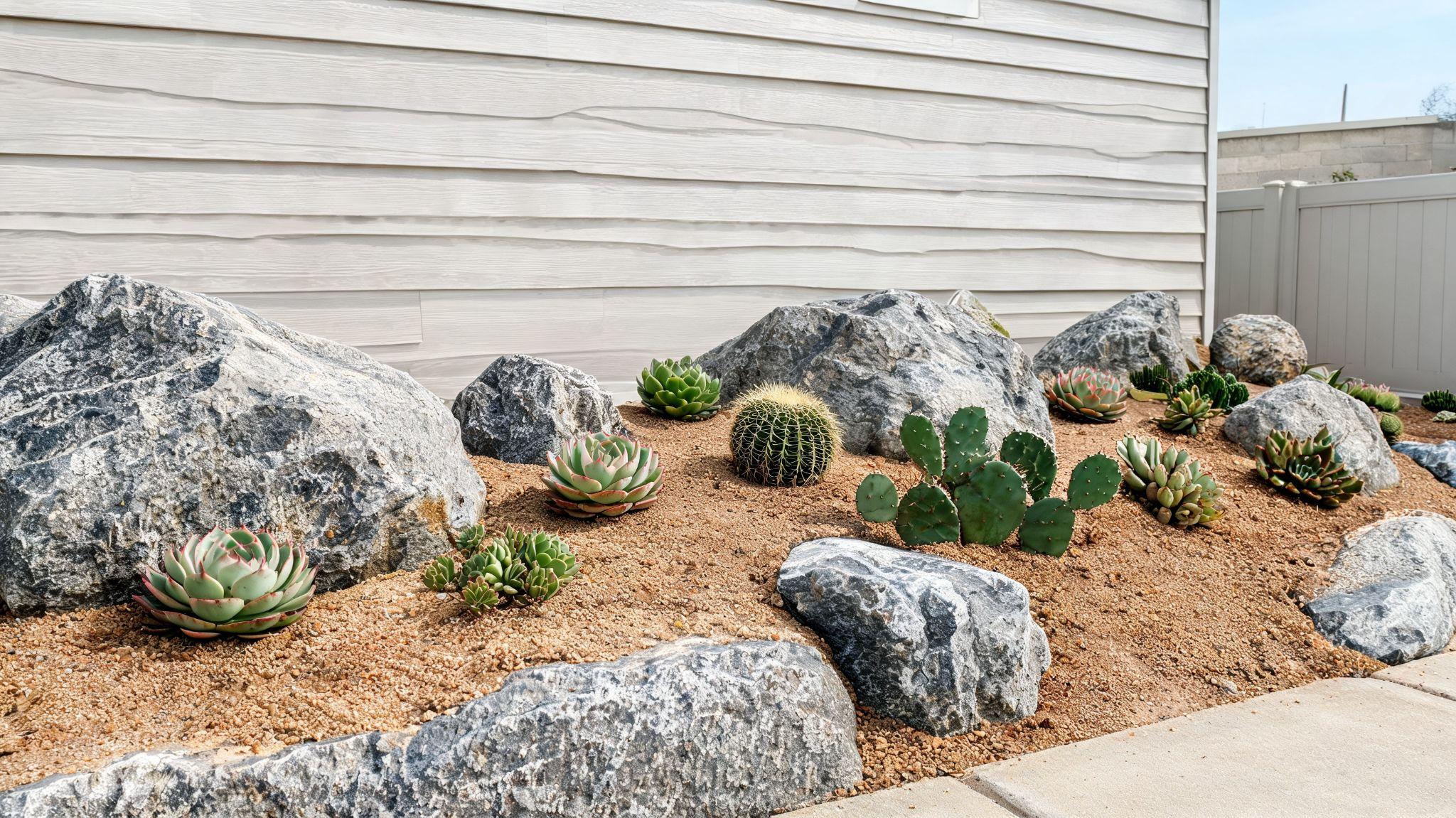
Succulents and cacti tuck neatly between boulders and need little water. Rough quarried stone suits them, and it holds the sun’s warmth. Place plants on each rock’s sunny side.
Use gritty, fast-draining soil around the plants. This fails in wet or freezing climates, where roots rot or freeze. Leave room for each plant to spread.
9. Hide the Utility Box or Downspout
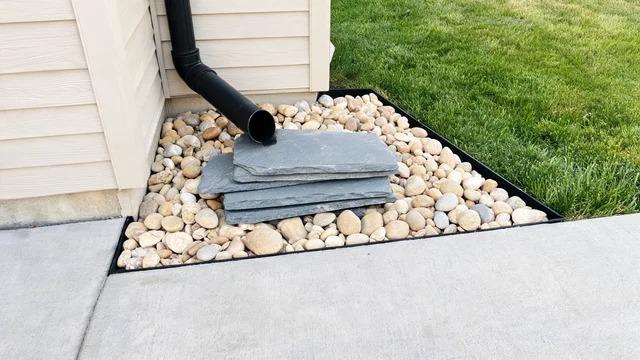
Boulders can disguise a utility box or downspout. Use mid-size fieldstone in a loose arc around it, with gaps between stones. It looks far better than bare plastic and pipe.
Keep access clear for meter readers and repairs. This fails if your utility company requires open space around the box. Call them first to check.
10. Soften the Foundation Line
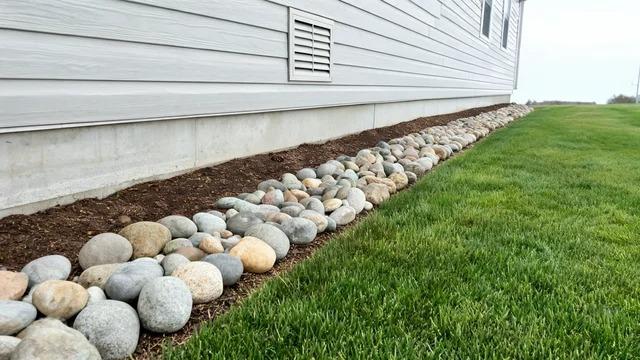
A row of rounded river rock along the house base breaks up a hard edge. It also helps rain drain away from the walls. Keep stones below siding and vents.
Slope the soil slightly away from the house first. This fails where water already pools at the foundation. Rocks can’t fix that alone.
11. Use Boulders as a Driveway or Curb Barrier
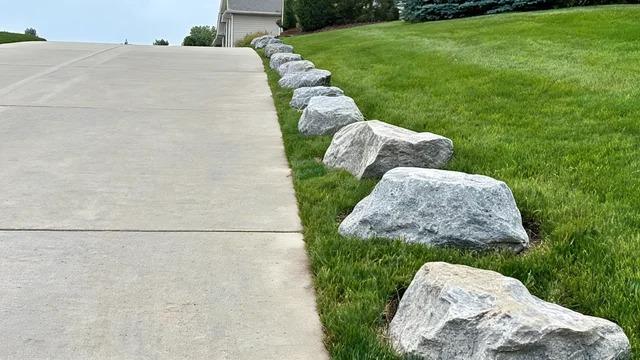
Boulders along a driveway or curb keep tires off the lawn edge. Use heavy quarried stones that won’t shift when bumped. Leave a few feet between stones so it looks relaxed.
Set them back so car doors and mirrors clear. This fails where snowplows work, because blades can hit and crack stones. Bury a third for stability.
12. Replace the Lawn With Gravel and Boulders
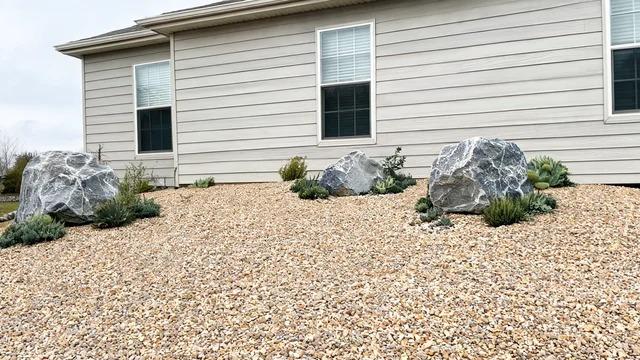
Swapping grass for gravel and boulders ends mowing and watering. Use crushed stone with a few large quarried boulders for contrast. Add a few plants for color so it doesn’t feel empty.
Lay landscape fabric underneath to hold back weeds. This fails under heavy leaf fall, since rotting leaves feed weeds in the gravel. Rake it often.
13. Ring a Front Yard Tree With Stone
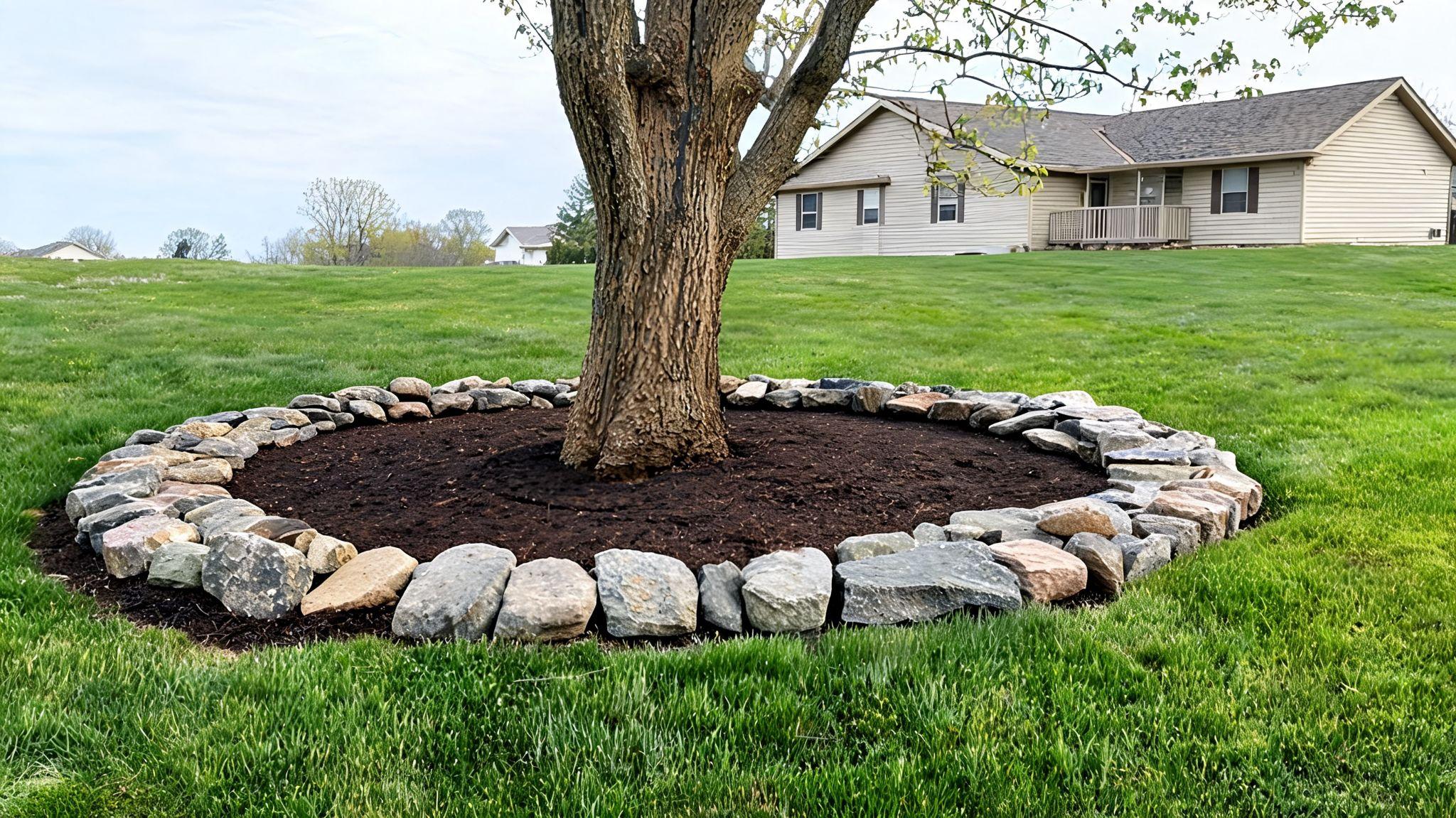
A ring of stone around a tree protects the base from mowers and string trimmers. Medium fieldstone works well and keeps grass out. Make the ring a few feet wide.
Leave a gap at the trunk so the bark can breathe. This fails when stones pile against the trunk. That traps moisture and rots the bark.
14. Build a Stacked Stone Border Wall
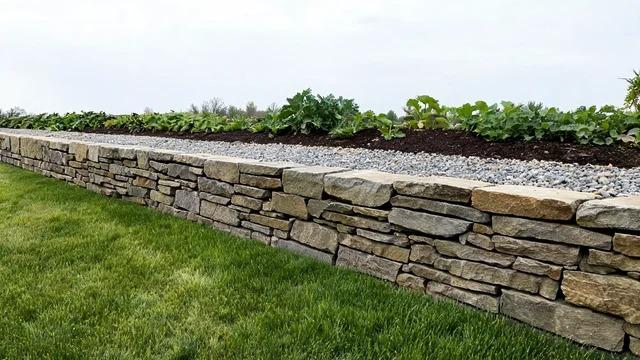
A low dry-stacked wall works as an edge or a raised bed. Use flat fieldstone, which stacks well without any mortar. Fill the back with gravel so water drains through.
Lean each layer slightly back into the soil. This fails much above two feet, where unmortared stacks can tip. Stagger the joints like brickwork.
15. Add a Boulder Water Feature
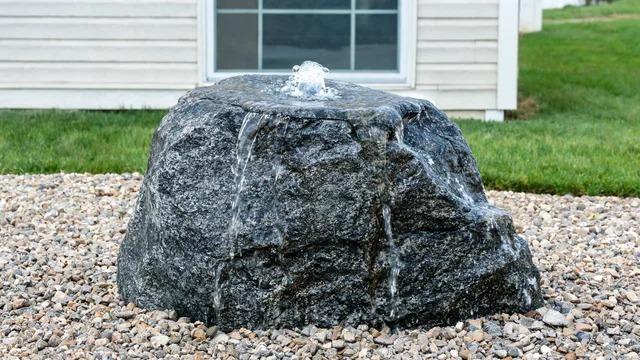
A drilled boulder with bubbling water makes a calm focal point. It also masks street noise. Dense granite holds up best. Place it where you can see it from a window.
Plan the power source and pump early. This fails in freezing climates unless you drain the pump for winter. Hide the cord under gravel.
16. Set a Flat Boulder as a Seat
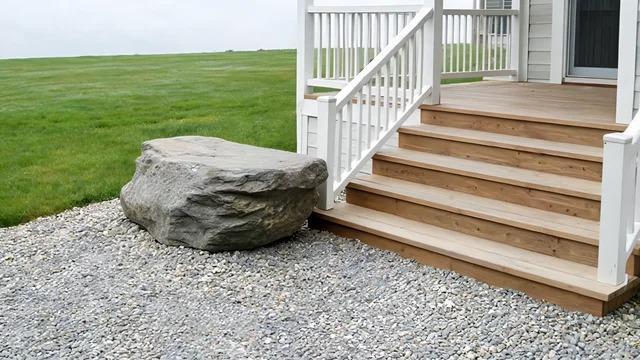
A broad, low boulder near the porch or path doubles as a seat. Choose a flat-topped fieldstone about knee height. Set it where people naturally pause, like beside the steps.
Test it at the stone yard before you buy. This fails in full sun, where dark stone gets too hot to touch.
17. Frame the Mailbox With Rocks
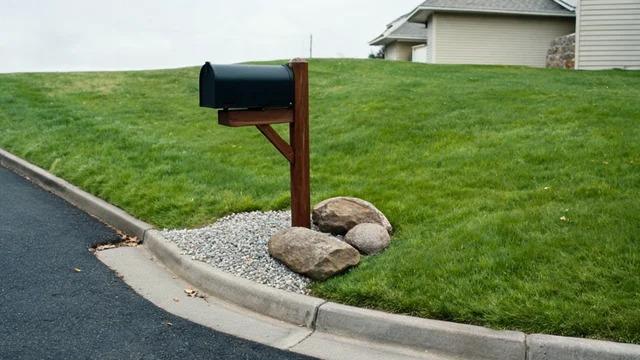
Boulders and gravel at the base tidy up a messy curb corner. Small to mid-size fieldstone fits best. Two or three stones is plenty.
Keep rocks low and out of the mail carrier’s path so drivers can see. This fails where roads get salted and plowed, since salt and snow batter the stones.
18. Mix Boulders With Ornamental Grasses
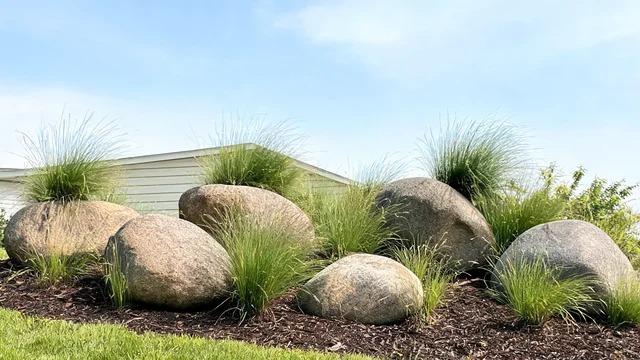
Ornamental grasses sway against hard stone and add soft movement. Pair them with rounded river boulders for a relaxed, natural look.
Plant the grasses on the sunny side of each rock. This fails in deep shade, where most grasses grow thin and flop. Give them room to spread.
19. Pair Mulch Beds With Accent Rocks
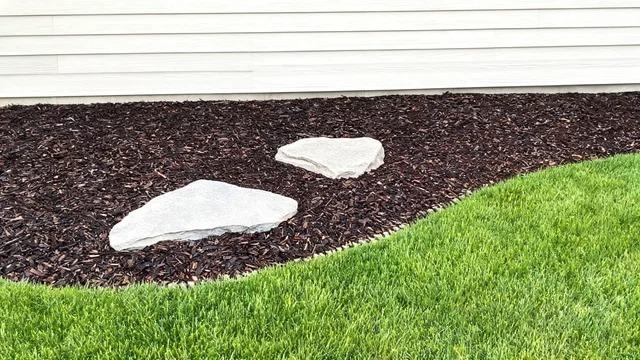
A mulch bed with a few accent rocks looks polished on a small budget. Use two or three fieldstones, not a pile. Dark mulch makes light stone stand out.
Keep mulch thin around the stone edges so it doesn’t bury them. This fails on slopes, where heavy rain washes mulch away and leaves bare soil.
20. Add Flagstone Steps With Boulder Accents
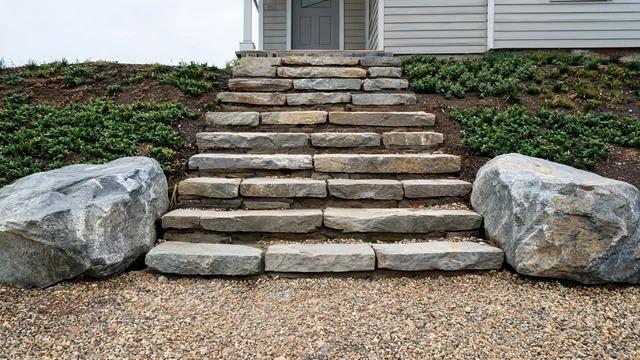
Flagstone steps with boulders on each side make a natural entry on uneven ground. The boulders hold soil and frame the path. Choose thick flagstone, not thin tile.
Set every step level and firm on a packed gravel base. Keep every rise even. This fails on very steep entries, which need code-approved stairs with railings.
21. Create a Drought-Tolerant Xeriscape
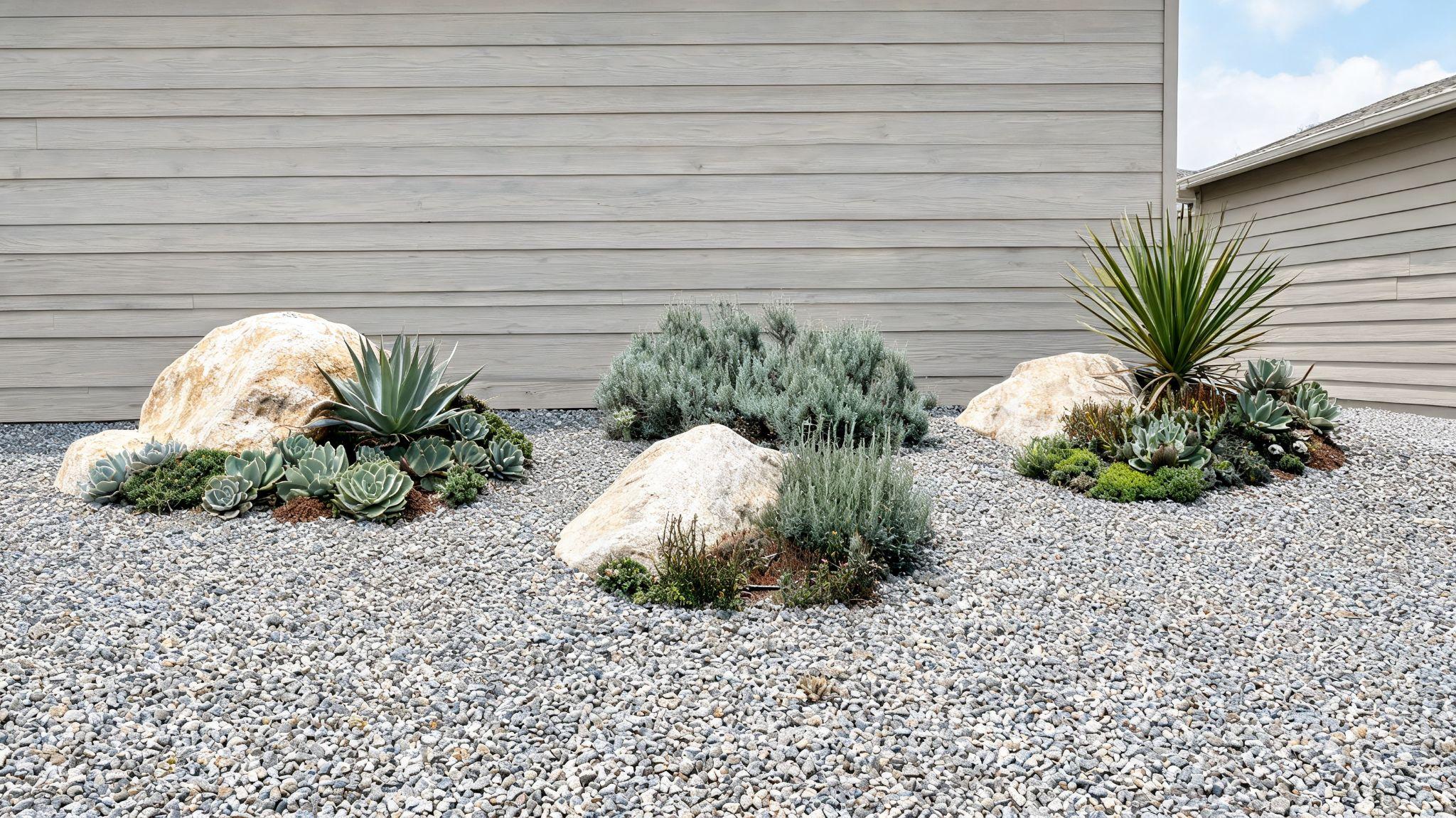
A xeriscape uses stone, gravel, and hardy plants to cut water use. Sun-bleached local boulders match the dry look. Gravel mulch keeps the soil cool and cuts weeds.
Group plants by how much water they need. Water new plants often until roots settle in. This fails in rainy regions, where soggy beds drown plants meant for desert.
22. Use a Few Smaller Boulders in a Small Yard
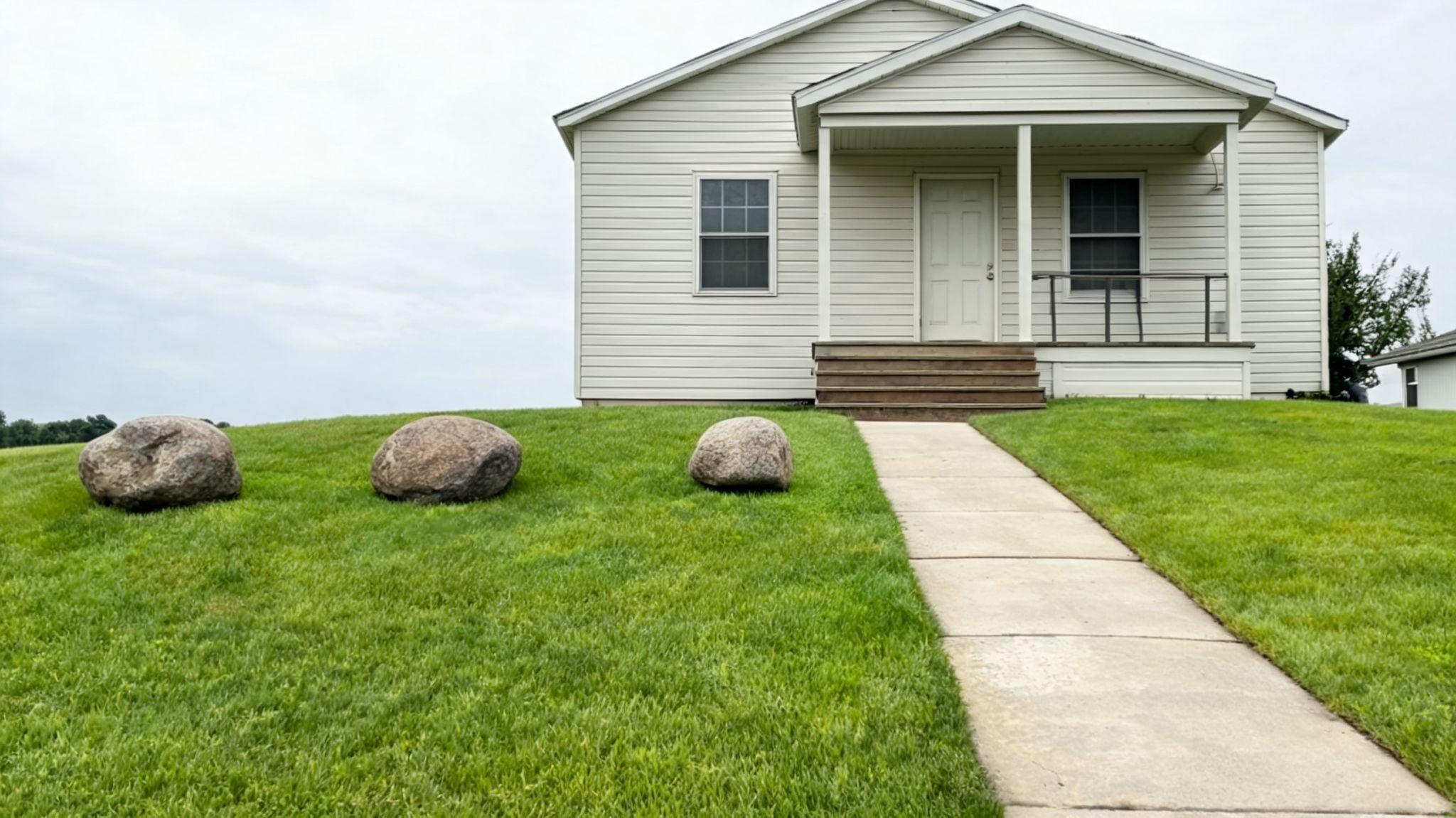
In a small yard, two or three well-placed stones beat a crowded display. Compact fieldstone keeps the scale right. Place them off-center, not in the middle of the lawn.
Leave open space around each rock so it can breathe. This fails when the stones are too big for the lot. The yard then feels smaller.
23. Use Scavenged or Local Rocks on a Budget
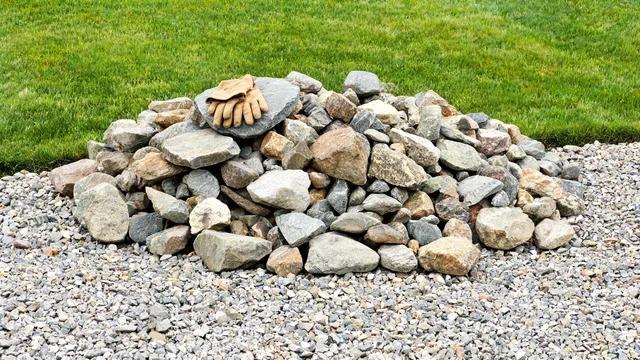
Local fieldstone can cost little or nothing. Ask farmers, construction crews, and quarries about scrap piles or leftover stone. Check each stone for deep cracks before you haul it.
Always get permission first. Bring gloves and a helper for the haul. This fails with stone taken from parks, streams, or protected land, where removing rocks is often illegal.
How Do You Place Large Rocks So They Look Natural?
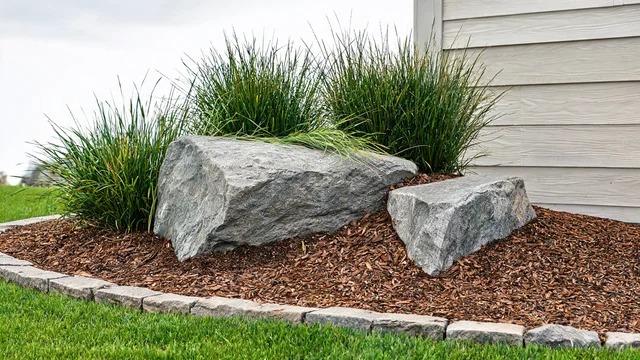
Large rocks look natural when they are partly buried and grouped with matching grain and direction.
Most people think a bigger rock looks more natural. It doesn’t. What matters is how the rock meets the soil. A boulder with its flat base showing looks dropped off a truck. These three steps fix that.
Choose and Bury the Boulder
Pick a rock with one flat side. That side becomes the bottom. Walk around the stone first and find its best face.
Dig a hollow, then pack the base firm and level so the rock won’t sink. Heavy stone settles fast on loose soil.
Set it so soil covers about a third. Treat that as a starting point. Rounder rocks may need more. In a group, match the grain lines and tilt so the rocks read as one outcrop.
Fill Around It With Plants and Ground Cover
Cover hides the rock’s edge and ties it into the bed. Pack soil up the sides first, so no gap shows at the base.
Then bring gravel, mulch, or low grasses right to the stone. Succulents tuck into gaps well. Let a few plants lean over the rock.
Pick cover that matches the rest of the bed. Gravel suits dry yards. Mulch suits shaded, leafy ones.
A hard, bare edge still looks staged, even on a buried boulder.
Keep Weeds and Washout Under Control
Weeds creep in along rock edges. Lay fabric under gravel only. Under soil or mulch, it clogs and tears.
Use firm edging so the bed holds its shape. Loose edges let gravel and mulch drift onto the lawn.
On slopes, bury the downhill side deeper so the rock can’t slide. Rain pushes soil downhill every season. Check the spot after the first heavy rain. Soil settles, and small fixes now save a reset later.
How Much Does Front Yard Rock Landscaping Cost?
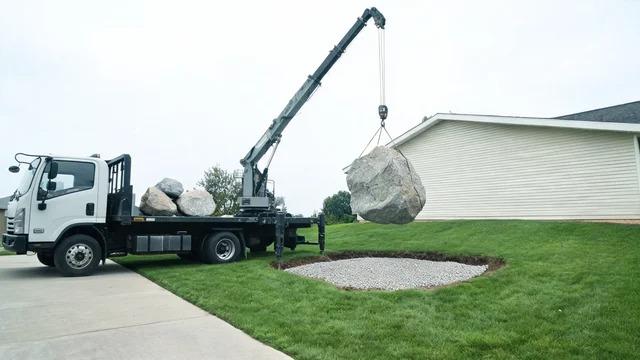
Cost depends mostly on rock type, size, and delivery, not just the number of stones.
As a starting point, individual boulders often run anywhere from $100 to $600 depending on size and stone type, and multi-packs or pallets from a supplier typically land between $425 and $535. Delivery and placement with machinery can add $100 to $300 or more per visit, depending on access to your yard.
Rock type, size, and distance from the quarry drive most of the price. A rare stone hauled far costs more than local fieldstone.
Delivery, machinery, and base prep often cost more than the stone itself. Heavy boulders need a truck, and sometimes a machine, to move and set them.
A firm, level base takes labor too. Smaller rocks cut costs because they are easier to haul and place. Local or scavenged stone can cut costs further.
Check the source and weight first, since a free rock that needs a crane isn’t free. Prices vary a lot by region, so get a quote from a local supplier before you plan your budget.
What Mistakes Should You Avoid With Large Rocks?
The most common mistakes are not burying the rock, using one size, and ignoring drainage.
Each one is easy to spot in a finished yard, and easy to fix before you start. This list gives the top errors and the quick fix for each. Check it before you order stone.
- Setting rocks on top of the soil: Bury about a third so the base doesn’t show.
- Placing rocks in even rows: Space them unevenly, in odd-numbered groups.
- Using one size: Mix large, medium, and small stones in each group.
- Putting fabric under boulders: Heavy stone tears it. Use fabric under gravel only.
- Ignoring drainage near the house: Slope soil away from the walls so water doesn’t pool.
- Buying too few or too small: Small rocks look lost. Size them to the house and yard.
Most of these come down to scale and soil contact. Get those two right and the rest follows.
Final Takeaway
Good front yard landscaping with large rocks isn’t about buying the biggest stone. It’s about how the rock meets the ground.
Bury it, group it in odd numbers, and let plants soften the edges. That’s what makes a boulder look like it belongs instead of something dropped off a truck.
One stone also teaches you scale, shade, and sightlines before you commit to more. You’ll learn how the light hits that corner at different times of day, and whether the spot drains the way you expected once it rains.
So start small. Pick one idea from the list, set a single stone, and bury it properly. Step back, look from the street, and adjust before you add the next one.
Frequently Asked Questions
Do Large Rocks Attract Snakes and Pests?
They can, since gaps between rocks give small animals cool, shaded cover. Tight piles attract the most, so keep grass trimmed near the stone.
Do Landscaping Rocks Make Your Yard Hotter?
Yes, in full sun. Dark rock and gravel soak up heat and release it after dark. Light-colored stone and nearby shade keep things cooler.
Do Large Boulders Add Value to a Home?
Not by themselves. Well-placed boulders can lift curb appeal, but no reliable figure ties them to sale price. A local real estate agent can tell you what buyers want.
How Do You Move a Heavy Boulder Without Machinery?
Slide it instead of lifting it. Tip one edge onto a tarp with a pry bar, then drag it with a helper. If two people can’t budge it, hire equipment.
Do You Need to Call Before You Dig?
Yes. Check for buried utility lines before digging. In the US, you can call 811 for free. Other countries have similar locate services, so check your local rules.
Will Boulders Shift or Heave in Freezing Winters?
They can, because freezing soil expands and pushes stone upward. Check your rocks each spring. Heavy ones often settle back, but reset any that don’t.