I’ve seen plenty of first beds built too tall, too heavy, and too costly.
Cinder blocks fix that. You set the height by counting courses, and fixing a mistake means lifting one block.
That forgiving quality is why cinder block garden ideas suit beginners and veterans alike. They also fit nearly any space, from a patio corner to a hillside.
Before you pick a design, it helps to know why these blocks work so well, and where they don’t.
Why Do People Build Gardens With Cinder Blocks?
Cinder blocks are hollow concrete blocks that hold soil in their cores and stack into raised beds, walls, and planters.
The name is a little out of date. Old cinder blocks used coal ash or fly ash as filler.
What you buy today is a concrete masonry unit, or CMU. Most people still call it a cinder block.
Gardeners like them for a simple reason. The hollow cores hold soil and plants, so each block acts like a small planter.
They also stack without tools or lumber. You set one on another, and the bed takes shape.
Durability is the other draw. Concrete lasts years longer than untreated wood, which rots in damp soil.
The trade-off is weight. A single block is heavy, and a full bed is far heavier. Once it’s placed, moving it is a real job.
List of Cinder Block Garden Ideas for Any Yard Size
The ideas below run from small-space builds to bigger projects. Start at the top if you’re short on room.
Each one names the size, the plants that suit it, and one thing to watch before you build.
1. Single-Layer Raised Bed
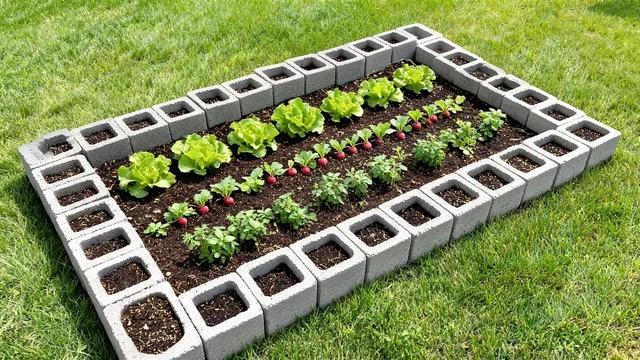
This is the easiest start, and it suits small yards or first-time builders. Lay one course of blocks on level ground in a rectangle.
Fill the cores and the middle with soil. Lettuce, radishes, and herbs do well here. Check that the ground is level first, or the blocks will rock.
2. Two-Tier Stepped Raised Bed
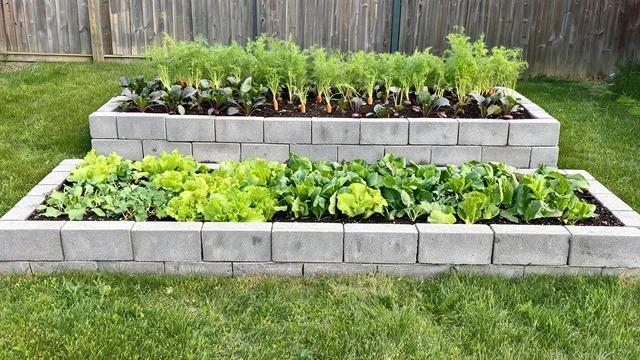
This one suits mid-sized yards where you want to grow different crops together. Build one layer at the back and a lower one in front.
Put carrots and beets in the taller tier, where roots can go deep. Keep greens in the lower tier. Watch the step: the top tier dries out faster.
3. Herb Garden in the Block Cores
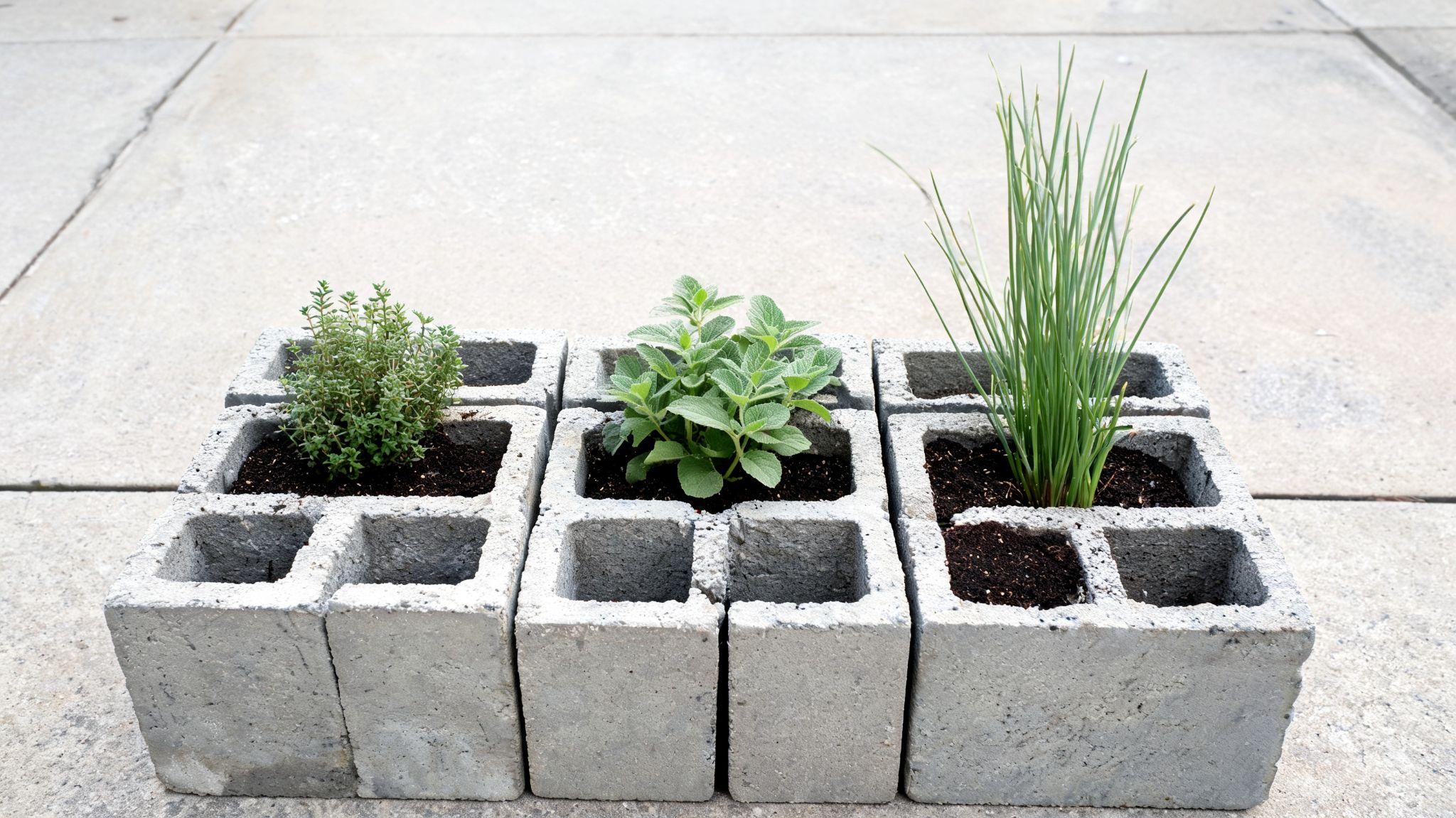
This suits patios and tiny yards. Stand blocks in a cluster and plant a different herb in each open hole.
Thyme, oregano, and chives handle the tight space. Watch the water. Small cores dry out fast, so they need checking on hot days.
4. Strawberry Cascade Wall
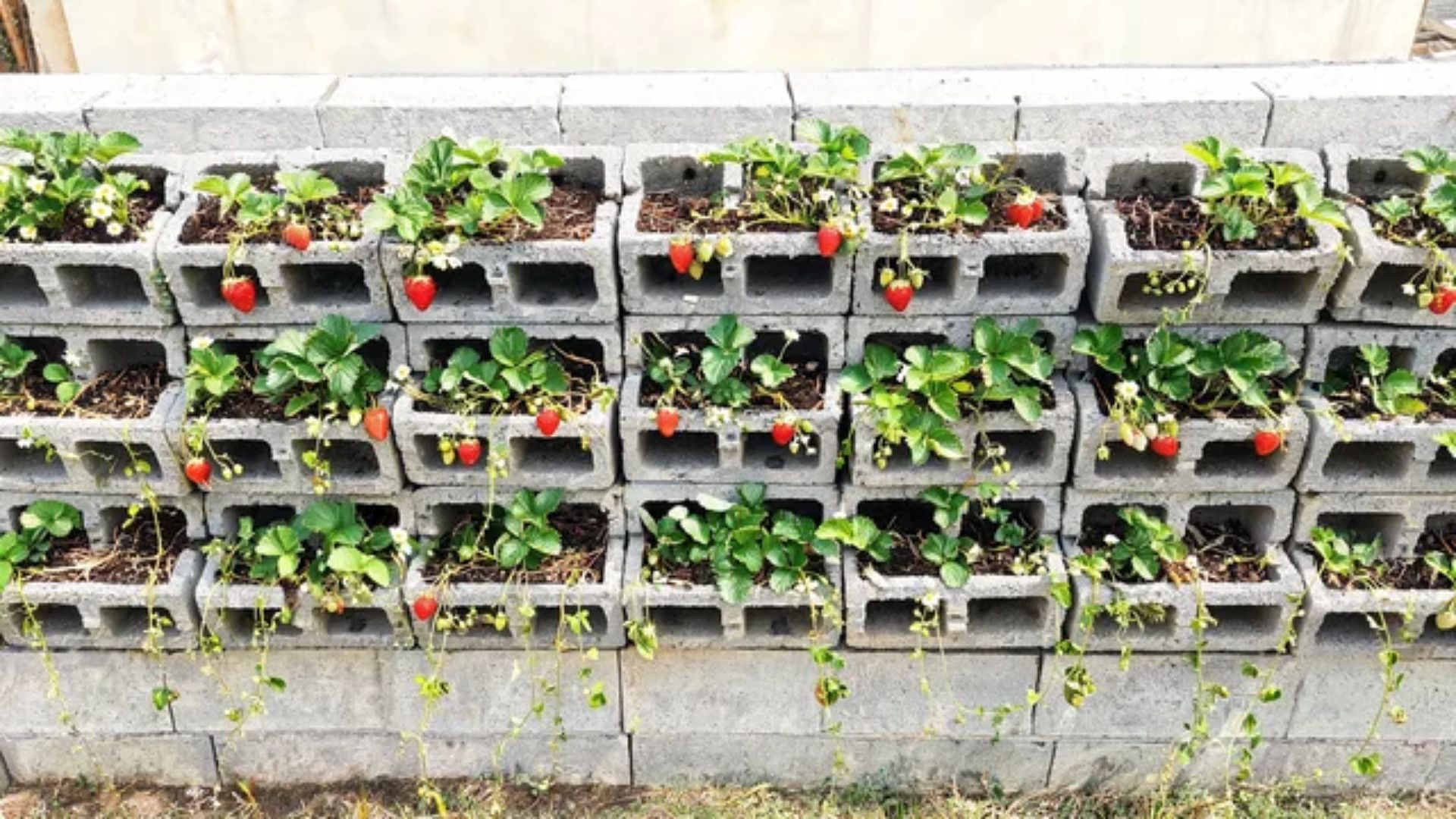
This suits narrow yards and sunny walls. Stack the blocks and plant strawberries in the cores so the runners trail down the face.
You get fruit at picking height, with berries off the soil. Watch the top row. It gets the most sun and dries out first.
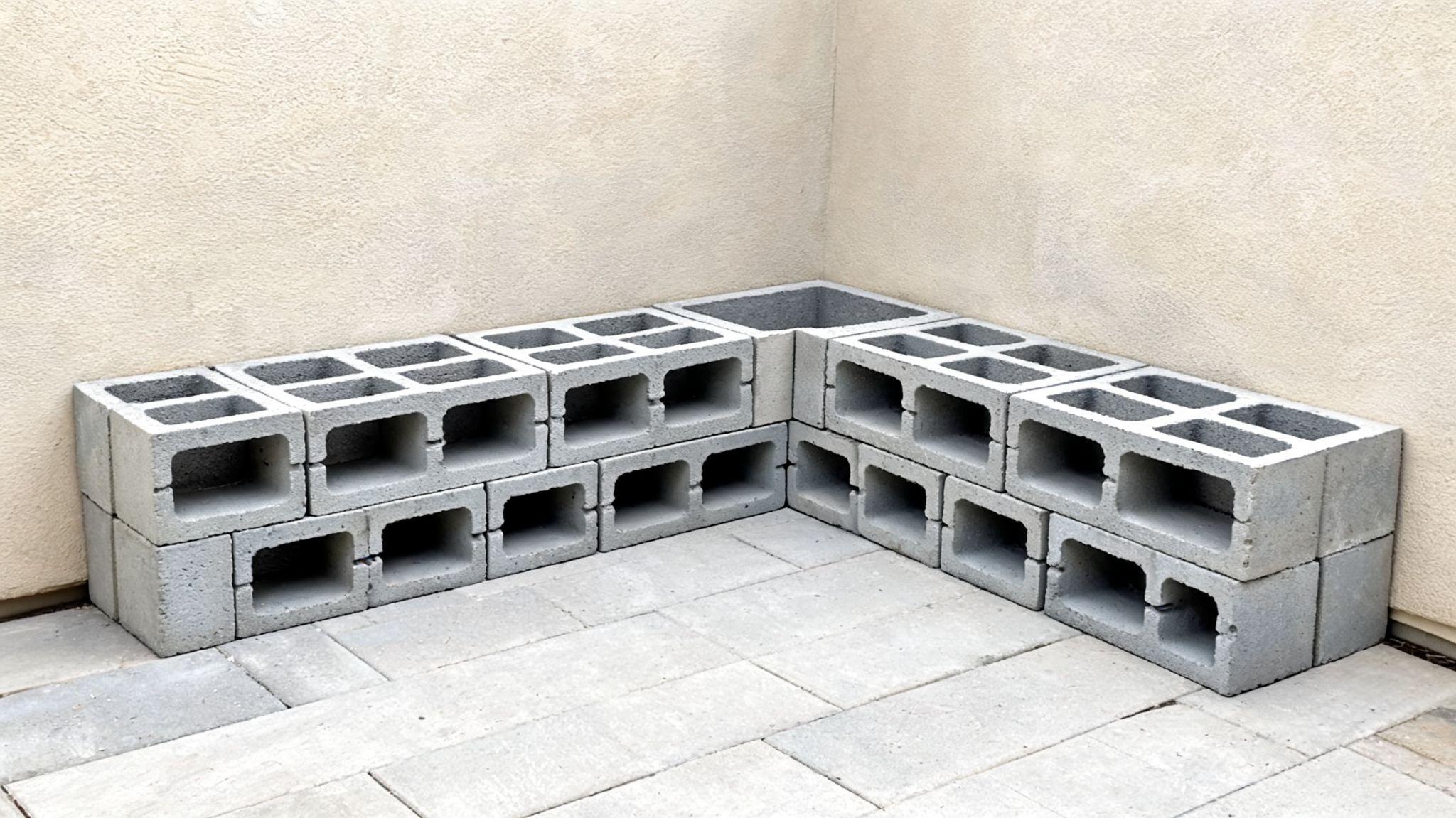
5. Corner Vegetable Tower
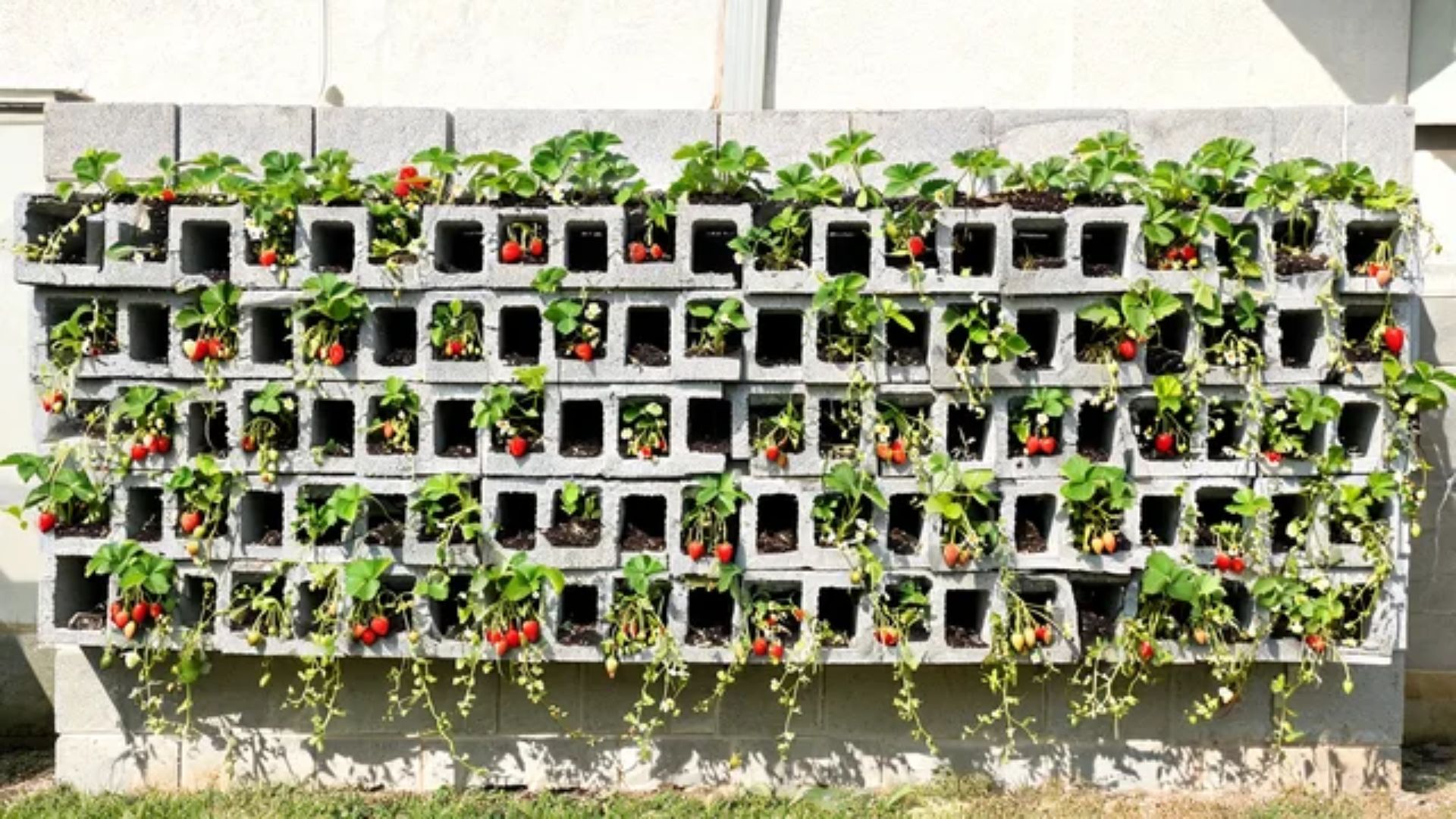
This suits tight corners and fence lines. Stack blocks in an L-shape against a fence, building upward in steps. Peppers, bush beans, and leafy greens fit well.
Stagger joints from the first course:shift each course half a block and alternate the corner overlap. Aligned seams crack when soil pushes outward.
6. Sloped-Yard Retaining Wall
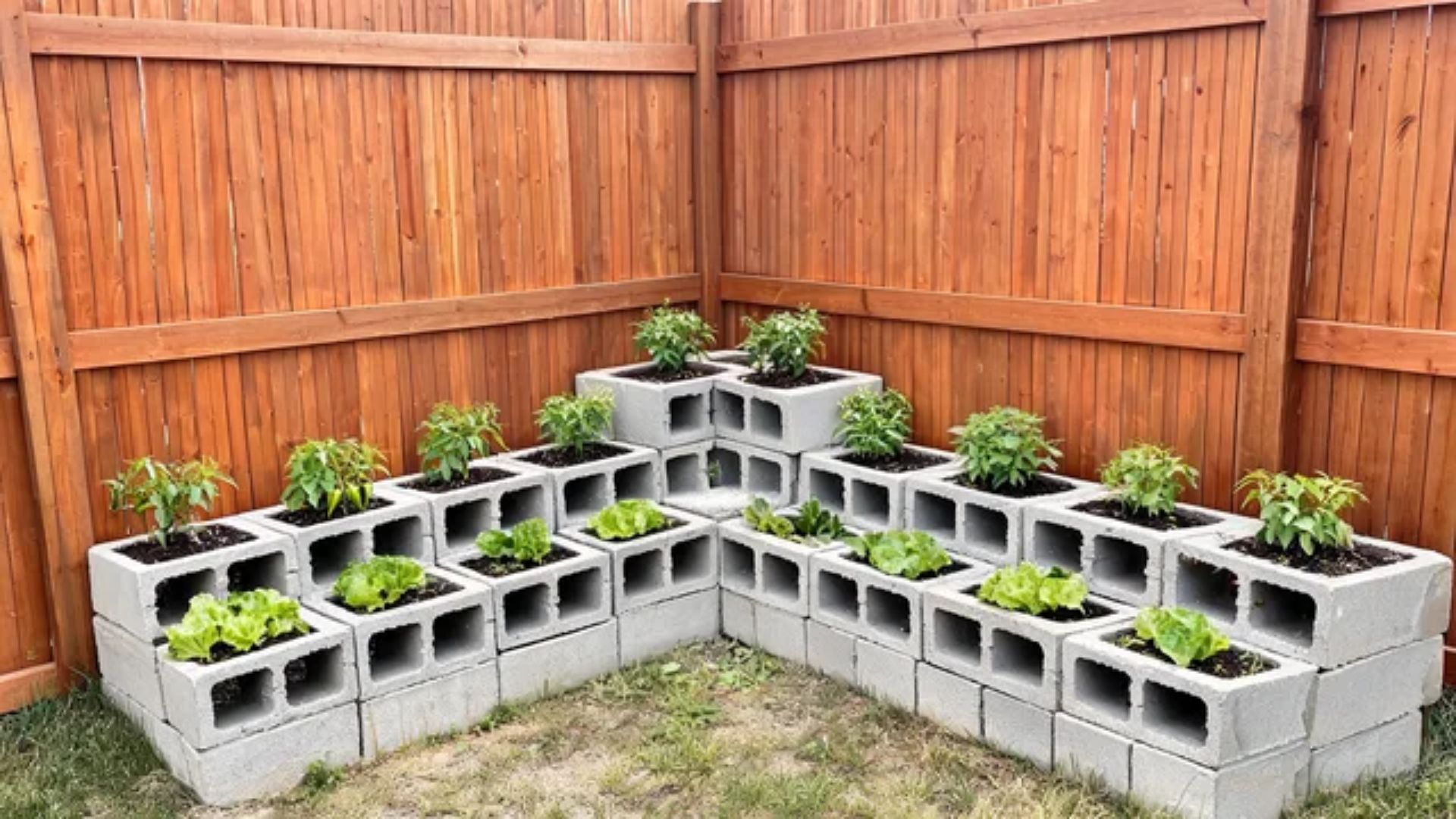
This suits sloped yards where soil keeps washing downhill. A block wall holds the earth back and gives you a flat planting shelf.
Dig a 4- to 6-inch trench, fill it with tamped gravel, and set the first course there so water drains. Glue every course so the wall doesn’t slide or lean.
7. Garden Divider Wall
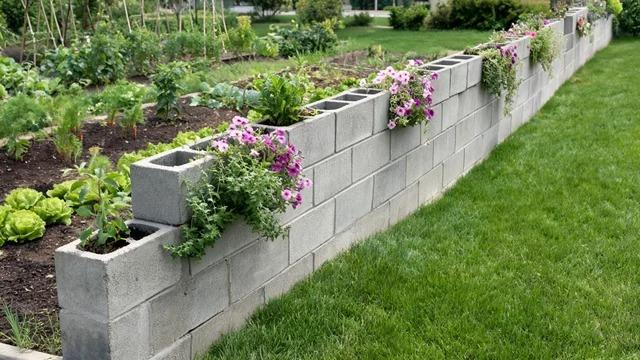
This suits larger yards where you want to split zones. A low wall can separate the vegetable patch from the lawn or seating area.
Plant trailing flowers or herbs in the top cores. Keep it low, around two or three courses. Taller walls need more support.
8. Painted Cinder Block Planters
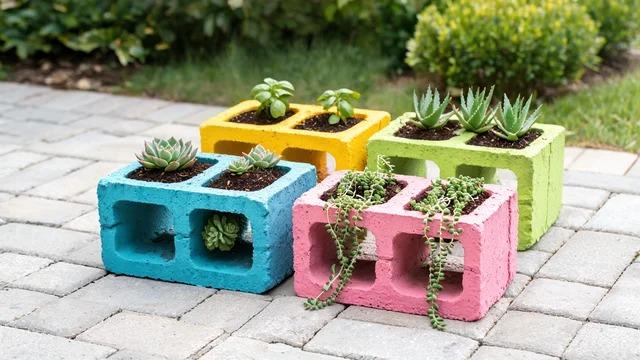
This suits anyone who wants color without much cost. Paint the blocks in bright shades and group them as planters.
Use exterior paint made for masonry. Let it cure fully before adding soil and plants. Rushing this step leads to peeling within a season.
9. Bench With Planter Ends
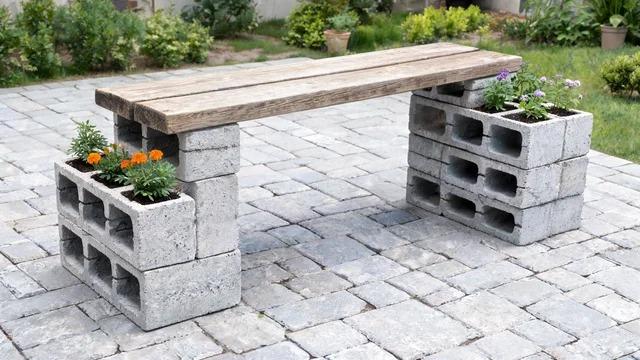
This suits patios and small gardens that need seating. Set two stacks of blocks as supports and lay boards across the top.
Plant flowers or herbs in the end cores. Use thick, sturdy boards. Thin ones sag, and a bench that sags gets less use.
10. Tiered Plant Stand
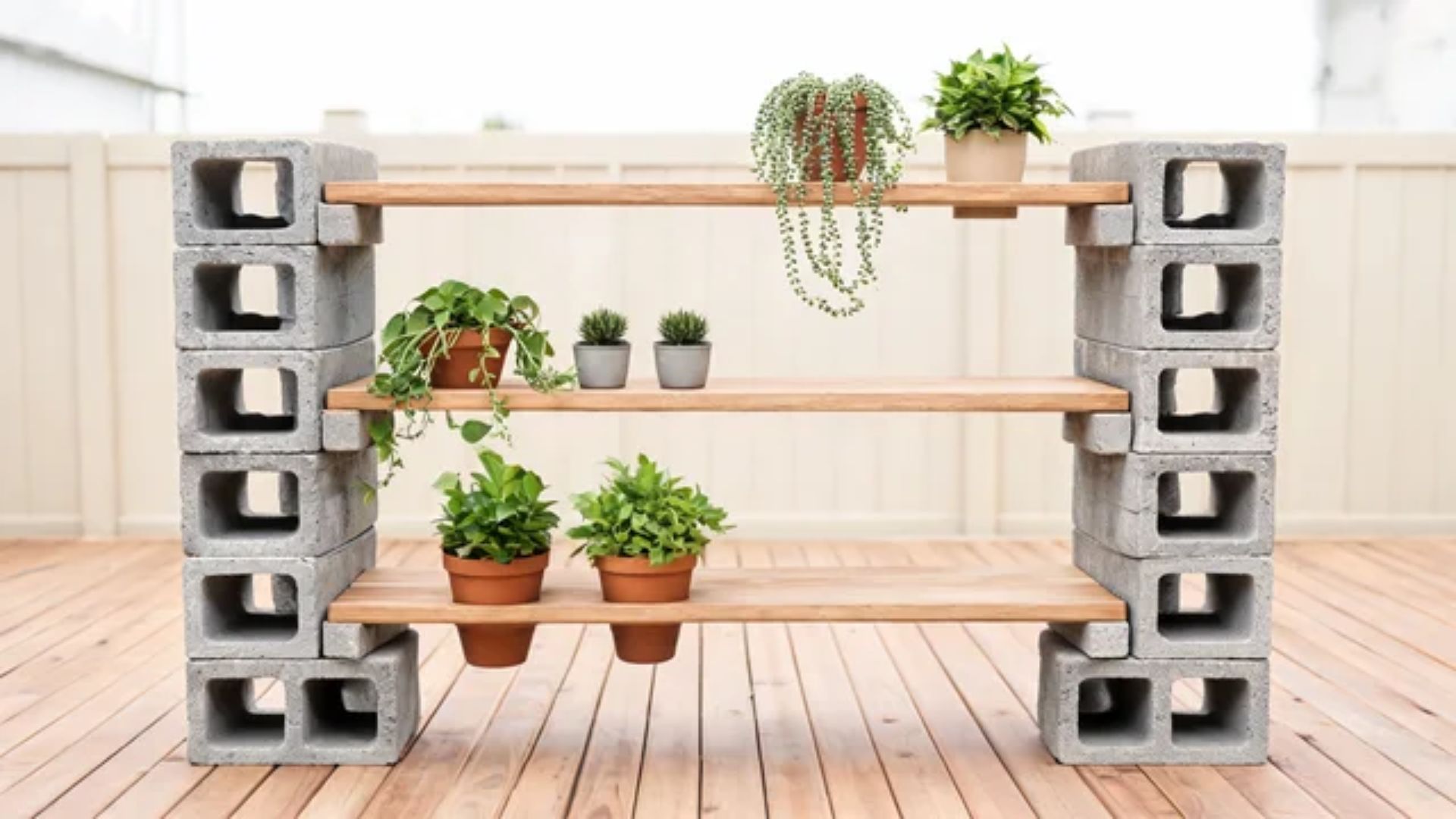
This suits patios and decks with limited floor space. Stack blocks and lay planks across them to make shelves for pots.
Mix heights to show off trailing and upright plants. Watch the plank thickness. Thin boards bend under wet, heavy pots.
11. Pathway and Bed Edging
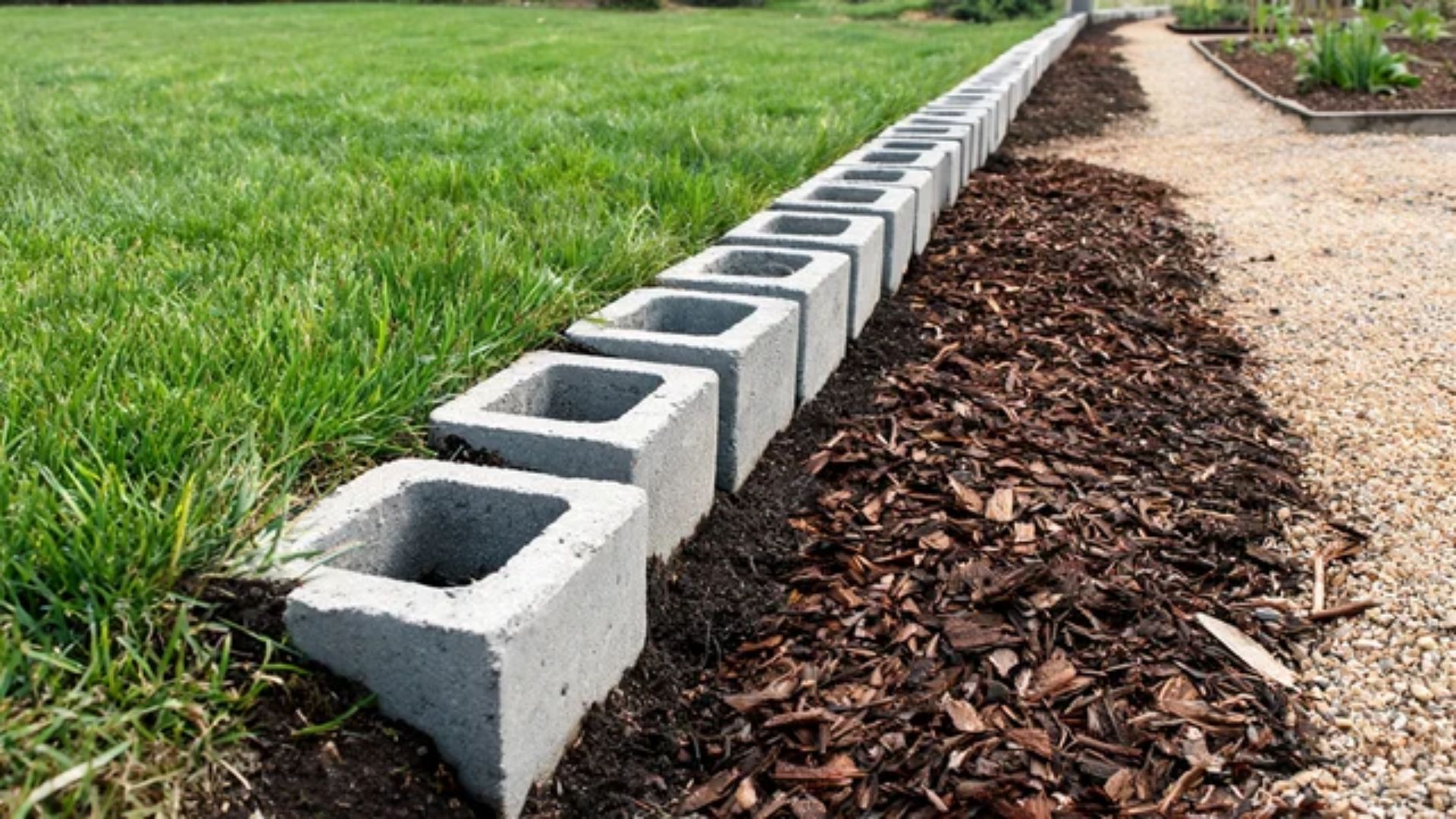
This suits yards with lawn that creeps into beds. Line blocks along a path or bed edge as a firm border.
The border holds mulch in and keeps grass out. Sink the blocks slightly into the ground. Loose ones tip when you mow near them.
12. Balcony Planter Box
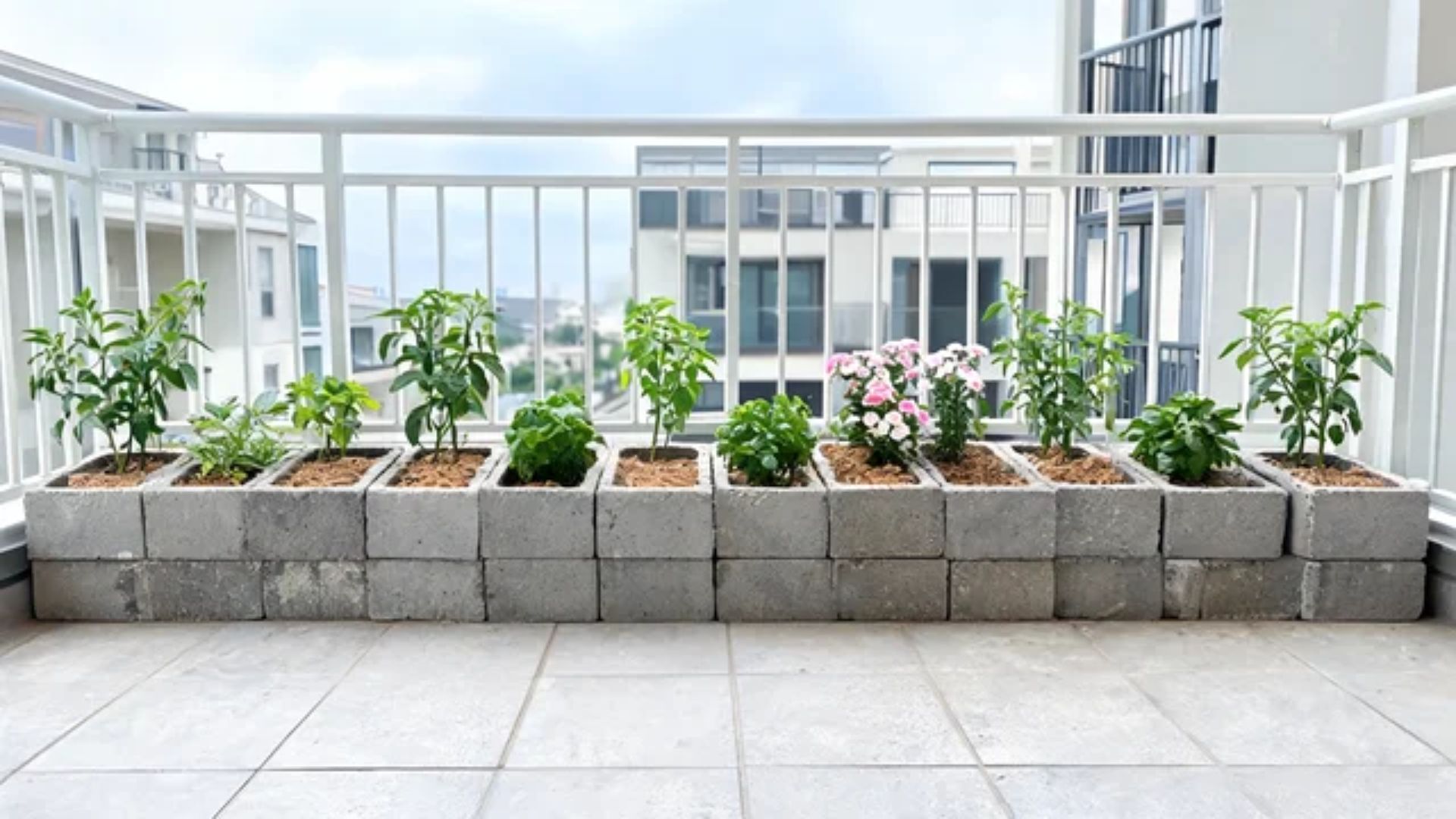
This suits apartments with a balcony or small terrace. Build a compact single row and fill it with light potting mix.
Peppers, herbs, and small flowers work well. Check your balcony’s weight limit first. Wet soil and concrete add up quickly.
13. Pollinator Flower Bed
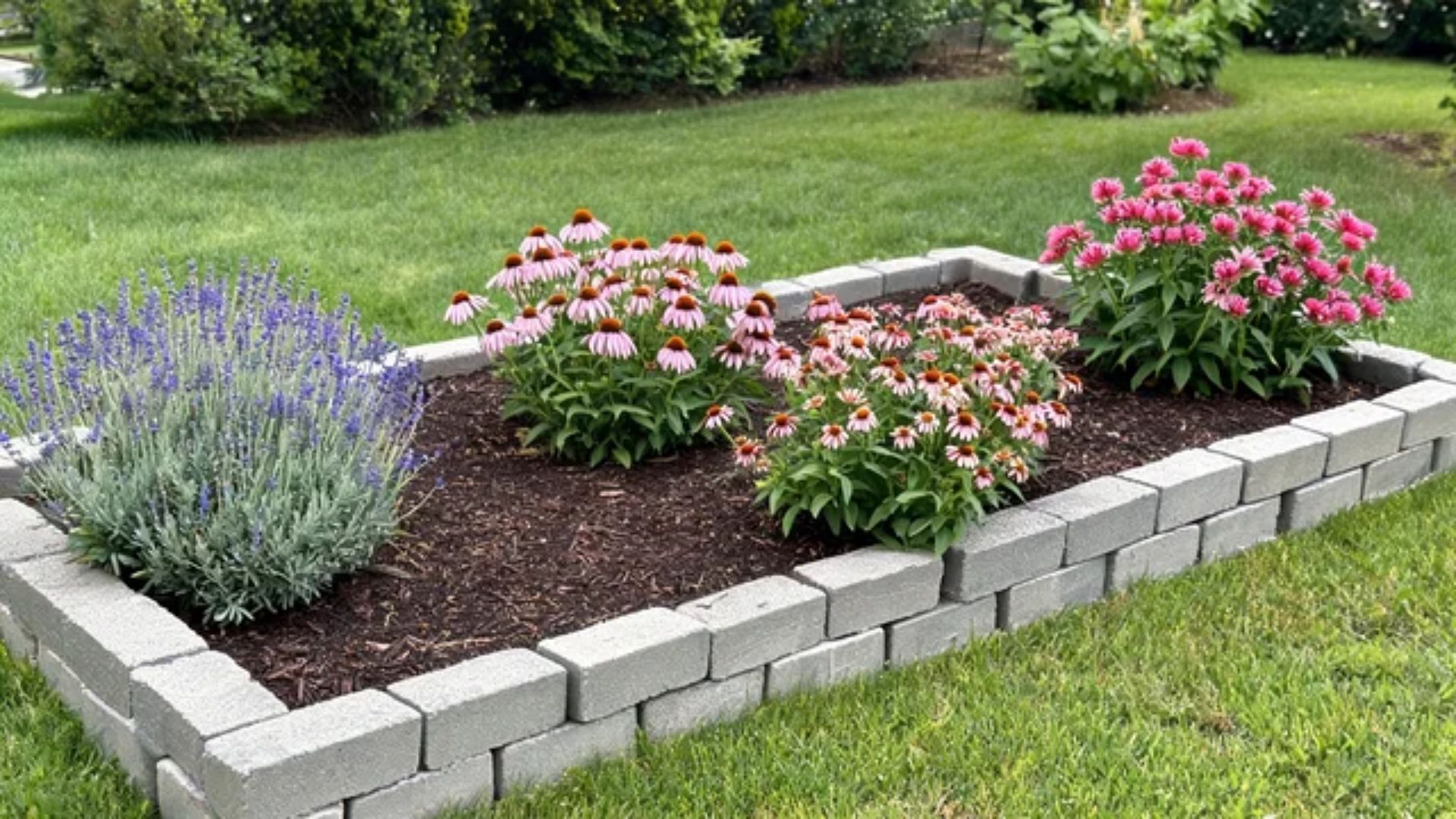
This suits yards of any size where you want more bees and butterflies. Edge a bed with blocks and fill it with flowering plants.
Lavender, coneflower, and bee balm are reliable picks. Group the same plants together. Bees find big patches of one flower more easily.
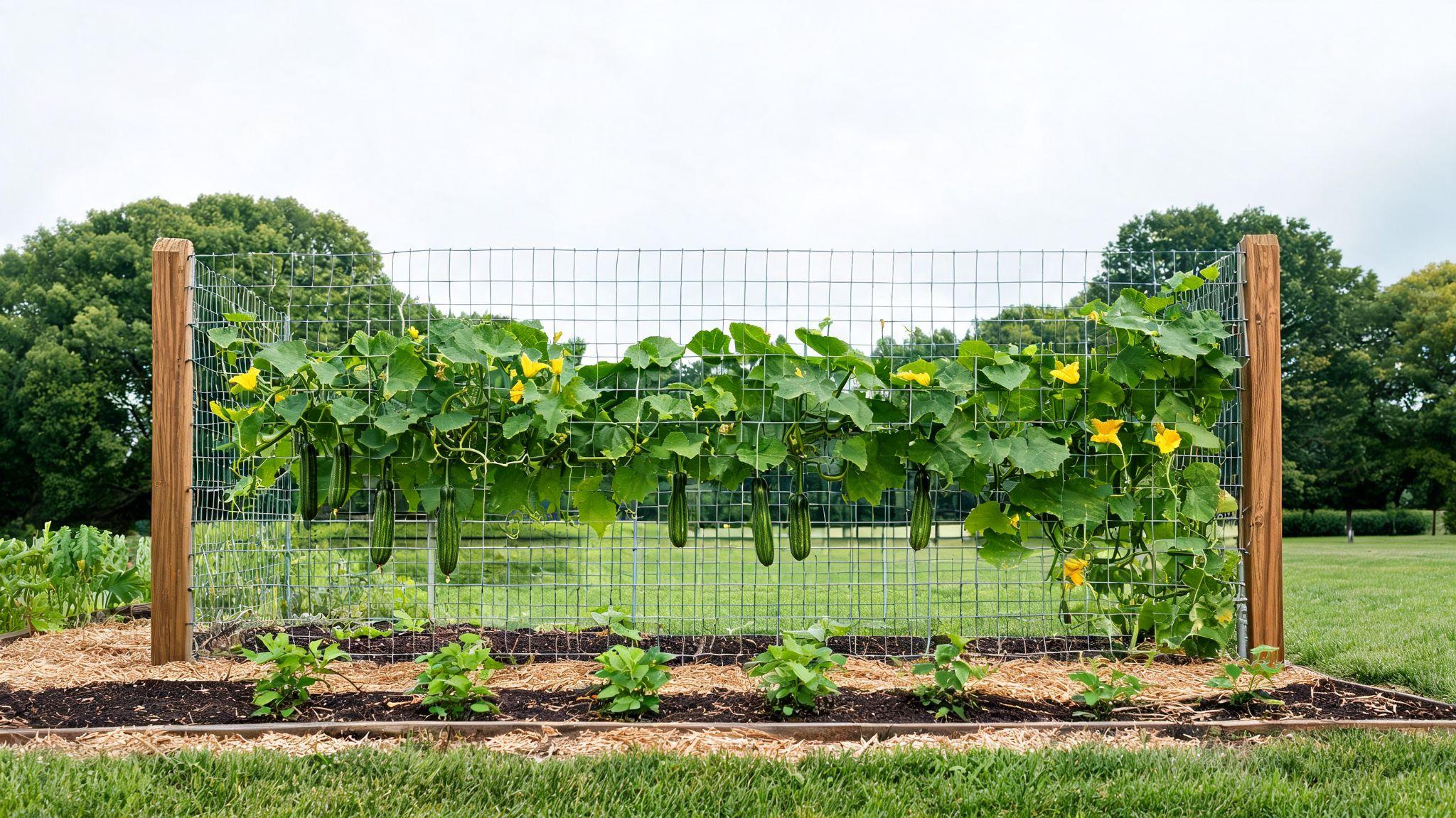
14. Trellis Bed for Climbers
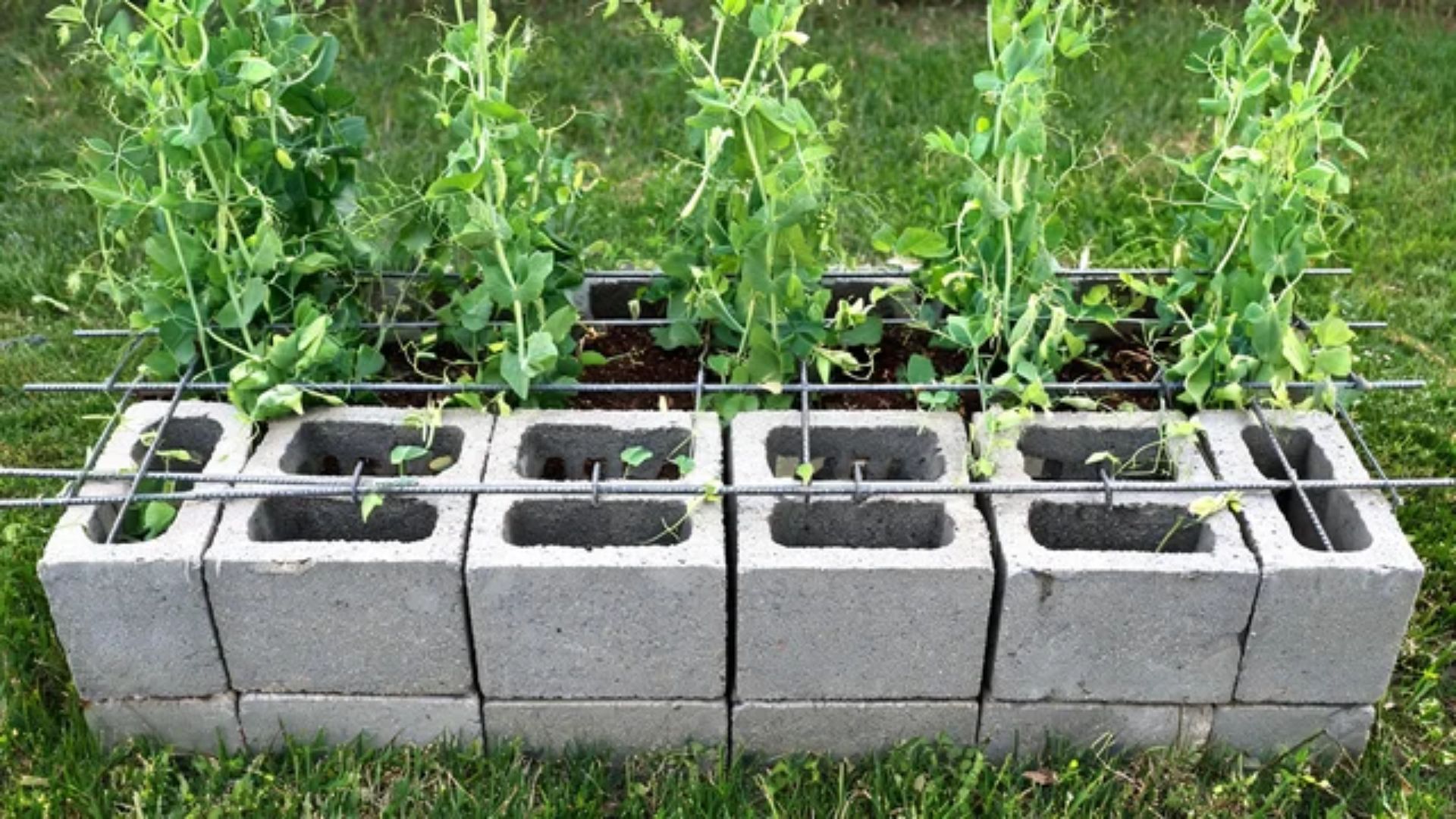
This suits narrow beds where you want to grow upward. Push rebar or a panel through the cores to anchor a support.
Beans and peas climb it well. Anchor the support deep. A full vine in the wind puts more strain on it than you’d expect.
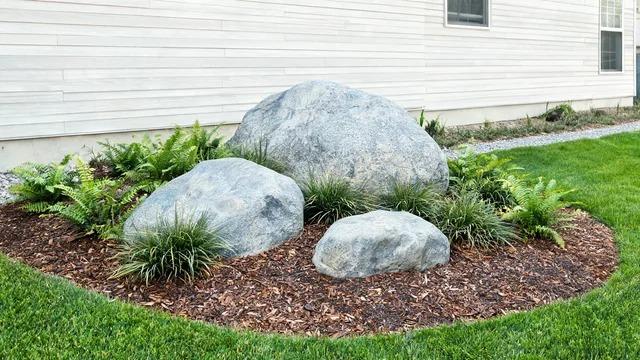
15. Succulent and Rock Garden
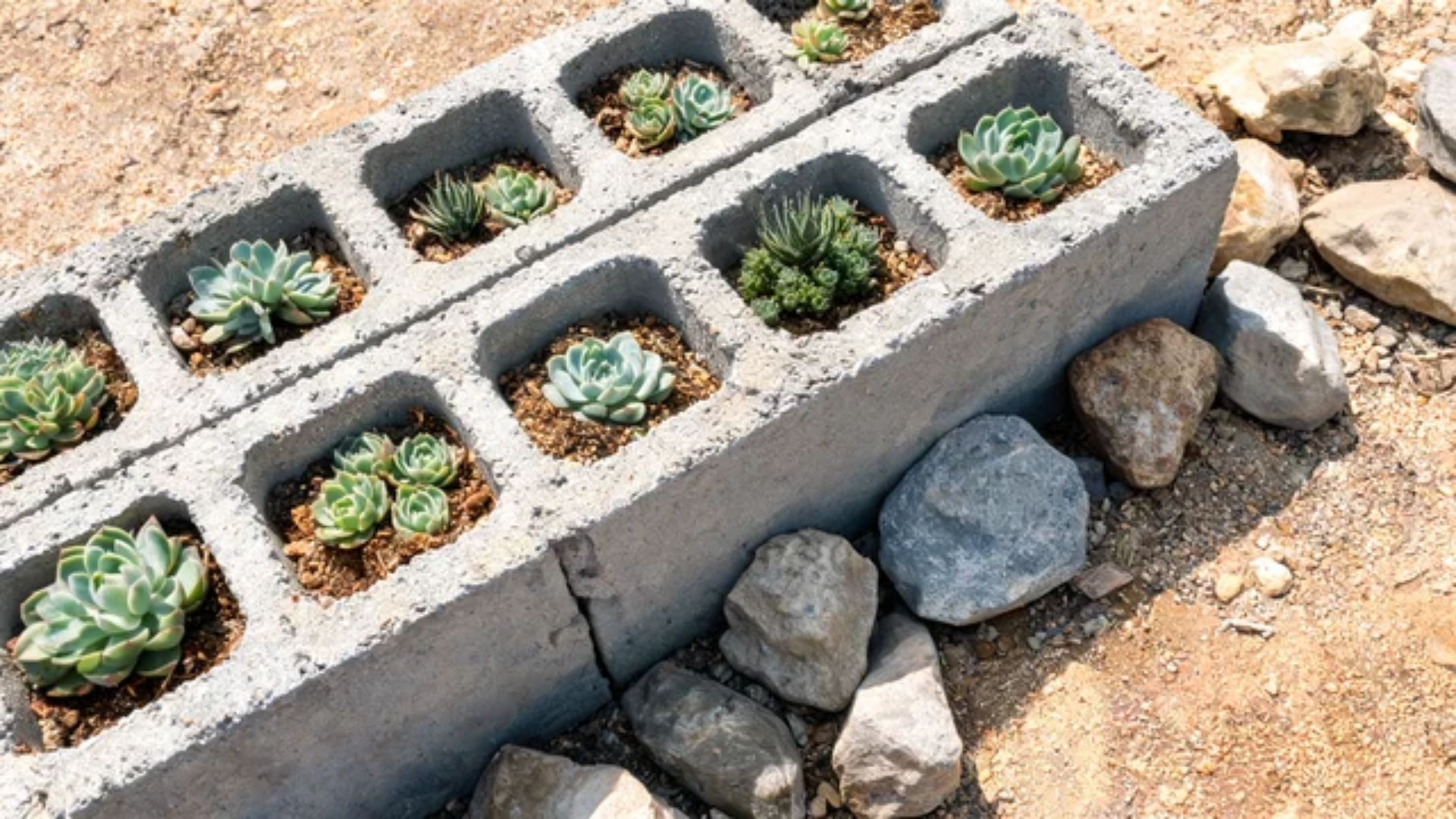
This suits dry, sunny spots and low-maintenance gardeners. Succulents like shallow cores that drain fast.
Pair them with a few rocks for a desert look. Watch the winter. Many succulents can’t take frost, so be ready to move them.
16. Compost Bin Enclosure
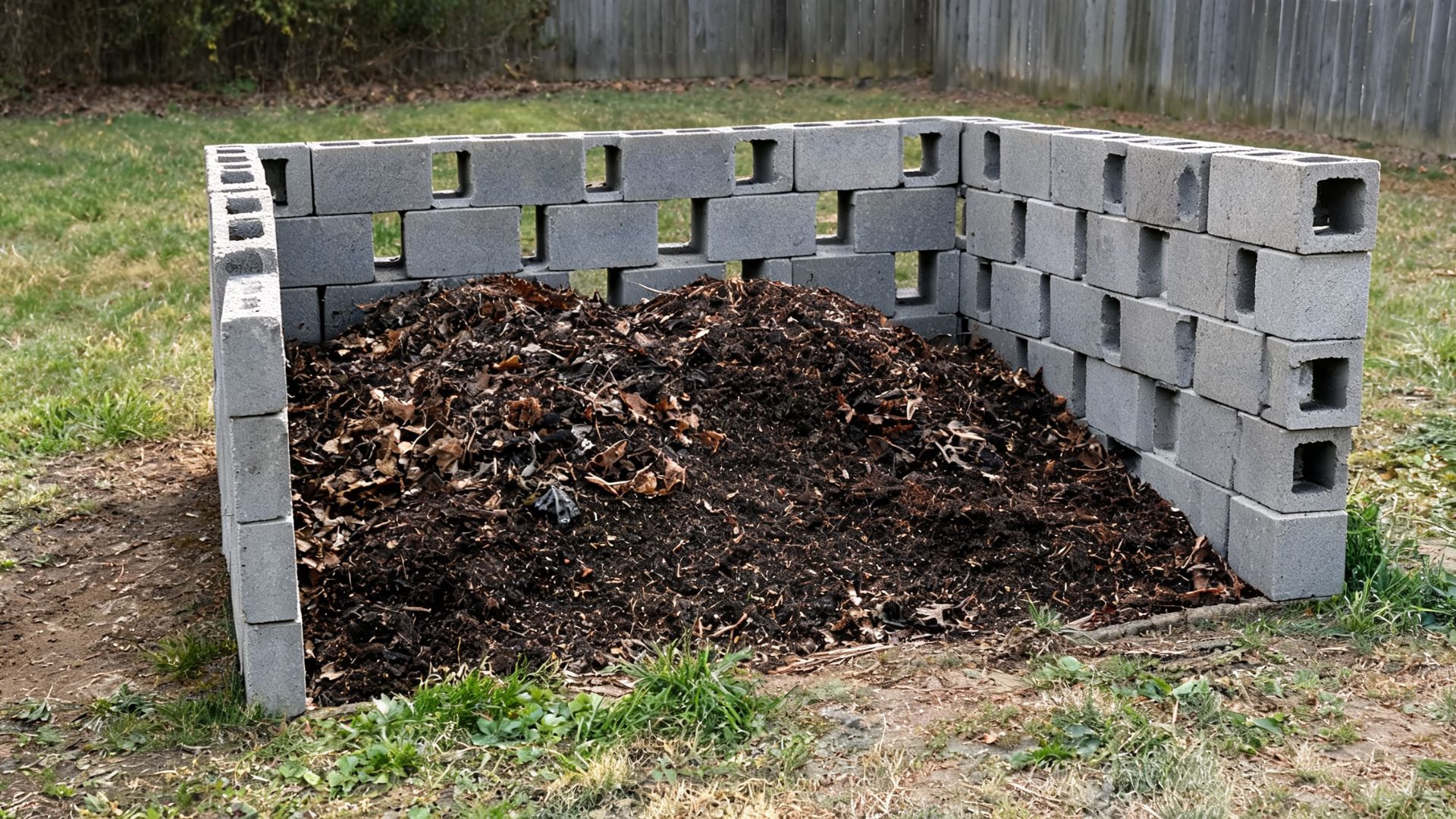
This suits yards with space for a compost pile. Stack blocks on three sides and leave the front open.
The walls keep the pile tidy and contained. Leave small gaps between blocks. Airflow helps the pile break down instead of turning soggy.
17. Cold Frame With a Window Lid
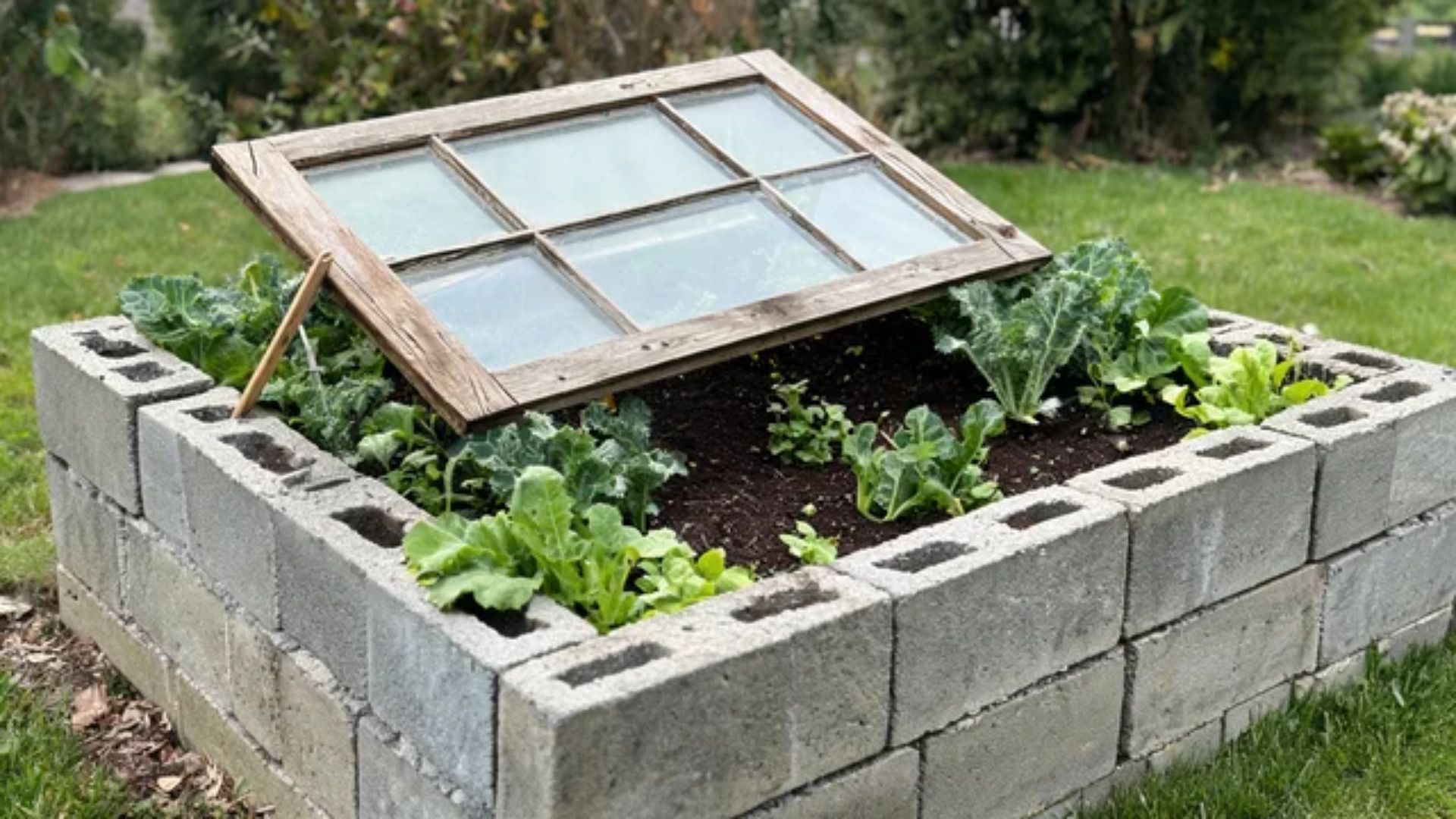
This suits gardeners who want a longer growing season. Build a block frame and rest an old window on top.
It traps heat for seedlings and winter greens. Prop the lid open on warm days. Without that, the plants can overheat.
Are Cinder Block Gardens Safe, and How Do You Build Them Right?
Modern concrete blocks are generally considered safe for gardens, but check soil pH and block origin. Three things to check and four things to do while building. Together, they keep a block bed safe, steady, and well-drained.
Soil pH:Concrete slowly releases lime into nearby soil, which nudges the pH up a little. Once the bed has settled for a few weeks, test a soil sample with a simple kit. A high reading is easier to fix early.
Acid-loving plants: Blueberries, azaleas, and similar plants struggle in alkaline soil, and yellowing leaves are the first sign. If your pH test reads high, mix in sulfur or acidic compost.
Block origin: Old cinder blocks used coal ash or fly ash as filler, and they may release traces of metals into nearby soil. Modern blocks use stone and sand instead. You can’t tell them apart by sight, so use salvaged blocks of unknown age only for edging, benches, or a compost enclosure. Buy new blocks for vegetable and herb beds.
Level base:Before laying any block, clear the grass, roots, and stones from the outline. Set a long board across the area with a level on top and check it in two directions. Add soil and tamp it in low spots, and scrape off high ones. On tilted ground, blocks rock and wet soil pushes the low side out, so the bed bows.
Gravel layer: Spread 2 to 3 inches of crushed gravel over the leveled footprint, directly under the first course, and tamp it flat. On heavy clay, water pools under a bare bed. Gravel gives it room to drain, so the base stays firm and the blocks settle evenly. For a retaining wall, use the gravel trench from idea 6.
Open cores: Leave the cores open and filled with soil. Open cores let rain and watering drain down through the bed instead of pooling. They also protect the blocks in winter, since water trapped in a sealed core can freeze and crack it.
Cardboard liner: Before adding soil, lay plain brown cardboard across the bed bottom and overlap the edges by a few inches. It blocks light, so the weeds and grass underneath die back. It then breaks down within a season, so roots can pass through.
Final Takeaway
Cinder block garden ideas work because they remove the guesswork. You stack, fill, and plant.
Start with one small bed this weekend. Learn how your soil drains and how your plants respond. That teaches you more than any plan on paper.
Most people stop at the first build. The ones who keep going add a second, then a third, because the blocks make growing easy to expand.
Pick one idea from this list, buy your blocks, and set the first course today.
Frequently Asked Questions
Do Cinder Block Beds Get Too Hot in Summer?
Yes, they can warm the soil along the block face. Mulch the top and water deeply, and keep heat-sensitive crops like lettuce toward the center of the bed.
How Do I Keep Soil From Washing Out of Cinder Block Planters and Will the Blocks Crack in Winter?
Place a flat stone or a piece of landscape fabric over the bottom of each core. Soil stays in, and water still drains out. That drainage also protects the blocks in winter. Water trapped in a core freezes and expands, and it can split a chipped or cracked block. Check each block for chips before you build, and keep the cores draining so water doesn’t sit.
How Many Cinder Blocks Do I Need for a Raised Bed?
A 4 by 8 foot bed takes about 18 standard blocks per layer. Block sizes vary slightly, so measure yours and add one or two spares.
How Deep Is the Soil in a Cinder Block Planter?
A standard block is about 8 inches tall, so each core holds roughly 8 inches of soil. That’s enough for herbs and strawberries, and stacking two blocks doubles the depth.